

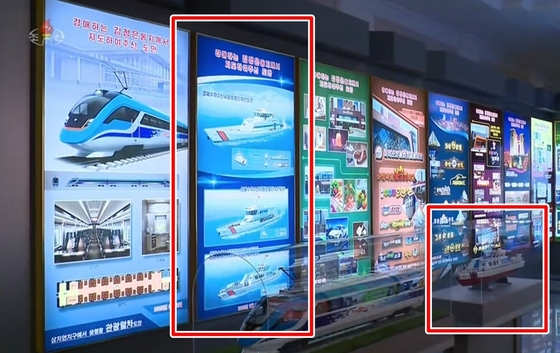
North Korea has unveiled the exterior of its newly refurbished maritime patrol vessel for the first time. Analysts suggest on Tuesday that this move aims to bolster maritime control while projecting an image of a normal state.
North Korean state media, Korean Central Television, showcased some designs from over 120 industrial art plans directed by General Secretary Kim Jong Un during the April 15 National Industrial Art Exhibition video on April 10. Among these designs, they confirmed the inclusion of a plan for a maritime patrol vessel for the protection of fishery resources in economic zones, which had never been disclosed before.
According to the South Korean Ministry of Unification, while North Korea has consistently emphasized the need to protect fishery resources, it appears that there have been no official mentions of the term patrol vessel until now.
North Korea has reportedly carried out maritime patrol duties using navy ships and vessels under the Ministry of Social Safety without a separate coast guard organization. In the 2020 incident involving the shooting of a South Korean official in the West Sea, North Korea also reported that a military patrol boat responded to the situation.
Experts suggest that the unveiling of this design indicates that North Korea may already operate an organization similar to a coast guard or is signaling its intention to institutionalize one.
In particular, analysts believe that North Korea aims to strengthen maritime boundary management between the North and South and control Chinese fishing boats through a patrol organization operating within the boundaries of the Northern Limit Line (NLL) and the Exclusive Economic Zone (EEZ) it has unilaterally set.
Professor Lim Eum-chul from Kyungnam University’s Institute for Far Eastern Studies stated that it appears to aim at enhancing control over maritime activities. While it could simply be for internal enforcement, there’s a possibility that North Korea, which denies the NLL, may have assigned practical military functions to the patrol vessel at the maritime boundary.
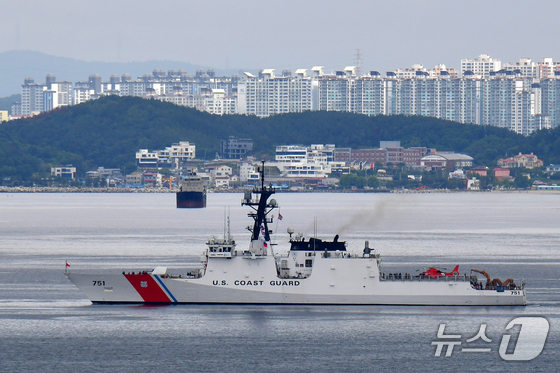
North Korea Adopts Diagonal Stripe Law Enforcement Vessel Look… Possibly Part of Normal State Strategy
Last April, General Secretary Kim stated during the launching ceremony for the new 5,000-ton multi-purpose destroyer Choe Hyun-ho that the vessels will operate in coastal defense areas and intermediate boundary waters during peacetime.
Some observers have speculated whether this indicates a newly claimed maritime boundary between the North and South since North Korea has defined the relationship as that of two hostile states, but North Korea has not provided further clarification since then.
North Korea does not recognize the NLL as the maritime boundary between North and South. Since the fourth inter-Korean general officer talks in 2004, it has claimed the West Sea Guard Line, which is drawn south of the NLL. In October 2022, when a North Korean merchant ship crossed the NLL and retreated after warning shots from the South Korean military, North Korea mentioned a maritime military demarcation line, which was interpreted as referring to the West Sea Guard Line.
The disclosed design shows a vessel that is relatively small and modern in appearance, raising the possibility that it is part of an image strategy to establish a normal state-style maritime management system.
In fact, the sides of the North Korean maritime patrol vessel shown in the design are painted in the colors of the national flag, adhering to international conventions. The diagonal color scheme of coast guard vessels serves as a shared symbol among major countries like the U.S. to identify law enforcement vessels, functioning as a visual signal to prevent confusion with military ships and enhance enforcement efficiency.
In conjunction with this, North Korea is also taking steps to organize a maritime transport insurance system. On Tuesday, the Korean National Insurance Corporation introduced a maritime insurance system consisting of hull insurance and shipowner civil liability insurance on its website, claiming that the insurance is organized in accordance with international insurance practices.
By emphasizing maritime risks from natural disasters like typhoons and tsunamis and mentioning potential national losses from shipwrecks and damage, analysts suggest that this reflects efforts to secure maritime transport stability in anticipation of future expansion of foreign trade.