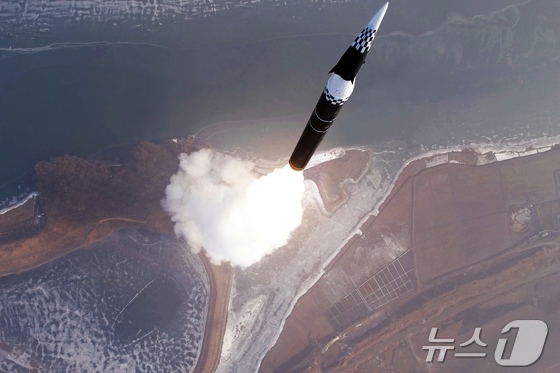
The South Korean government strongly condemned North Korea’s ballistic missile launch on the morning of April 19, declaring it a violation of United Nations (UN) Security Council resolutions. The officials called for an immediate halt to these provocative actions that escalate tensions on the Korean Peninsula.
According to defense sources, North Korea fired a short-range ballistic missile into the East Sea at approximately 6:10 a.m. (South Korean time) from an area near Sinpo, South Hamgyong Province. The projectile traveled about 140 km (about 87 miles) before splashing down.
In response to the launch, the Office of National Security at the presidential Blue House convened an emergency security assessment meeting. The session was chaired by Deputy National Security Advisor Kim Hyun-jong and included representatives from the Ministry of Defense and Joint Chiefs of Staff.
Blue House Chief Spokesperson Kang Yoo-jeong briefed reporters on the meeting, noting that President Lee Jae Myung had directed relevant agencies to maintain heightened vigilance as he embarked on state visits to India and Vietnam. Kang expressed growing concern over North Korea’s recent uptick in ballistic missile tests.
The Ministry of National Defense reiterated that North Korea’s ballistic missile launches clearly violate the UN Security Council resolutions. Defense officials urged Pyongyang to cease its repeated missile provocations, which only serve to increase regional tensions, and instead engage constructively in the South’s peace initiatives.
A Defense Ministry spokesperson emphasized that U.S. and South Korean forces maintain a robust combined defense posture, closely monitoring North Korean military movements. The alliance possesses overwhelming capabilities to respond decisively to any provocations, the official added.
U.S. and South Korean intelligence agencies are conducting a detailed analysis of the missile’s specifications. Given its relatively short flight distance of less than 300 km (about 186 miles), experts suggest it could be a close-range ballistic missile (CRBM) designed for low-altitude trajectories that challenge existing missile defense systems.