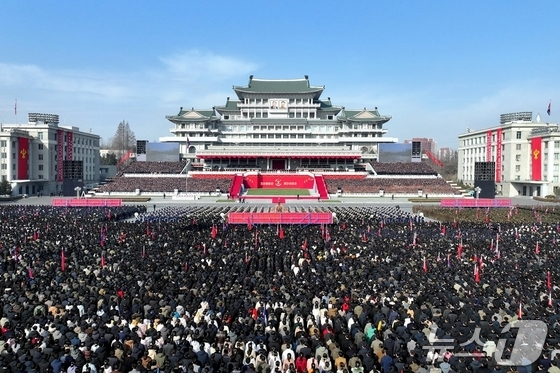
When you climb to the observation deck of the 170-meter (about 558 ft) tall Juche Tower, a symbol of Pyongyang, you can see Kim Il Sung Square across the Taedong River at a glance. Buildings on both sides of the square house cabinet departments such as the Ministry of Foreign Affairs and the Ministry of Education. To the left of the Grand People’s Study House (Central Library) north of the square, beyond a low hill covered with dense vegetation, a white marble building with the national flag hoisted can be seen. This is the headquarters of the Workers’ Party of Korea, where General Secretary Kim Jong Un’s office is located. It is equivalent to the Blue House (Presidential Office) in the South.
This is where the Party Congress, which determines the policy direction of the party and state for the next five years, the plenary meetings of the Central Committee held quarterly to discuss and decide on current policy issues, and the Political Bureau and its Standing Committee, which routinely make major policy decisions, are held.
North Korea has a party-dominant state system where the Workers’ Party of Korea leads all state institutions and organizations. The party’s decisions become state policies. As such, all matters decided at meetings held at the Workers’ Party headquarters are transmitted through party organizations from the central party to the primary party committees, which are the grassroots party organizations, and are implemented through party organizations, the cabinet, and military organizations.
The highest executive department of the party is the Secretariat and its specialized departments under it. The Secretariat mainly discusses and decides on issues arising from internal party affairs and other practical matters, and organizes and guides their implementation (according to party rules). Currently, the Secretariat consists of 11 secretaries responsible for organization, propaganda, military affairs, discipline, international affairs, economy, and more. The Workers’ Party Secretariat meeting or expanded Secretariat meeting is similar in function to a meeting attended by the Chief of Staff and Policy Chief of our Presidential Office.
There are currently 17 specialized departments under the Secretariat, organized by function. Among these, the Organization and Guidance Department, called the party within the party and the heart of the party, wields the most powerful authority. In the Workers’ Party headquarters, also known as Building No. 1, only the Organization and Guidance Department is located alongside the General Secretary’s office out of the 17 specialized departments. Most of the other specialized departments operate from the nearby Building No. 2.
Comparing functions, the Organization and Guidance Department performs tasks that all senior secretarial offices under our Presidential Office would handle, while the other specialized departments in Building No. 2 handle tasks similar to those of the Policy Office in our Presidential Office. The Central Committee Secretariat, which assists the General Secretary most closely, performs some tasks similar to those of the Chief of Staff, Protocol Secretary, and Personal Secretary, but formally, the Secretariat staff are also part of the Organization and Guidance Department.
In this regard, North Korea’s Chief Secretary mainly performs duties equivalent to the Presidential Protocol Secretary, while the role equivalent to our Presidential Chief of Staff is essentially performed by the Party Organization Secretary. This is why the Organization Secretary accompanies the General Secretary in all events and local on-site guidance visits.
The Party Organization and Guidance Department manages party cadres and the entire party organization, and oversees the selection and appointment of cadres in the military, cabinet, and other social organizations. The Organization and Guidance Department itself, which serves as the eyes, ears, and feet of the General Secretary, can be considered equivalent to our Presidential Office without much exaggeration. Therefore, to understand the operation of the North Korean system and its policy-making process, one must understand the Organization and Guidance Department.
Looking back at the history of the Workers’ Party of Korea, the Vice Chairman or Secretary for Organization, who oversees the Organization and Guidance Department, was always considered the second-in-command of the party. Notably, Chairman Kim Jong Il was appointed as Organization Secretary after being designated as successor in 1973 and did not appoint a successor to this position until his death in 2011. Instead, he divided the department into four sectors: Headquarters Party (Central Party), All-Party (local parties and state institutions), Administrative (security and judicial), and Military, with a First Vice Director overseeing each sector. This structure is known to have been maintained basically during the first term of Kim Jong Un’s rule.
Then, in October 2017, Choe Ryong-hae, a second-generation partisan, was appointed as Party Vice Chairman (now renamed Secretary) and Director of the Organization and Guidance Department after a gap of 44 years. Around this time, the reorganization of the Organization and Guidance Department began, and the details of the reorganization were revealed through the 8th Party Congress in 2021 and the 9th Party Congress in 2026. It appears to be a measure to prevent the Organization Secretary from being seen as a successor or having excessive power concentration, and to streamline the functions of the Organization and Guidance Department, under the condition that the Party Organization Secretary and Organization Department Director are officially appointed, rather than the supreme leader concurrently holding these positions as in the era of Kim Jong Il.
According to the reorganization, first, the military sector was separated, and the Military and Political Guidance Department was established as an independent department in late 2019. It is known that the Military and Political Guidance Department expanded and reorganized the Military Department, which was in charge of military affairs within the Workers’ Party of Korea, and took over the function of party guidance and supervision of the military, which was previously handled by the military sector of the Organization and Guidance Department. The core department of the Military and Political Guidance Department is the General Political Bureau Guidance Section. It is responsible for guiding and supervising the General Political Bureau, which is in charge of political work for party organizations in the military system, including the General Staff Department of the Korean People’s Army, the Ministry of National Defense, the Security Department, and the Second Economic Committee.
Secondly, in August 2020, the administrative sector of the Organization and Guidance Department was separated, and the Legal Affairs Department was newly established. The administrative sector of the Organization and Guidance Department was responsible for guiding public security and judicial institutions such as the State Intelligence Agency (formerly the State Security Department), the Social Security Ministry, and the Prosecutor’s Office. The administrative sector of the Organization and Guidance Department was separated from the Organization and Guidance Department when Jang Song-thaek established the Administrative Department and became its director in 2007, but was reabsorbed into the Organization and Guidance Department after Jang was purged in 2013. It is said that when the separation process began, it was called the Organization and Administration Department before being renamed the Legal Affairs Department.
The Legal Affairs Department appears to have been organized to strengthen party guidance and control over special institutions such as judicial, prosecutorial, security, and intelligence agencies. At the 8th Party Congress, General Secretary Kim used harsh language, saying that it can no longer tolerate the phenomenon of departmentalism and self-centeredness that infringes on the interests of the state and the people and delays the implementation of the party’s decisions and instructions, and it must resolutely crush it by mobilizing party authority, legal authority, and military authority, criticizing the self-centeredness of special institutions.
Thirdly, through the 8th Congress of the Workers’ Party of Korea in January 2021, the Inspection Section of the Organization and Guidance Department was separated, the Party Central Inspection Committee was strengthened, and the Party Discipline Investigation Department was newly established. At the 1st Plenary Meeting of the 8th Central Committee held during the 8th Party Congress, General Secretary Kim Jong Un explained the background of strengthening the Party Central Inspection Committee, saying that to establish strong discipline within the party to strictly implement party rules and party policies and to eradicate the phenomena of authoritarianism, bureaucracy, and corruption, a new disciplinary supervision system must be established.
Accordingly, the Party Central Inspection Committee was abolished and absorbed into the Party Central Audit Committee, and the authority and role of the Party Central Audit Committee were enhanced to take full charge of supervision and investigation work for strengthening discipline within the party. And the Discipline Investigation Department was organized as the executive body of the Central Audit Committee. Discipline Investigation Departments were also established under provincial and special city party committees, and Discipline Investigation Sections under city, county, and district party committees. It is reported that personnel were drawn mainly from the Inspection Section of the Organization and Guidance Department, along with the Cadre Section and Petition Section.
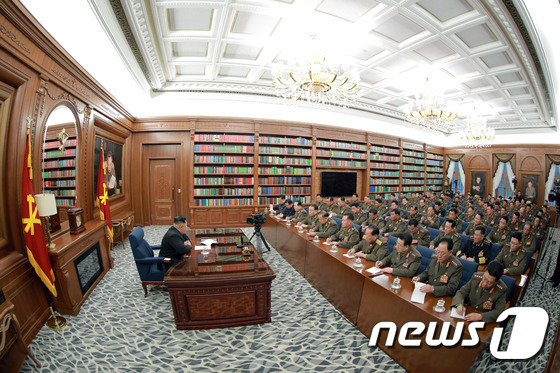
Regarding the establishment of the Discipline Investigation Department, the Rodong Sinmun (January 10, 2021) explained that when departments dedicated to party discipline issues from the Party Central Committee to provincial, city, and county party committees emerge and begin their activities, many phenomena that violate or challenge party organizational discipline, violate regulations and functions, and blur the revolutionary party spirit will be greatly suppressed. In terms of our Presidential Office, it can be said to be similar to the work handled by the Civil Affairs Secretary and the Public Service Discipline Secretary under the Senior Secretary for Civil Affairs.
In January 2005, an expanded meeting of the Party Secretariat decided to dissolve the Onchon County Party Committee in Nampo City, which is known to be the result of the Discipline Investigation Department’s detection of corrupt practices (such as drinking and entertainment, infringement of people’s property) by county party officials. Particularly at the 9th Party Congress, the status of the Discipline Investigation Department was further elevated by creating the position of Discipline Secretary, and Shin Young-il, presumed to be from the Organization and Guidance Department, was appointed as Secretary and Director of the Discipline Investigation Department.
However, although considerable authority in military, administrative, and disciplinary areas has been transferred to newly established organizations, it is assessed that there has been no significant change in the status of the Organization and Guidance Department.
The power of the Organization and Guidance Department basically comes from the evaluation of party life and inspection of party members, and personnel rights. The Party Life Guidance Section, Inspection Section, and Cadre Section of the Organization and Guidance Department are responsible for this. The number of Workers’ Party members is estimated to be around 4 million (according to announcements at the 8th and 9th Party Congresses, it is around 6 million). This means that one out of every six North Koreans is a party member. All party members are managed by the Party Member Registration Section and Cadre Registration Section of the Organization and Guidance Department.
All party cadres and members, regardless of their position, must live according to the requirements and discipline of party life norms and participate in regular activities such as study sessions and party life reviews. The Party Life Guidance Section of the Organization and Guidance Department is responsible for guiding and evaluating this.
The Party Life Guidance Section is subdivided into about 13 sections that guide various sectors from the Headquarters Party to local parties, central institutions such as the Supreme People’s Assembly and the Cabinet, and military institutions such as the General Political Bureau. Through this, in cooperation with the Propaganda and Agitation Department, they prepare Organizational Life Evaluation Reports and Ideological Life Evaluation Reports on the party life status of cadres and party members. The evaluation reports include information on family background, party members’ career histories, evaluations of party life and study, and evaluations of personal life, which are used as basic data for personnel decisions.
Additionally, all party organizations in every region and unit of North Korea must routinely report the daily trends of their party members and residents to the Party Life Guidance Section of the Organization and Guidance Department through higher party organizations before leaving work every day.
The Organization and Guidance Department also has a Notification Section. This is a department that receives reports on all situations related to incidents and accidents that occur in party organizations. The Notification Section, which has functions similar to the National Situation Room of our Presidential Office, receives reports directly without the involvement of organization secretaries or organization department heads of various party committees.
General Secretary Kim Jong Un is able to grasp the real-time situation across North Korea through double and triple reporting lines, including the daily reporting system of the Party Life Guidance Section of the Organization and Guidance Department, the direct reporting system of the Notification Section, and the trend reporting systems of security agencies such as the State Intelligence Agency and the Social Security Ministry.
If problems are identified through this, the Inspection Section of the Organization and Guidance Department conducts inspections. Unlike inspections by other party departments or cabinet departments, regular and special (ad hoc) inspections by the Inspection Section of the Organization and Guidance Department have no restrictions on targets or scope. Depending on the case, they may conduct joint inspections with the Party Discipline Investigation Department or the Social Security Ministry.
Additionally, when the General Secretary goes on local on-site guidance visits, the Inspection Section of the Organization and Guidance Department is also tasked with conducting preliminary inspections of the relevant regions, institutions, or factories and preparing basic reports for the on-site guidance.
The evaluation of party life and inspection of party members leads to personnel matters (cadre affairs). Personnel work is handled by the Cadre Section of the Organization and Guidance Department and the Party Cadre Department. It operates on a dual system where high-level personnel matters of the party organization are handled by the Cadre Section of the Organization and Guidance Department, while mid to low-level personnel matters are handled by the Party Cadre Department. The Cadre Section is divided into about 10 sections, from Organization Section 1, which handles personnel matters for the highest-ranking officials of the Central Party, to sections handling personnel matters for each institution. Of course, the personnel discretion of individual cadres in the Cadre Section is limited. This is because a strict order has been established where no one except the General Secretary can abuse personnel authority.
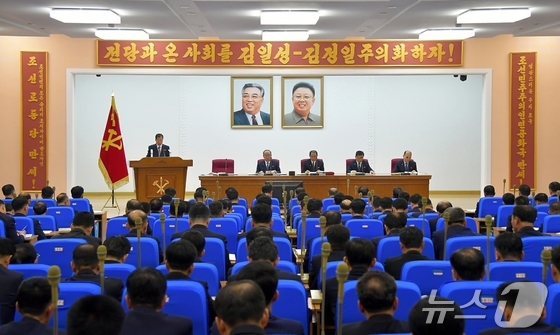
In addition to party life, inspection, and personnel matters, the Organization and Guidance Department transmits the General Secretary’s instructions or policies and decisions from major party meetings to the organization departments of provincial, city, and county party committees and organization departments of each unit’s party committee. The organization departments of each unit then relay these to administrative and economic sector working-level cadres. They regularly check how these policies and decisions are being implemented and receive reports on the results of implementation. For this purpose, instructors from the Party Life Guidance Section, Local Guidance Section, and Factory Guidance Section may be stationed in relevant regions or institutions.
Representative examples include the responsible instructors stationed in each province and the political commissars dispatched to the military. The Organization and Guidance Department dispatches responsible instructors at the level of deputy director or section chief to each provincial and city party committee to consult with the responsible secretaries of each provincial and city party on all matters. In the military, political commissars are dispatched to corps, division, and regiment levels, and political instructors are stationed at battalion level. Even corps commanders or division commanders cannot move troops without consultation and consent from the political commissars. Political commissars dispatched from the Organization and Guidance Department report directly to the Central Committee of the Party without being controlled by the General Political Bureau. There’s an anecdote shared by a North Korean figure who had a long military career when I visited Pyongyang.
“One day, I entered the division commander’s office and saw a very young man sitting in the division commander’s chair while the division commander was standing. I was about to tell him to stand up, but the division commander signaled me to be quiet. When the young cadre left, the division commander even gave him a military salute. When I asked the division commander who he was, he said it was a responsible instructor from the Central Party’s Organization and Guidance Department.”
In fact, there have been cases where the title of general was given to the first deputy director of the Organization and Guidance Department in charge of military affairs, showing how powerful the influence of Organization and Guidance Department officials is, although it’s not easy for outsiders to realize.
Currently, Kim Jae-ryong is the Organization Secretary and Director of the Organization and Guidance Department, overseeing the entire department. He worked in the Organization and Guidance Department, then served as Organization Secretary of Jagang Province and North Pyongan Province Party Committees, and rose to become the responsible secretary of the Jagang Province Party Committee. He then served as Premier of the Cabinet, Director of the Organization and Guidance Department, Director of the Cadre Department, and Director of the Discipline Investigation Department. It seems he has been recognized for his abilities while serving in key positions in both local and central party organizations. The current Premier of the Cabinet, Pak Thae-song, was also appointed as Premier after serving as deputy director of the Organization and Guidance Department and responsible secretary of the South Pyongan Province Party Committee, similar to Kim Jae Ryong.
In addition, Jo Yong-won, Chairman of the Presidium of the Supreme People’s Assembly, Kim Hyong-sik, Vice Chairman, Jeong Kyong-taek, Military Affairs Secretary and Director of the Military and Political Guidance Department, Ri Hui-yong, Cadre Secretary and Director of the Cadre Department, Park Gwang-ung, Director of the Party Legal Affairs Department, and Park Kwang-ung, the Party’s Minister of Justice, as well as Park Kwang-sik and Choi Jun-ho, members of the Party Central Inspection Commission, all hail from the Organization and Guidance Department. Although the military, administrative, and inspection divisions have been spun off into independent departments from the Organization and Guidance Department, those with backgrounds in the department are making greater strides than ever before.
This is viewed as a measure to further solidify General Secretary Kim Jong Un’s personal rule and to strengthen the Party’s leadership and control over the military and state institutions. Furthermore, North Korea appears to have determined that strengthening Party discipline and the discipline of Party members is a prerequisite for the political ideologies of people-first and people’s welfare—which it has currently set as its top priorities—to take root, and is therefore promoting officials from the Organization and Guidance Department who specialize in these areas.
Although the Organization and Guidance Department plays a central role in operating the Workers’ Party of Korea and, by extension, North Korean society, much remains unknown regarding its overall size, functions, and operational methods relative to its status. However, the Organization and Guidance Department is an essential gateway for understanding the North Korean system and policy-making processes. This is why we must pay closer attention to its trends and changes.