

Jeju Island has confirmed sending medical equipment and forest pest control materials to North Korea. This marks the first exchange since North Korea declared the two Koreas as hostile nations in December 2023, drawing attention to North Korea’s intentions.
On Monday, Jeju Island announced that as part of a North-South cooperation project, goods worth approximately 160 million KRW (about 105,570 USD) were dispatched on April 1. The shipment included a kidney dialysis machine, forest pest control chemicals, and 50 Hallabong citrus saplings. The cargo departed from Incheon Port, transited through Dalian, China, and arrived at Nampo Port in North Korea on May 4.
Jeju received approval from the Ministry of Unification in March for the export of these goods. However, the island stated that it has not received any official confirmation regarding the arrival of the items in North Korea.
The support from Jeju Island gained momentum after Governor Oh Young-hoon requested cooperation to resume the citrus delivery project during a meeting with Unification Minister Chung Dong-young on November 5 last year.
Subsequently, Jeju officials sought assistance from the Chinese government for North-South cooperation during discussions with the Chinese Ambassador to South Korea.
In February of this year, Jeju formed a delegation that reached a comprehensive agreement on North-South cooperation with North Korean officials in Beijing. Reports indicate that Governor Oh met with Ri Ho-nam from North Korea during this visit.
Ri has a history of involvement in inter-Korean relations, including meeting with former Chungbuk Governor Ahn Hee-jun during Roh Moo-hyun’s administration in 2006 to discuss summit meetings and other matters. He has also been linked to the Ssangbangwool North Korea remittance incident and was mentioned in discussions surrounding the Black Venus incident in the past.
The reasons behind North Korea’s sudden decision to proceed with the project with Jeju Island, despite previously severing all contacts following the declaration of the two Koreas as hostile nations, remain unclear. Notably, there are reports that during times of poor inter-Korean relations, some private organizations have received messages indicating that only exchanges with Ri’s side are currently possible.
Jeju and North Korea have agreed to first pursue cooperation in the fields of citrus, medical welfare, and forest pest control, with plans to expand into pig farming and tourism in the future.
In this context, Kim Yang-bo, the director of Jeju’s Tourism and Exchange Bureau, held a press briefing at the provincial government office, stating that Jeju Island will focus its efforts on maintaining North-South cooperation projects and working towards a sustainable future for both Koreas.
Although there has been no official confirmation, Jeju presumes that the goods were received through the Korean Federation for the Protection of the Disabled, a North Korean partner organization.
Over the years, Jeju has sent a total of 66,000 tons of citrus and carrots to North Korea, starting with 100 tons in 1999 and continuing until 2010.
However, the project was suspended after relations deteriorated following the Cheonan sinking incident. Since then, there have been sporadic deliveries of Jeju citrus to North Korea in 2018 and 2021, separate from the North-South cooperation projects.
Jeju established a North-South exchange cooperation fund in 2008 under its regulations concerning inter-Korean exchanges, with a remaining balance of 8 billion KRW (approximately 5.3 million USD) as of the end of last year.
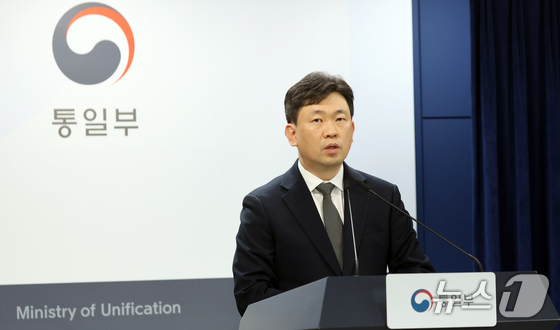
During a regular briefing, Unification Ministry spokesperson Yoon Min-ho stated that the Ministry of Unification has approved the North Korean resident contact report and the export application submitted by Jeju Special Self-Governing Province in accordance with relevant legal requirements.
He added that since local governments are not federal authorities, they are treated as corporations, and noted that the Ministry of Unification cannot confirm specific details or progress while considering the positions of the relevant local governments.