

The South Korean government announced on June 19 that its regular monitoring conducted in the second quarter of this year found no abnormalities regarding concerns over radioactive wastewater discharge from North Korea’s Pyongsan uranium plant.
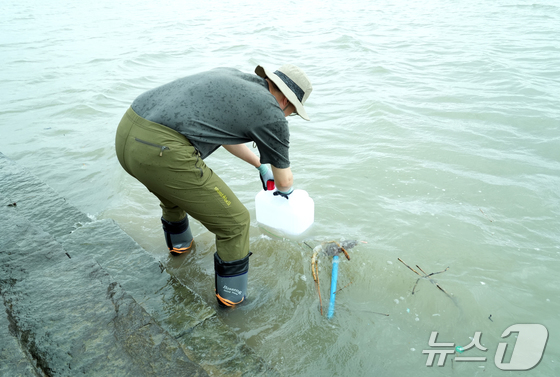
The Ministry of Unification, in collaboration with the Nuclear Safety Commission, the Ministry of Oceans and Fisheries, and the Ministry of Climate, Energy, and Environment, collected samples from seven key monitoring points: three in the Ganghwa area, two at the Han River and Imjin River estuaries, and two along the Incheon coastline. They analyzed these samples for the presence of uranium and five types of heavy metals.
The analysis revealed that in the second quarter, uranium concentrations ranged from 2.153 to 2.616 parts per billion (ppb) in the Ganghwa area, 0.133 to 0.147 ppb at the Han River and Imjin River estuaries, and 2.819 to 3.025 ppb along the Incheon coastline. Government officials stated that these levels are all within normal ranges.
Regarding heavy metals, the investigation examined cadmium, arsenic, mercury, lead, and hexavalent chromium. The results confirmed that all monitoring points recorded levels below environmental standards or were undetectable.
The Pyongsan uranium plant, a uranium refining facility located in North Korea’s North Hwanghae Province, has been a source of concern due to potential wastewater discharge. This has raised ongoing worries about water quality in the Han River, Imjin River estuaries, and along the western coast of South Korea.
The government has committed to continuing its regular quarterly monitoring in the future to ensure the safety of these water bodies.