

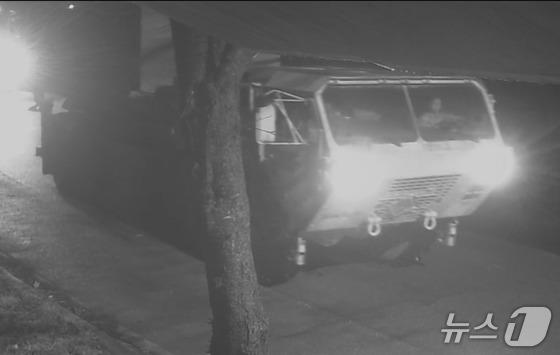
U.S. forces have recently been observed redeploying Terminal High Altitude Area Defense (THAAD) equipment from South Korea to the Middle East, following the earlier transfer of Patriot air defense systems. This ongoing shift of air defense assets from the Korean Peninsula has sparked concerns about potential vulnerabilities in the air defense networks of Middle Eastern countries, including those opposing Iran.
According to a comprehensive report by News1 on Wednesday, a convoy was seen departing the THAAD site at Seongju base around 12:30 a.m. (South Korean time) on March 3.
THAAD is designed to intercept missiles at high altitudes between 40 to 150 km (about 25 to 93 miles) above ground. A typical THAAD battery consists of six mobile launchers, each capable of firing eight interceptors, an AN/TPY-2 radar with a detection range of up to 3,000 km (about 1,864 miles), and a control center.
The equipment that left the base on March 3 is believed to include interceptors and launchers. Sources indicate that the mobile radar and fire control center remained at Seongju base.
Following a Washington Post report on the Pentagon’s plans to relocate THAAD equipment from South Korea to the Middle East, the confirmed departure of THAAD launchers from Seongju base has solidified this redeployment as fact.
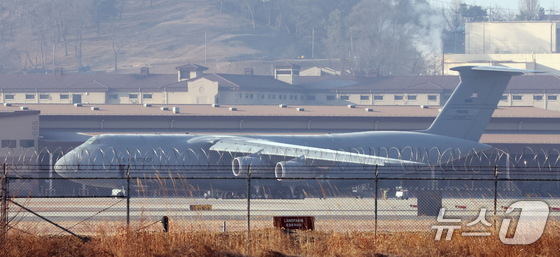
Prior to this, U.S. Forces Korea had already moved Patriot systems and large transport aircraft, including C-5s and C-17s, to Osan Air Base. Some C-17s departed Korea between March 5-6, traveling through the U.S. before appearing in Europe and the Mediterranean, indicating a steady flow of U.S. air defense assets to the Middle East.
Neither U.S. nor South Korean officials have officially confirmed these movements. However, during a recent Cabinet meeting, President Lee Jae Myung acknowledged the situation, stating that while it opposes the withdrawal of air defense assets by U.S. forces, it must also recognize that it cannot fully dictate their military decisions.
THAAD Withdrawal Raises Concerns: Is Iran’s Retaliation More Formidable than Anticipated?
The recent withdrawals of U.S. military assets from South Korea coincide with ongoing U.S. airstrikes against Iran and Israel, which have entered their second week. These actions have reportedly impacted U.S. air defense capabilities in the region, prompting efforts to reinforce and enhance air defense systems.
The removal of THAAD systems is particularly significant given the political and diplomatic controversies surrounding their initial deployment in South Korea. The swift redeployment of these assets underscores the urgency of bolstering air defenses in the Middle East, which has evidently become a top priority for U.S. military planners.
On March 2, Iran’s Revolutionary Guard claimed to have destroyed an AN/FPS-132 early warning radar at Qatar’s Al Udeid Air Base using drone strikes. Reports also indicate damage to THAAD radar systems at the Al Ruwais Air Base in the UAE and Muwaffaq Salti Air Base in Jordan.
These developments suggest that U.S. air defense systems may be depleting faster than anticipated, or that U.S. intelligence has detected Iran’s possession of more advanced weaponry than previously thought.
Iranian officials have expressed confidence, hinting that they have not yet fully deployed their military capabilities. This suggests the potential for a prolonged conflict, raising concerns among U.S. and allied forces.
Since the airstrikes began, Iran has launched over 1,200 projectiles, primarily believed to be Shahed suicide drones. Analysts suggest this strategy aims to exhaust U.S. air defense systems with relatively inexpensive drones while reserving more destructive ballistic missiles for decisive strikes.
Iran Claims Hypersonic Missile Capability, Challenging Current Air Defense Systems
On the fourth day of airstrikes, Iranian Defense Ministry spokesman Reza Talaie stated that it has not yet employed the advanced weapons, hinting at preparations for an extended conflict. While specific details were not provided, experts believe he was referring to hypersonic ballistic missiles that Iran claims to have developed.
The Iranian Revolutionary Guard previously unveiled the Fattah hypersonic ballistic missile, boasting a range of 1,400 km (about 870 miles) and speeds of Mach 13 to 15. They have since showcased an upgraded version of this system.
Military analysts warn that if Iran’s hypersonic ballistic missiles prove operational, they could potentially neutralize air defense systems deployed by Israel and U.S. forces in the Middle East.
During last June’s brief conflict with Israel, Iran reportedly used Fattah missiles to penetrate Israel’s Iron Dome and Arrow missile defense systems, striking targets in Tel Aviv.
Professor Choi Gi-il from Sangji University’s Department of Military Studies explained that current air defense systems like Iron Dome and THAAD are not designed to intercept missiles traveling at Mach 10 or higher. If Iran combines hypersonic missile technology with nuclear warhead miniaturization, the situation could become even more dire. This may have motivated U.S. airstrikes to eliminate this emerging threat.
Concerns Over Weakened Defenses as Patriot and THAAD Systems Withdraw; South Korean Officials Downplay Impact
The continued withdrawal of U.S. air defense assets from the Korean Peninsula has raised alarm about potential vulnerabilities in South Korea’s security posture.
Critics argue that the removal of these systems has already created gaps in South Korea’s ability to intercept North Korean intercontinental ballistic missiles (ICBMs), hypersonic missiles, and submarine-launched ballistic missiles (SLBMs). There are concerns that further withdrawals may occur.
Some analysts warn that assets removed from the Korean Peninsula may not return promptly due to the ongoing crisis in the Middle East, exacerbating security concerns.
South Korean officials have attempted to allay these fears. A statement from the presidential office asserted that regardless of U.S. force movements, the military capabilities, defense spending, defense industry capacity, and troop morale ensure our deterrence against North Korea remains robust. However, specific details about the current situation remain unclear.
The potential return of THAAD launchers to Seongju base is expected to face significant challenges. The THAAD Withdrawal Peace Meeting, a civilian activist group, has pledged to resist any reintroduction of THAAD until it is completely removed from Korean soil, demanding an immediate halt to what they term deceptive THAAD operations and the withdrawal of all related systems, including radar components.