

The South Korean government is closely monitoring business stances and trade developments. The Donald Trump administration’s initiation of a Section 301 investigation targeting unfair trade practices from 16 economic entities, including South Korea, has once again created tension among South Korean small and medium-sized exporters.
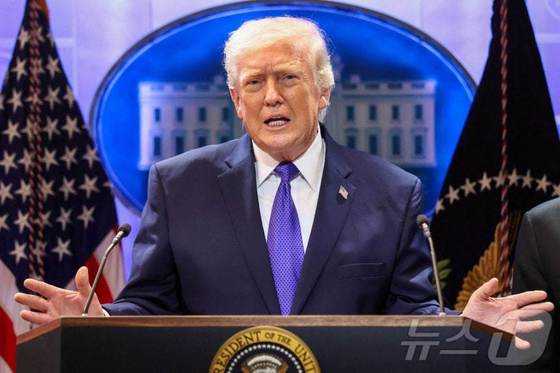
After the U.S. Supreme Court ruled that imposing reciprocal tariffs based on the International Emergency Economic Powers Act (IEEPA) exceeded legal authority, President Trump immediately imposed a global 15% tariff. He based this on Section 122 of the Trade Act, which allows for temporary import surcharges or quotas of up to 15% for a maximum of 150 days.
This Section 301 investigation is seen as a follow-up measure to secure additional grounds for imposing tariffs in anticipation of the expiration of the temporary tariff measures.
U.S. Section 301 Probe Targets Broad Manufacturing Sector, Including Steel and Aluminum
According to industry and government sources on Friday, the U.S. Trade Representative (USTR) launched a Section 301 investigation targeting 16 economic entities, including South Korea.
The investigation focuses on whether the policies and business practices of various countries lead to structural overcapacity and excess production in manufacturing sectors such as steel, aluminum, automotive, petrochemicals, electric vehicles, electronics, and shipbuilding.
Many of South Korea’s key export items overlap with the sectors under investigation, prompting businesses to remain vigilant about the possibility of additional tariffs.
Export-oriented small and medium-sized enterprises are taking a cautious approach, similar to when the U.S. Supreme Court ruled that reciprocal tariffs were illegal, opening the way for refund applications on reciprocal tariffs imposed since April 5 of last year.
Companies are wary of publicly expressing their positions, fearing direct or indirect retaliation from the U.S. administration. They are also carefully considering legal reviews, cost-benefit analyses of potential refunds, and possible retaliatory measures when deciding on tariff refund applications.
A corporate representative stated that the government plans to actively negotiate with the U.S. to ensure that the balance of benefits secured in the existing Korea-U.S. tariff agreement is not compromised and that it receives treatment that is not unfavorable compared to major countries. They added that it will closely monitor the government’s responses and industry trends.
Another representative explained that they’re focusing on enhancing the core business competitiveness in terms of product value, customer service, and supply chains to overcome tariff pressures in the local market. It plans to prepare appropriate responses based on various scenarios that may arise from the investigation results.
Seen as America-First Pressure Tied to Reshaping Global Supply Chains in Key Industries
The Section 301 investigation raises concerns about potential direct impacts, as it encompasses not only direct tariff imposition but also non-tariff barriers in digital and service sectors.
In its 2026 Trade Policy Report, the USTR identified regulations such as restrictions on data movement, demands for algorithm transparency, and mandatory domestic server installations as discrimination against U.S. platform companies, referencing Section 301.
An industry insider remarked that the Section 301 investigation strongly indicates a preference for domestic priorities in the restructuring of global supply chains encompassing batteries, electric vehicles (EVs), steel, platforms, and digital industries. They advised that rather than reacting to immediate changes in tariff rates, it should accept the situation from a long-term perspective and prepare appropriate measures.
Meanwhile, the South Korean government plans to maintain the agreements made during the Korea-U.S. tariff negotiations and continue close consultations with the U.S. to prevent any unfavorable circumstances compared to major trading partners.