As the deadline for negotiations set by President Donald Trump with Iran looms just one day away, all eyes are on how this might affect the ongoing talks about U.S.-South Korea nuclear-powered submarine construction and nuclear agreement revisions, which have yet to gain traction.
While the South Korean government has made considerable headway in its preparations, experts predict that if the U.S. and Iran fail to reach an agreement by the deadline, potentially leading to further military action, it could inevitably weaken the momentum for U.S.-South Korea discussions. This is primarily because U.S. strategic priorities may relegate South Korea-related issues to a lower priority.
Trump’s Stone Age Ultimatum D-1: Ratcheting Up Pressure with References to U.S. Troops in South Korea
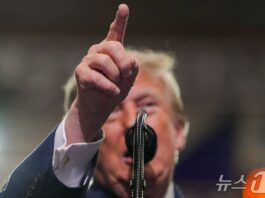
During a White House press conference on Monday, President Trump issued a stark warning: if Iranian leadership fails to comply with his demands, including opening the Strait of Hormuz, by 8:00 p.m. on Tuesday, he would authorize bombing of all Iranian infrastructure, including power plants and bridges, effectively plunging the country back into the Stone Age.
Trump declared, They have until tomorrow. After that, they won’t have any bridges or power plants left. They’ll literally be thrown back to the Stone Age. It can make this happen in just four hours if it decides to.
This marks the second time in less than a week that Trump has employed the Stone Age rhetoric, having first used it in a public address on April 1, signaling an escalation in his pressure tactics.
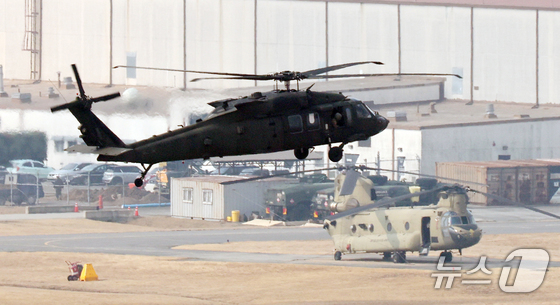
During the same event, Trump explicitly voiced his dissatisfaction with South Korea. He stated that it has 45,000 troops right at the doorstep of Kim Jong Un, who possesses a significant nuclear arsenal, and South Korea hasn’t helped them. It’s worth noting that this figure overstates the actual number of U.S. troops stationed in South Korea by about 16,000, as the real count is approximately 28,500.
In doing so, Trump delivered a dual message: military pressure on Iran while simultaneously pushing allies like South Korea to increase their contributions.
U.S. Shifts Focus to Iran conflict: U.S.-South Korea Talks Reduced to Perfunctory Communication
A prolonged Middle East crisis could directly impact discussions between the U.S. and South Korea regarding nuclear submarine construction and revisions to their nuclear agreement.
A diplomatic insider revealed that the U.S. is currently channeling its policy resources into the Iran conflict. As a result, U.S.-South Korea working-level discussions have been reduced to mere formalities. Meaningful progress in these talks will likely only resume once the Iran situation stabilizes to some degree.
In January, the South Korean government launched a Nuclear Agreement Revision Interagency Task Force to prepare for technical cooperation and address issues related to uranium enrichment and nuclear fuel reprocessing. At the time, Foreign Minister Chung Eui-yong emphasized the need to pursue both enrichment and reprocessing, describing it as a once-in-a-lifetime opportunity.
Prior to this, in December, the Ministry of Defense established a Nuclear Submarine Interagency Task Force (TF), which includes participation from the Ministry of Foreign Affairs.
However, as the U.S. stance on Iran’s nuclear program hardens, the situation appears to be growing increasingly complex.
Some analysts express concern that as the U.S. reinforces its position of zero tolerance for any nuclear enrichment in Iran, it may lead to a resurgence of policies limiting enrichment and reprocessing in nuclear agreements with allies.
Trump’s Dissatisfaction With Allied Contributions Raises Concerns About U.S.-South Korea Negotiations
Adding another layer of complexity is President Trump’s transactional alliance approach. Although the U.S. and South Korea agreed last November on a Joint Fact Sheet covering 350 billion USD in investment, tariff adjustments, and security cooperation, linking these discussions to contributions in the Middle East could potentially derail negotiations.
Analysts suggest that Trump’s expressed dissatisfaction with South Korea’s contributions to the Middle East situation may indicate his intention to present South Korea with a hefty bill, even after the Iran conflict concludes.
Park Won-gon, a professor of North Korean studies at Ewha Womans University, observed that Trump is likely to increase demands. He views alliances in terms of transactional costs and perceives the current conflict as a fight for oil-importing countries like South Korea and Japan. If he believes there’s been insufficient contribution, he’ll likely demand more. Park added that this could extend beyond defense costs to include tariffs, potentially increasing the burden during post-war negotiations.
Kim Jae-cheon, a professor at Sogang University’s Graduate School of International Studies, noted that given Trump’s tendency to intertwine security and economic issues, there’s a possibility of retaliatory delays in nuclear submarine procurement or nuclear agreement revisions. However, he also suggested that rather than completely overturning existing agreements on nuclear submarines or nuclear cooperation, it may be more pragmatic for the U.S. to demand increased contributions in defense cost negotiations, such as expenses related to U.S. troop deployments in South Korea.