The U.S. is rapidly escalating military tensions in the Middle East by enforcing a counter-blockade in the Strait of Hormuz. This military response, coming immediately after the collapse of ceasefire negotiations with Iran last weekend, raises the possibility of an armed conflict between Iran and the U.S. over control of the strait.
This situation significantly increases the likelihood that the U.S. will again request South Korea to dispatch naval vessels. It could reignite U.S. pressure on allies to contribute to the Middle East crisis.
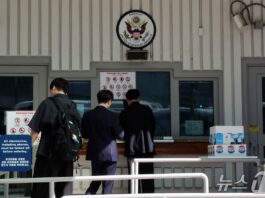
Particularly, with 26 South Korean ships and 173 crew members stranded in the Strait of Hormuz area, South Korea now faces the triple challenge of ensuring the safety of its citizens, maintaining relations with the Middle East for energy cooperation, and coordinating with the U.S.
No Passage Through Strait of Hormuz Without U.S. Approval… Maritime Blockade Enforced Around Iran
The U.S. Central Command initiated measures to block access routes to Iranian ports in the eastern Gulf of Oman and the Arabian Sea near the Strait of Hormuz at 10:00 a.m. local time on Monday. This action came just one day after President Donald Trump mentioned the blockade measure.
This crisis escalated after the breakdown of ceasefire negotiations between the U.S. delegation, led by Vice President J.D. Vance, and the Iranian delegation, headed by Parliament Speaker Mohammad Bagher Ghalibaf, in Islamabad, Pakistan on April 11.
While the specific details of the U.S. blockade measures need further confirmation, the U.S. Central Command stated in a notice issued hours before the blockade took effect that all vessels entering or leaving the blockade zone without permission will be subject to interception, return, or seizure. However, they clarified that neutral passage through the Strait of Hormuz for ships heading to or departing from non-Iranian destinations will not be obstructed.
Observers predict that the blockade will be implemented with U.S. Navy fleets in the Gulf of Oman and Arabian Sea verifying ships’ origins and destinations through maritime communications, and potentially exercising control through shows of force. The closest U.S. Navy presence is the Fifth Fleet based in Bahrain.
The key factor now is Iran’s response. There are concerns that Iran might retaliate by blockading the Bab el-Mandeb Strait, the gateway to the Red Sea near Yemen and Somalia. The Bab el-Mandeb Strait, connecting to Egypt’s Suez Canal, is a crucial maritime passage linking the Red Sea and the Indian Ocean, handling about 12% of global oil traffic and serving as an essential trade route between Asia and Europe. Iran might attempt to gain control over this area through the Yemen Houthi rebels, who are aligned with Iran.
Some analysts predict that tensions in this region will significantly escalate, with the possibility of physical confrontations between the U.S. Navy and Iran, or accidental clashes during mutual shows of force.
Trump Likely to Pressure Allied Commitment Again… South Korea on Alert for Potential Naval Deployment Requests
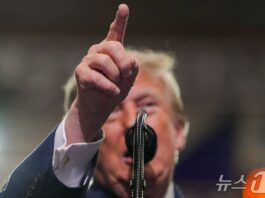
President Trump has been consistently demanding allied support since striking Israel and Iran. With the Middle East situation deteriorating again due to the blockade of the Strait of Hormuz, after nearly stabilizing with a U.S.-Iran ceasefire declaration, Trump is likely to renew his calls for allied contributions.
Trump has recently emphasized the dependence of Asian countries like South Korea and Japan on the Strait of Hormuz for oil supply, urging the need for support, including potential naval deployments. He has particularly hinted at possible retaliatory measures’ against countries hosting U.S. troops if they don’t provide support, using this crisis as a test of allies’ loyalty.
South Korea’s Cheonghae Unit, operating near the Gulf of Aden and the Somali Basin close to the Bab el-Mandeb Strait that Iran might blockade, has consistently been considered a candidate for deployment since the Middle East crisis began. Experts suggest that if the U.S. blockade measures persist, Washington might specifically request the Cheonghae Unit to participate in maritime inspections and searches.
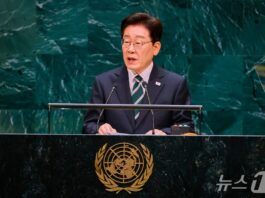
In response to this situation, the South Korean government has urgently dispatched Foreign Minister’s Special Envoy Jung Byung-ha to Iran for working-level negotiations, focusing on maintaining communication with Iran. Envoy Jung is likely reporting relevant information back to Seoul for the government’s assessment of the ongoing situation.
Experts advise maintaining a cautious approach to direct military involvement while suggesting that if an official U.S. request is made, South Korea should use domestic procedures such as legal reviews and parliamentary consent to buy time for response, and align its strategy with other allies like Japan.
Professor Kim Jung of the University of North Korean Studies stated that it’s advisable for South Korea to refrain from direct military force projection such as naval deployments. Instead, considering other forms of response like economic support or non-combat contributions might be necessary.
Professor Park Won-gon of Ewha Womans University’s North Korean Studies Department added that if an actual (deployment) request comes, it needs to secure time through procedures like parliamentary consent and coordinate with other allies like Japan. However, it should also keep the possibility of deployment open in the response strategy.