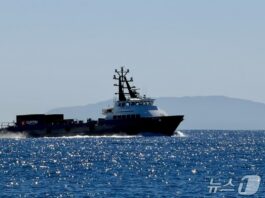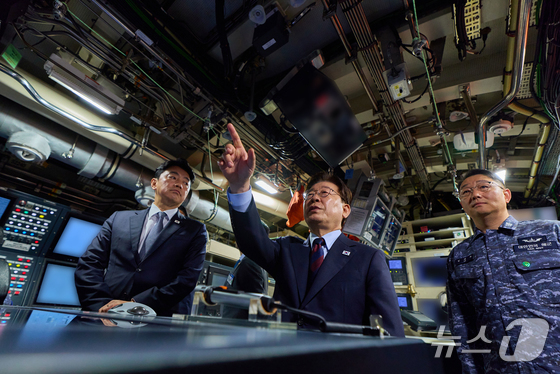
South Korea will take command of the world’s largest maritime joint exercise, Rim of the Pacific Exercise (RIMPAC), led by the U.S. in Hawaii at the end of June. This marks the first time since joining the exercise in 1990, and the first for an Asian nation to command the combined naval forces.
A South Korean admiral will serve as the Combined Force Maritime Component Commander, overseeing the exercise under the direction of the Combined Task Force Commander (U.S. 3rd Fleet Commander). It’s expected to be a unique sight with naval forces from over 30 participating countries operating under the command of a South Korean admiral.
The South Korean Navy plans to showcase its capabilities by deploying elite forces, including the 3,000-ton submarine Dosan Ahn Chang-ho, developed with indigenous technology, and the latest Aegis destroyer King Jeongjo, capable of intercepting North Korean missiles.
South Korea’s leadership role in the biennial RIMPAC exercise demonstrates the Navy’s elevated status, reflecting its rapid growth from a time when it couldn’t build a single warship. It’s also a prime opportunity to showcase the Korean Navy’s operational command capabilities, potentially bolstering the case for an early transfer of wartime operational control (OPCON).
However, with greater visibility comes greater scrutiny. Some argue that the U.S. positioning South Korea at the forefront of the global security stage is a strategic move to assign more responsibility to South Korea as part of its strategic flexibility plan.
As South Korea’s Military Capabilities Increase, U.S. Focuses More on Countering China… The Proportional Equation of Strategic Flexibility
South Korea’s military capabilities and the U.S. strategic flexibility in the Indo-Pacific region are directly proportional. As South Korea’s capacity to counter North Korea, China, and Russia alongside the U.S. and Japan grows, the U.S. gains more latitude to shift its focus from the Korean Peninsula to the broader Indo-Pacific region.
The security strategy of a potential second Donald Trump administration can be summarized as reducing U.S. burden on allies and deploying military assets centered on U.S. interests. The administration has been particularly vocal in demanding increased defense spending and military strengthening from allies like South Korea, revealing its intent to make countering China the sole objective of its Indo-Pacific strategy.
This approach is reflected in the National Security Strategy (NSS), the highest-level U.S. national security document released last December.
In the NSS, the U.S. stated that the era when America acted as Atlas, shouldering the burden of global order, has ended. Allies and partners must fairly share the burden of defense.
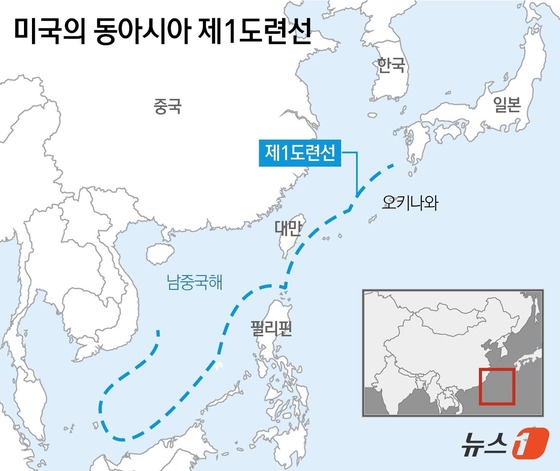
The NSS emphasized that the U.S. and its allies will enhance their capacity to deter Chinese attempts to seize Taiwan by linking maritime security issues along the First Island Chain. It stated that it will build military power capable of deterring aggression anywhere along the First Island Chain, but this cannot be done by U.S. forces alone. The allies must spend and do much more for collective defense.
The First Island Chain, a maritime defense line connecting Japan’s Kyushu, Taiwan, the Philippines, and the South China Sea, is also known as the containment line to prevent Chinese invasion of Taiwan and expansion into the Pacific. The report emphasized the strategic importance of the South China Sea, stating that any competitor’s dominance in this area would cause extensive damage to U.S. interests. Notably, this NSS made no mention of North Korea.
U.S. Secretary of Defense Pete Hegseth, in his speech at the Asia Security Conference (Shangri-La Dialogue) late last month, expressed concern about China’s historic military build-up and expanding military activities in the Pacific region and beyond. He stated that what it seeks is a stable equilibrium that benefits both the U.S. and the allies.
The phrase benefits all is not entirely accurate. The U.S. considers defending the First Island Chain crucial to its core interests. Therefore, it wants South Korea and Japan to increase their defense budgets and enhance their defense capabilities to handle security issues previously managed by U.S. forces independently. This is part of the U.S. plan for allies to play a larger role in safeguarding American interests.
In other words, the U.S. giving South Korea command of RIMPAC can be interpreted as providing justification for an early OPCON transfer while simultaneously expressing its intention to have South Korea shoulder more military responsibilities for U.S. national interests.
In this context, this RIMPAC exercise may serve as an opportunity for the U.S. to evaluate our military’s maritime command capabilities and test whether South Korea can take on a larger role in Northeast Asia.
USFK Commander Likens South Korea to a Dagger, Aircraft Carrier Aimed at China… Increasingly Overt Strategic Flexibility
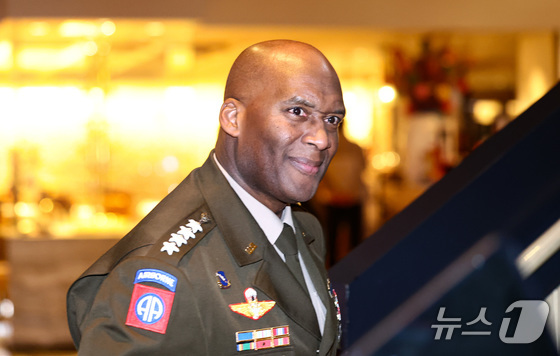
The U.S. intention to involve South Korea more deeply in its strategy to counter China is also evident in the statements of U.S. Forces Korea (USFK) Commander General Xavier Brunson.
In a U.S. Army War College podcast last month, Brunson described South Korea as looking like a dagger pointed at the center of Asia (towards China), while characterizing Japan as a kind of shield blocking China’s ambitions to extend beyond the South China Sea. In May last year, he also likened South Korea to a fixed aircraft carrier floating between Japan and China.
These statements are widely interpreted as revealing a view of South Korea as a frontline state in countering China.
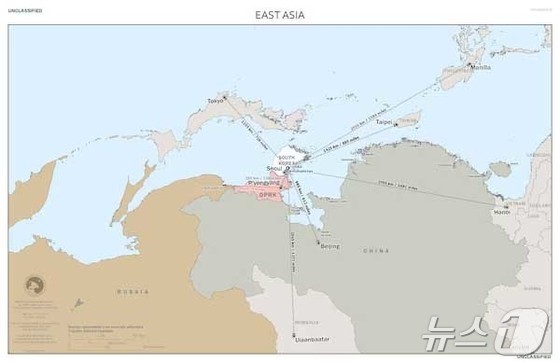
In November last year, Brunson stirred controversy by publishing an inverted map of East Asia for USFK educational purposes on the USFK Command website. The map, which flipped North and South Korea, showed straight-line distances between Camp Humphreys in Pyeongtaek and major Northeast Asian cities.
Brunson explained that changing perspective shows (the Korean Peninsula) as a strategic central location with accessibility, reachability, and influence. He added that the inverted Northeast Asian map reveals South Korea, Japan, and the Philippines as a connected network, a strategic triangle.
This led to speculation that USFK may no longer be a stationary force on the Korean Peninsula to deter North Korea, but could become a rapid response force for Taiwan and China contingencies under strategic flexibility.
Brunson didn’t stop there. He recently introduced the concept of a Regional Sustainment Hub (RSH), outlining plans to make South Korea a logistics hub for U.S. forces’ Maintenance, Repair, and Operations (MRO). This appears to be an intention to assign South Korea not only the role of spearheading efforts to counter China but also to serve as a logistics base for U.S. forces. This raises concerns about South Korea potentially becoming directly embroiled in conflicts.
While it’s positive for our military to showcase its status as the first Asian country to serve as the Combined Naval Forces Commander in RIMPAC and to gain jobs and economic benefits by handling MRO for U.S. forces, we must also consider how neighboring countries view this.
It’s not an exaggeration to say that it’s South Korea’s destiny to maintain relations with neighboring China while not defying the order led by its blood ally, the U.S. Isn’t it the harsh reality of diplomacy that the interests of an alliance don’t always align perfectly with the own?