

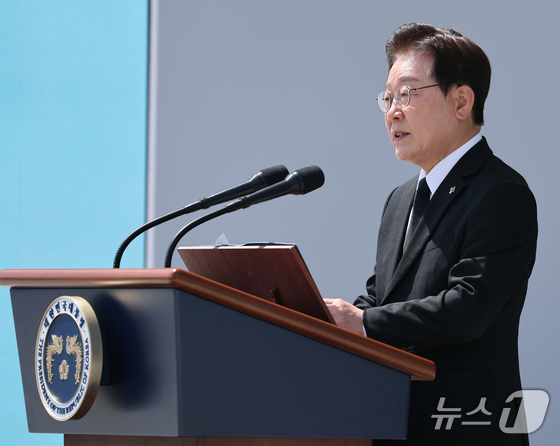
President Lee Jae Myung’s upcoming eight-night, nine-day European tour, starting June 9, has sparked considerable interest, with the potential meeting with U.S. President Donald Trump taking center stage.
This heightened attention stems from the numerous critical issues requiring bilateral discussion, including further tariff negotiations and the transfer of wartime operational control.
While President Trump’s attendance was initially uncertain, his official confirmation to participate in the G7 summit in France has significantly increased the likelihood of a meeting between the two leaders.
Anticipation Builds for a Potential Third Summit with Trump
The Blue House announced on June 7 that President Lee will embark on a European tour from June 9 to 18, visiting Belgium, Italy, and France in succession.
The cornerstone of this diplomatic mission is Lee’s participation in the G7 summit in Évian, France, from June 16 to 17, marking his second consecutive invitation to this prestigious gathering.
Public interest is primarily focused on whether a U.S.-Korea summit will materialize. Despite initial doubts due to tensions with European nations and the Iran situation, President Trump officially declared his intention to attend via social media on June 3.
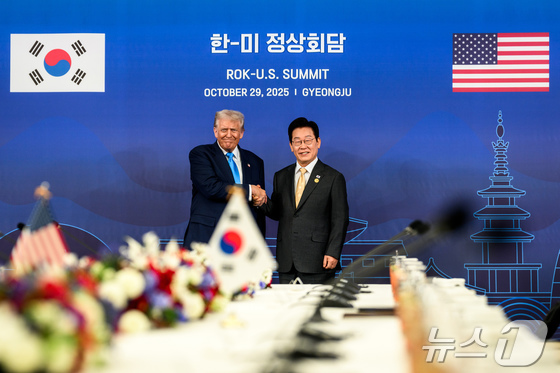
Should President Lee and President Trump convene during this trip, it would mark their third summit. Their previous encounters include Lee’s visit to the U.S. last August and a subsequent meeting during the Asia-Pacific Economic Cooperation (APEC) summit in Gyeongju last October.
Tariffs and Security Issues Likely to Dominate Discussions
If the U.S.-Korea summit proceeds, tariff concerns are expected to be a central topic. On June 2, the U.S. Trade Representative (USTR) revealed findings from a Section 301 investigation related to forced labor, hinting at a potential additional 12.5% tariff on Korean goods.
While the Korean government aims to maintain tariffs below the mutually agreed 15% rate from last year’s negotiations, the U.S.’s openness to imposing additional tariffs has created a tense atmosphere.
The transfer of wartime operational control may also be on the agenda. Although both nations broadly agree on the transfer itself, they differ by about a year on the specific timeline for implementation.
The Blue House is currently exploring options for a bilateral meeting between Presidents Lee and Trump but emphasizes that no definitive plans have been set. Some analysts suggest that given the multilateral nature of the G7, a less formal pull-aside meeting might occur instead of a full-fledged summit.
Broadening Diplomatic Horizons in Europe
This European tour signifies an effort to expand diplomatic reach as President Lee enters his second year in office. Over the past year, the administration has prioritized announcing Korea’s return to the global stage and normalizing diplomatic relations by visiting 14 allied nations.
The current trip is seen as a strategic move to extend diplomatic engagement into Europe, where Korean corporate presence has been comparatively limited, aiming to bolster economic cooperation and pave the way for Korean businesses to establish a stronger foothold.
National Security Office Director Wi Sung-lac stated in a June 5 briefing that the European tour and G7 summit attendance will serve as a springboard to expand Korea’s diplomatic horizons, building on the Lee administration’s first-year achievements.
He added that it anticipates this will further cement Korea’s position as a globally responsible power aspiring to G7 Plus status by increasing our involvement in major international issues.