Experts propose a national strategy that views the Tumen River and Arctic routes as a single strategic space to counter the intensifying cooperation between North Korea, China, and Russia regarding China’s maritime access through the Tumen River. This approach aims to link North Korea policies with Arctic strategies.
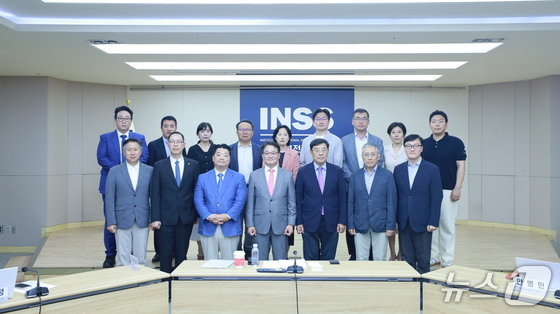
The Institute for National Security Strategy (INSS) held its third Arctic Security Forum on Tuesday in the 12th-floor conference room to discuss these proposals.
The forum, titled, Arctic and North Korea Strategy: Simultaneous Defense of the East Sea and Indo-Pacific, gathered over 20 experts in security, diplomacy, and maritime affairs. They examined the structural implications of the emerging Tumen River-Arctic corridor on North Korean strategy and the order in the East Sea and Indo-Pacific across two sessions.
Recently, collaboration among North Korea, China, and Russia over the Tumen River’s maritime access has intensified. China, previously lacking access through the Tumen River, is now in talks with North Korea and Russia to secure this route. Using the Tumen River could dramatically reduce China’s Arctic shipping times and potentially expand military cooperation among the three nations in the East Sea.
In his opening remarks, INSS Director Kim Sung-bae stated that the new bridge being constructed over the Tumen River between North Korea and Russia is more than just infrastructure; it’s a tangible declaration of a new geopolitical order. South Korea can no longer afford to remain a non-Arctic nation.
Professor Shin Beom-sik from Seoul National University explained that as the Korean Peninsula issue connects to the Arctic via the Tumen River, the Arctic transforms from a purely economic space into a strategic area where maritime security and North Korea policies intersect. He suggested developing a Korean Arctic Security concept to integrate the currently fragmented North Korea strategy and Arctic policies.
Choi Jang-ho, head of the Korea Institute for International Economic Policy’s North Korea International Cooperation Team, noted that the new vehicle bridge over the Tumen River is designed 1 meter lower than the existing rail bridge, effectively blocking China’s maritime access. He added that the recent China-Russia summit’s joint statement referenced Article 9 of the 1991 border agreement, signaling a new phase in the trilateral competition over the Tumen River estuary.
Professor Kim Young-jun from the National Defense University highlighted a crucial difference: While the U.S. and its allies view the Arctic as a potential military confrontation zone with Russia, South Korea sees it as an economic opportunity. He emphasized the need for a comprehensive risk analysis of North Korea-Russia cooperation.
INSS Chief Researcher Kim In-tae identified the Tumen River’s maritime access as a key strategic asset for North Korea in its relations with China.
Professor Nam Ki-jeong from Seoul National University criticized South Korea’s approach: South Korea manages its North Korea strategy and Arctic policy separately, failing to integrate them into a cohesive framework. Japan has already attempted this integration, potentially leading to strategic disparities between Korea and Japan that could evolve into security issues.
Korea Maritime Institute (KMI) Senior Research Fellow Lee Seong-woo stressed that it must view the Arctic route as a strategic asset for Arctic and Korean Peninsula security, linked to the East Sea region.
INSS Associate Researcher Joo Dong-jin observed that since the Hormuz crisis, the Arctic route has become a complex issue rather than an isolated one. Gradually establishing South Korea’s role as a quasi-Arctic nation should be the foundation of the strategy.
Navy Captain Lee Jin-seong emphasized the East Sea’s growing strategic importance and security risks. He urged the swift development of a national strategy combining icebreaker and submarine capabilities.