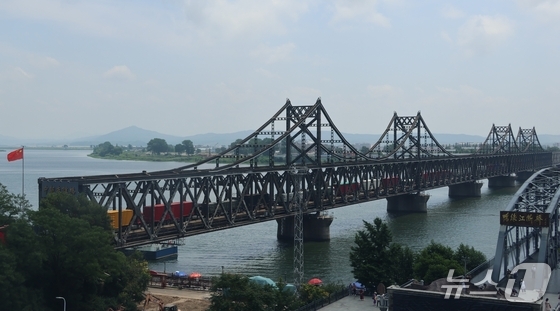
It has been more than a month since Chinese President Xi Jinping visited Pyongyang for a summit with North Korean leader Kim Jong Un, where the two leaders agreed to strengthen practical cooperation and emphasized the full reopening of border crossings and expanded people-to-people exchanges. Has the summit brought tangible changes to Dandong, the Chinese city in Liaoning Province across the Yalu River from North Korea’s border city of Sinuiju? A two-night, three-day visit to the China-North Korea border area with cross-border traders from June 30 to July 2 revealed several notable developments. The first striking sight upon returning to Dandong after about eight months was the long line of trucks waiting outside Dandong Customs. These trucks, all headed for North Korea, crossed the Sino-Korean Friendship Bridge into Sinuiju over the course of roughly three hours. The uninterrupted line of trucks stretching from Dandong Customs, across the Yalu River bridge, to the Sinuiju customs office was a scene that had not been visible last year.
“Trade between China and North Korea began increasing gradually in December last year and accelerated significantly after Chinese Foreign Minister Wang Yi visited Pyongyang in April,” one trader accompanying the trip said. “Before the COVID-19 pandemic, more than 300 trucks crossed into North Korea each day at the peak of bilateral trade. We’re now approaching that level again.” Official data show bilateral trade reached approximately $326 million in April, the highest monthly figure since November 2017. Traders involved in cross-border commerce, however, said the actual volume of goods entering North Korea is significantly higher than official statistics indicate. They said large quantities of construction materials, medical equipment and pharmaceuticals are being shipped to support North Korea’s regional development projects, which remain a government priority.
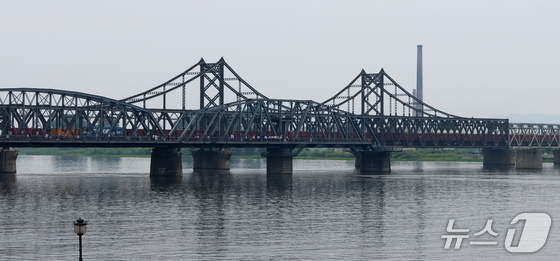
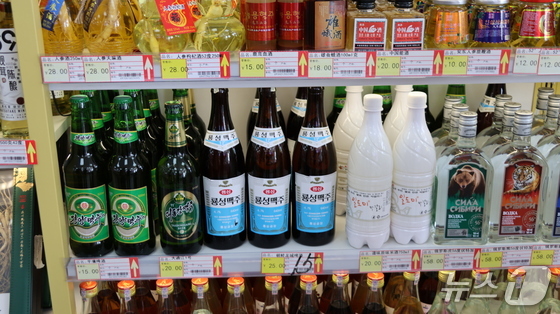
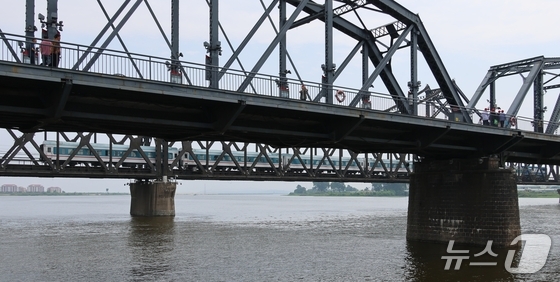
Stores near the Yalu River railway bridge displayed a wide range of products imported from North Korea. In addition to Taedonggang Beer, retailers sold Ryongsong Beer, Bonghak Beer, Pyongyang Beer, and various other alcoholic beverages and food products. The following morning, freight trains traveling from Dandong to Pyongyang’s Sopo Station and from Sopo back to Dandong were observed crossing the border. Around 11 a.m., an international passenger train departed Dandong for Pyongyang via the Yalu River railway bridge. International rail service currently operates four times a week between Beijing and Pyongyang and daily between Dandong and Pyongyang.
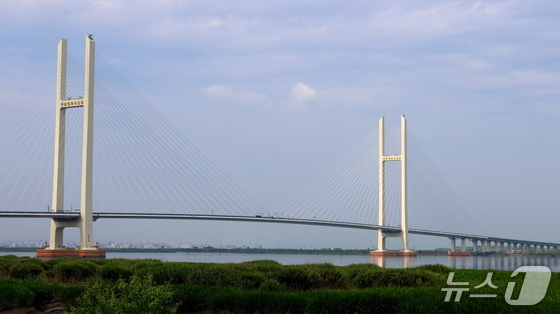
Momentum also appears to be building for the long-delayed opening of the New Yalu River Bridge following the summit. On July 1, construction crews on the North Korean side were actively building customs facilities and logistics warehouses beyond the bridge. A bus was also seen crossing the bridge. Based on current construction progress, however, North Korea’s preparations are not expected to be completed until October. A Dandong-based trader said speculation about opening the bridge has circulated for years, but even the painting of the North Korean customs building has yet to be completed. “The opening ceremony cannot be scheduled until construction on the North Korean side is finished,” the trader said. He added that another variable is the completion of the new road bridge connecting North Korea and Russia over the Tumen River. “It’s likely the New Yalu River Bridge will open only after North Korea and Russia hold the inauguration ceremony for the Tumen River road bridge,” he said. The New Yalu River Bridge was completed in 2014, but its opening has been delayed for more than a decade because North Korea has not finished the connecting roads and customs infrastructure.
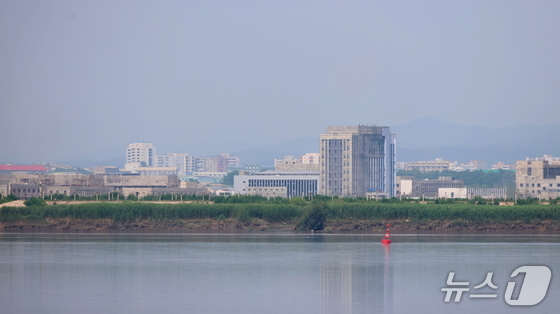
Along with Vladivostok, Dandong is one of the few cities where North Korean residents outnumber South Koreans. Traders estimate that roughly 60,000 to 70,000 North Korean workers are currently employed in Dandong, with the number steadily increasing since new workers began arriving last year. According to one trader, some North Korean workers previously employed in Russia’s Primorsky region have relocated to Dandong, where working conditions are considered better. Monthly wages for North Korean workers at processing factories have also risen sharply—from $280–$350 to $490–$530—as local manufacturers compete for scarce labor.
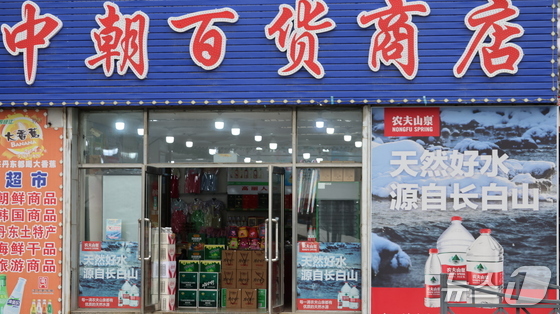
Traders interviewed in Dandong unanimously said that China’s easing of restrictions on trade with North Korea became apparent after the visits to Pyongyang by Foreign Minister Wang Yi and President Xi Jinping. “North Korea is focusing on regional construction under its policy of comprehensive socialist development, so economic exchanges with China are bound to increase,” they said. Even so, they cautioned that the economic impact has yet to be fully reflected in official data. International sanctions remain in place, while complicated customs procedures and high logistics costs continue to constrain trade. Although North Korean trade representatives are making frequent visits to discuss business opportunities and Chinese companies are proposing various projects, most initiatives remain in the negotiation stage and will require time before producing tangible results.