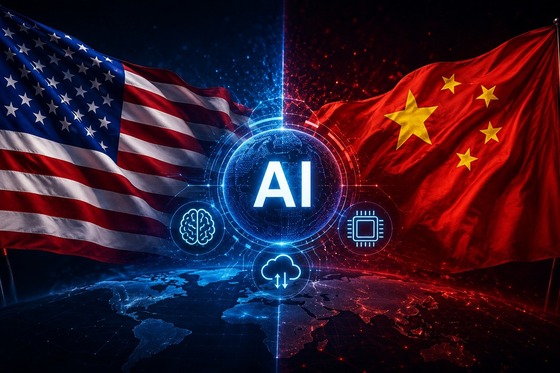
The emergence of low-cost, high-performance artificial intelligence (AI) models from China is intensifying the AI power struggle between the U.S. and China. In the U.S., allegations have surfaced that the Chinese AI startup Moonshot AI’s Kimi K3 has replicated the functionality of American companies’ AI models using a distillation technique. A U.S. government official cautioned that sanctions could be imposed if American intellectual property rights are infringed upon.
Conversely, some argue against restricting open AI models. Jensen Huang, Chief Executive Officer (CEO) of NVIDIA, advocated for the active utilization of open AI ecosystems like Chinese AI models and even suggested lifting restrictions on Anthropic’s Mythos. He contends that widespread access will not only drive AI development but also enhance security measures.
Industry reports from Thursday indicate growing apprehension in the U.S. that China’s open-source AI initiatives could threaten global AI leadership.
China recently hosted the World Artificial Intelligence Conference (WAIC) in Shanghai, where President Xi Jinping articulated his commitment to establishing a China-led AI order during his keynote address.
The Kimi K3, unveiled at WAIC, garnered significant attention from the AI industry. It achieved benchmark results competitive with top-tier American AI models and offers the advantage of being open-source, allowing developers worldwide to utilize it freely.
In the U.S., concerns have emerged that Chinese firms are swiftly adopting cutting-edge AI technology by employing distillation techniques based on American AI models.
Distillation is a method that enhances the performance of smaller models by learning from the outputs of high-performing large AI models. This technique enables the development of high-performance AI with relatively fewer computing resources and lower costs, making it widely adopted in the current AI landscape.
The Wall Street Journal (WSJ) reported that several small model developers, including various Chinese companies, are using distillation technology to emulate the capabilities of leading U.S. models. AI safety experts worry that if open models continue to evolve without adhering to the same regulations as U.S. companies like Anthropic or OpenAI, potential threats such as cyber or biological weapons could emerge.
Major U.S. AI companies are also expressing vigilance. Dario Amodei, CEO of Anthropic, has consistently warned about the national security and cyberterrorism risks that could arise if AI models with robust cybersecurity features are indiscriminately released as open-source.
A U.S. Government Official Alluded to the Possibility of Sanctions
In a recent interview with Fox Business, U.S. Treasury Secretary Scott Bessent stated that if it discovers that foreign models are misappropriating the companies’ intellectual property, it can impose sanctions for such theft. Michael Kratios, Director of the White House Office of Science and Technology Policy, also mentioned on social media that they are investigating reports of Moonshot AI distilling Anthropic’s model, asserting that it cannot tolerate attempts to steal American proprietary technology and undermine American research.
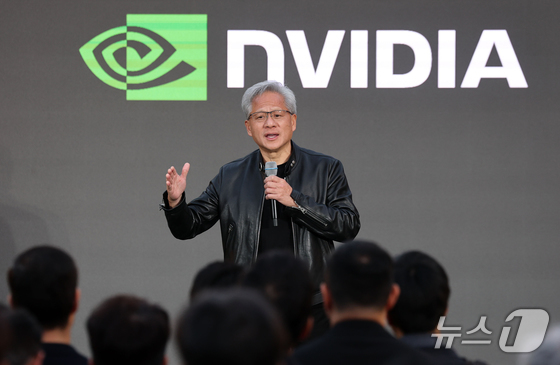
Jensen Huang: Use the Best Open Source—Zero Chance U.S. Firms Will Be Pushed Out
Some voices oppose restrictions on China’s open AI. David Sacks, a White House AI advisor and venture capitalist, criticized big tech’s calls for regulation as a regulatory capture strategy aimed at eliminating competitors, stating that weaponizing uncertain regulations as a competitive tool is absolutely unacceptable.
Huang stressed the importance of actively utilizing open AI models. Responding to concerns about U.S. AI leadership, he stated that there’s zero possibility of China pushing U.S. companies out of the market, predicting that many users would pay for the robust performance offered by proprietary AI models.
Huang argued that limiting open models for national security reasons could actually undermine America’s competitiveness. He also dismissed concerns about potential backdoors in Chinese models.
He explained that if everything converges into a single model, attack point, or failure cause, the world becomes more vulnerable, emphasizing that open models allow external experts to continuously verify and identify vulnerabilities, thereby enhancing security.
Addressing concerns that the proliferation of open AI models might reduce the need for AI infrastructure investment, Huang predicted that open models will provide more people with access to AI, expanding the market and increasing demand for chips, data centers, and computing power.
Huang advocated for lifting access restrictions on cutting-edge U.S. AI models like Anthropic’s Mythos to ensure universal accessibility.
He stated that even if Mythos isn’t accessible, it must recognize that open-source models are available. It should offer Mythos as a service and enhance its security through rapid inspections and corrections.