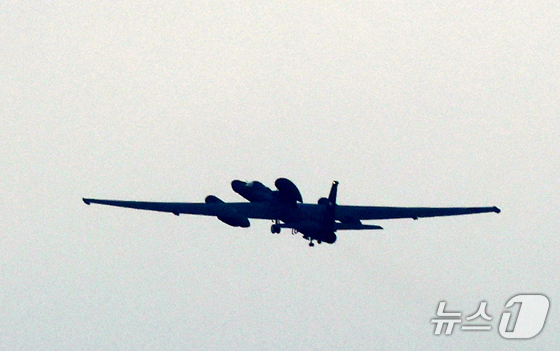
A potentially disastrous situation unfolded in the northernmost region of Paju, Gyeonggi Province, where South Korean forces nearly fired upon a U.S. military drone during a joint exercise, mistaking it for an unidentified flying object. This close call could have resulted in an unprecedented tragedy – the downing of an allied military asset conducting reconnaissance missions alongside South Korean Marines.
The root cause of this alarming incident was traced back to improper practices. Standard protocol dictates that U.S. forces should formally notify the relevant South Korean unit several days before deploying aerial assets, and obtain approval from higher command structures like the Air Force Operations Command or Ground Operations Command for operations above certain altitudes.
However, these established procedures were undermined by a mere text message. The U.S. side hastily sent a text to their South Korean counterpart just a day before the exercise, mentioning the addition of a high-altitude drone flight – a first for joint Marine Corps training. The South Korean officer, failing to properly verify the information, assumed it was the usual low-altitude flight exercise and neglected to report it up the chain of command.
The consequences were potentially catastrophic. The U.S. drone proceeded with its scheduled high-altitude flight, catching South Korean sentries off guard. The unexpected appearance of this aircraft triggered a heightened air defense status, known as DURUMI, typically reserved for North Korean drone incursions, creating a powder keg situation.
It’s worth noting that even routine low-altitude flights require systematic administrative procedures, including prior communication and approval between U.S. and South Korean forces. For some reason, both sides appear to have completely disregarded these protocols. The practice of relying on text notifications and omitting reports to superiors for routine exercises likely didn’t develop overnight.
This isn’t the first instance of miscommunication between U.S. and South Korean military authorities. In February, tensions arose over U.S. Air Force exercises in the West Sea. Chinese fighter jets responded to the U.S. Air Force’s sortie, leading to an aerial standoff, which South Korean forces only learned about after the fact. While South Korean military claimed they weren’t notified in advance, U.S. forces insisted they had followed proper notification procedures. The truth of that day’s events remains unclear.
Persistent communication breakdowns can only lead to entrenched structural disagreements and distrust. We must be wary of how minor conveniences at the operational level can escalate into fractures in trust between command structures, potentially undermining the overall combined defense posture of the U.S.-South Korea alliance.
The U.S. and South Korea need to reach conclusions on major security issues, from setting a target year for the transfer of wartime operational control to cooperation on building nuclear-powered submarines, all based on deep mutual trust.
One can’t help but question whether two nations that struggle to communicate smoothly even during Marine Corps joint exercises, conducted over 10 times a year, can effectively manage and control long-term strategic tasks crucial to the future of their alliance. It’s time to root out the complacency hidden under the guise of standard practice.