

President Donald Trump’s recent conciliatory messages toward North Korea have sparked renewed hope for U.S.-North Korea dialogue. While South Korea and the U.S. share a common goal of halting North Korea’s nuclear advancements, it remains uncertain whether the South Korean government can effectively play a facilitating role in the upcoming U.S.-led negotiations.
According to sources on August 23, including the presidential office, the Blue House is exploring ways to create favorable conditions for dialogue, keeping potential U.S.-North Korea talks in mind.
On August 16, President Trump announced a reduction in the U.S.-South Korea joint exercise Ulchi Freedom Shield (UFS) via Truth Social, stating that his relationship with North Korean leader Kim Jong Un is positive. On August 19, he expressed his intention to meet with Kim before year’s end, signaling a conciliatory approach toward North Korea.
Following Trump’s statements, the U.S. and South Korea decided to conclude the UFS earlier than planned. Despite these gestures, North Korea has continued its provocations with short-range ballistic missiles (SRBMs), clearly rejecting the overtures. The U.S. Pacific Command (USPACOM) has refrained from harsh rhetoric against North Korea while signaling its willingness to engage in talks.
A Blue House official noted that there’s a shift in the situation, adding that Trump’s actions could help create conditions for dialogue. The U.S. needs to take the lead.
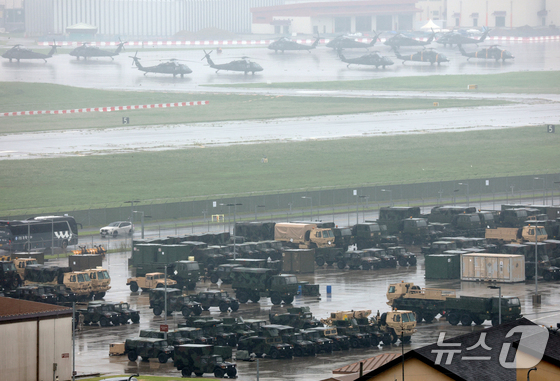
Blue House Prioritizes U.S.-North Korea Dialogue… Attention on Inter-Korean Relations
President Lee Jae Myung has maintained that U.S.-North Korea dialogue is more realistic than inter-Korean talks. In June, he stated that they’re in a situation where all avenues are blocked, so it can’t even make proposals to North Korea. The U.S. and North Korea appear to be the only viable partners for dialogue. He hopes the U.S. presents a realistic proposal that North Korea can accept.
President Lee recently praised Trump’s messages toward North Korea, expressing appreciation for Trump’s efforts to create conditions for dialogue aimed at establishing peace on the Korean Peninsula, even through the reduction of joint exercises and field training.
Despite U.S. conciliatory gestures, North Korea has downplayed the UFS reduction, indicating its refusal to engage in talks. Kim Yo-jong, the Deputy Director of the Workers’ Party, openly criticized President Lee by name.
The Blue House believes that although North Korea continues its strategy of severing communications with both the U.S. and South Korea, it remains open to dialogue with both sides.
While Kim Yo-jong denied Trump’s claims of communication with Kim Jong Un, stating that it has no knowledge of that, she also mentioned that the relationship between the two leaders is excellent. The Blue House interprets her remarks, which were not published in the state-run Rodong Sinmun, as not completely shutting down relations with South Korea.
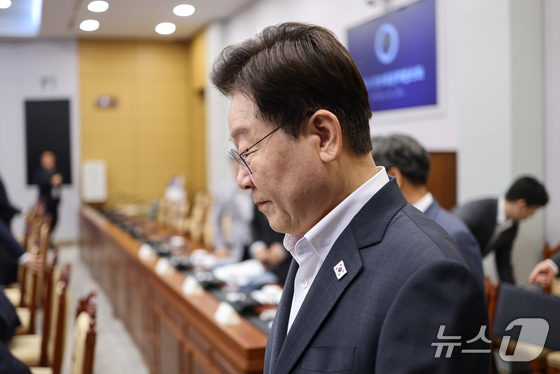
Growing U.S. Dissatisfaction Over Hormuz and Investments… Dual Challenge for U.S.-South Korea Relations and Facilitation
The Blue House is considering an approach that focuses on halting the advancement of North Korea’s nuclear capabilities, rather than pursuing immediate denuclearization. President Lee shared this strategy with President Trump during the recent Group of Seven (G7) summit.
A Blue House official explained that there’s a basic consensus between the U.S. and South Korea on the strategy to stop North Korea’s nuclear advancements.
However, underlying tensions in U.S.-South Korea relations raise concerns about whether South Korea’s strategy can be effectively incorporated into U.S.-North Korea dialogue.
Some analysts suggest that Trump’s decision to reduce the UFS stemmed from dissatisfaction with South Korea’s limited contributions in the Strait of Hormuz. Acknowledging this, President Lee stated that within the limits of the laws and policies, it will continue to communicate closely with the U.S. regarding various practical contributions, as it has done in the past.
The delay in South Korea’s announcement regarding investments in the U.S. is another significant issue. As various challenges in U.S.-South Korea relations become increasingly complex, South Korea faces pressure to secure its role as a facilitator.
With the U.S. controlling the pace and agenda of U.S.-North Korea dialogue, South Korea faces the dual challenge of managing its relationship with the U.S. while steering the dialogue in a desired direction.
Meanwhile, National Security Office Director Wi Sung-lac stated that in response to potential U.S.-North Korea dialogue that it will engage in necessary diplomatic efforts as a facilitator, based on close U.S.-South Korea cooperation.