

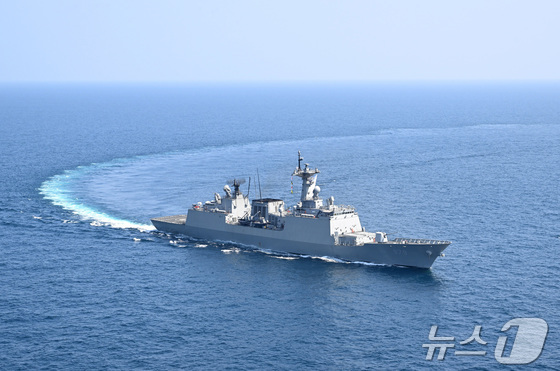
The South Korean Navy has confirmed that it decided against deploying warships to the U.S.-led multinational maritime exercise Pacific Vanguard due to safety concerns arising from typhoon activity. Instead, the Navy is participating by sending additional joint staff members to the exercise.
Navy sources reported that South Korea had initially planned to send warships and personnel to Pacific Vanguard, which kicked off on August 29.
However, the deployment was canceled in response to the threats posed by Typhoon Saudel (18th named storm) and Typhoon Atsani (21st named storm), which affected the waters around Guam last month. Saudel, which formed on August 19, intensified to a Category 3 storm before moving northwest of Guam five days later. Atsani, developing on August 25 northwest of Guam, tracked towards Okinawa, Japan. Both typhoons impacted areas that South Korean naval vessels would have needed to traverse en route to Guam.
Pacific Vanguard, initiated in 2019 under U.S. 7th Fleet leadership, is a combined exercise focusing on anti-surface, anti-air, and anti-submarine warfare training. South Korea has participated with ships and personnel since the inaugural exercise in 2019, making this year’s absence of South Korean vessels a first.
Japan’s Ministry of Defense reports that the exercise will continue near Guam until September 10, involving forces from six nations: the United States, South Korea, Japan, Australia, Canada, and New Zealand. The U.S. Navy has committed submarines and ammunition supply ships, while the Royal Australian Navy deployed the Hobart-class destroyer HMAS Sydney. Both New Zealand and the U.S. are utilizing P-8A maritime patrol aircraft. The South Korean Navy had originally planned to deploy the 4,400-ton destroyer ROKS Gang Gam-chan.
In related news, South Korea will join the U.S. and Japan in a trilateral exercise called Freedom Edge from September 7 to 11 in waters southeast of Jeju Island.
The South Korean Joint Chiefs of Staff, in announcing the schedule for the trilateral exercise on August 28, emphasized its defensive nature, stating that it is conducted annually to counter North Korea’s nuclear and missile threats and to maintain regional peace and stability.