

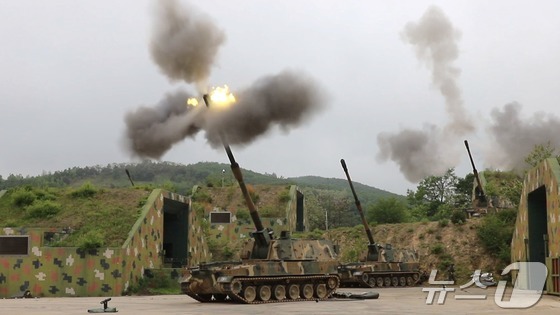
A groundbreaking proposal calls for the deployment of five 1-megawatt (MW) microreactors across forward infantry divisions by 2050. This strategic move aims to ensure a stable power supply for critical military operations, even during wartime scenarios.
On Wednesday, the Korea Institute for Defense Analysis (KIDA) reported that Army Major Kim Young-chan, a doctoral candidate in nuclear and quantum engineering at Korea Advanced Institute of Science & Technology (KAIST), collaborated with KAIST master’s student Ko Young-jin, National Defense University Professor Kang Chang-woo, and KAIST Professor Lee Jeong-ik on a paper titled, Securing Mission-Critical Energy Resilience for the Korean Army. This research was published in the September issue of KIDA’s English journal, The Korean Journal of Defense Analysis.
The research team projects a significant surge in military energy consumption despite decreasing troop numbers. This increase is attributed to the expansion of artificial intelligence (AI), manned and unmanned hybrid systems, individual soldier electronic devices, and high-energy weapons. Their estimates suggest that the total energy consumption of the military will skyrocket from 2,335 GWh (gigawatt-hours) in 2025 to 6,332 GWh by 2050, marking a 2.71-fold increase.
Specifically, they anticipate that the annual energy demand for a single forward infantry division will escalate from 50 GWh to 136 GWh during this period. Their analysis indicates that the mission-critical load essential for operations could average 3.11 MW and peak at 5.59 MW by 2050.
The researchers highlighted the U.S. Army’s proactive approach as a model. Through the Janus Program, the U.S. Army is actively working to deploy microreactors at domestic military bases. Recently, they selected five priority bases and outlined plans to invest up to 2.2 billion USD from fiscal years 2027 to 2031. This investment aims to install over 20 reactors at future Department of Defense facilities, with at least one reactor scheduled to be operational by September 2028.
The U.S. military’s focus on small reactors stems from the need to ensure that military facilities can generate their own power, even if local power grids are compromised due to cyber or drone attacks.
In stark contrast, the South Korean military heavily relies on external power sources. The research team’s data shows that from 2018 to 2023, a staggering 98.5% of the Army’s power supply came from commercial power grids, with self-generated power accounting for a mere 1.5%. While diesel generators can provide emergency power, the potential disruption of fuel supply lines during wartime poses a significant vulnerability.
The researchers concluded that relying solely on solar power and energy storage systems (ESS) would be insufficient for long-term power sustainability. Their calculations show that even if 60,000 square meters were allocated for solar installations in forward divisions, it would only cover 9.78% of the mission-critical power needs by 2050.
To address these challenges, the research team proposed a ring-connected military microgrid. This plan calls for the introduction of two 1 MW microreactors by 2035, expanding to four by 2040, and reaching five by 2050. The 2050 vision includes operating five reactors alongside a 20 MWh ESS, 2.08 MW of solar power, and a 1 MW emergency diesel generator.
Their analysis shows that even if one of the five reactors goes offline due to maintenance, accidents, or attacks, the remaining 4 MW capacity would still meet the average mission-critical load of 3.11 MW. They also proposed deploying mobile energy storage units to isolated battalion command posts or air defense and communication facilities, ensuring power maintenance for at least 72 hours.
Furthermore, the team recommended aligning national small reactor policies with military requirements. They emphasized the need to establish operational performance standards (ROC), safety and security regulatory frameworks, base protection measures, and specialized training systems for military microreactor operations.
It’s important to note that this study does not represent a confirmed implementation plan from the Ministry of National Defense or the Army. Rather, it serves as a preliminary assessment based on publicly available data, international examples, and hypothetical planning. The researchers clarified that the figures presented do not necessarily reflect actual wartime energy consumption or final designs.