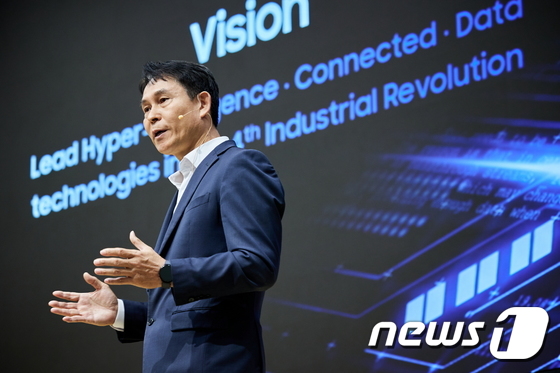
Park Yong In, President of Samsung Electronics’ System Large-Scale Integration (LSI) Division, announced on July 11 that they are making steady progress on the Exynos 2600, following the development of the Exynos 2500.
Park shared this information with reporters prior to the Korean Academy of Engineering Young Festival, a mentoring event focused on nurturing future engineering talent, held at the COEX Convention & Exhibition Center in Seoul’s Gangnam district. He expressed optimism, stating that he anticipates positive outcomes.
Samsung Electronics’ latest mobile application processor (AP), the Exynos 2500, has been fully integrated into the company’s recently launched foldable smartphone, the Galaxy Z Flip 7.
The Exynos 2500 is an AP designed by Samsung’s System LSI Division and manufactured using the cutting-edge Gate-All-Around (GAA) 3-nanometer (nm) process by the Foundry Division.
While yield issues prevented its inclusion in the Galaxy S25 series released in January, improvements in performance and production yield led to its adoption in the Galaxy Z Flip 7. This marks the first time Samsung has used its 3nm process to produce a smartphone AP.
If the Galaxy Z Flip 7 proves successful in the market, it could provide a much-needed boost to the System LSI Division’s performance, which has been struggling in recent years.
The next-generation mobile AP, the Exynos 2600, is slated for mass production using Samsung Foundry’s 2-nanometer process.
When questioned about the possibility of the Exynos 2600 being featured in the Galaxy S26 series, set to launch early next year, Park diplomatically responded that the decision lies with its customers.
Regarding the management assessment of the System LSI Division initiated by the Samsung Global Research team earlier this year, Park stated that they are still awaiting the results. He added that it would be premature to speculate on any potential organizational changes by year-end.