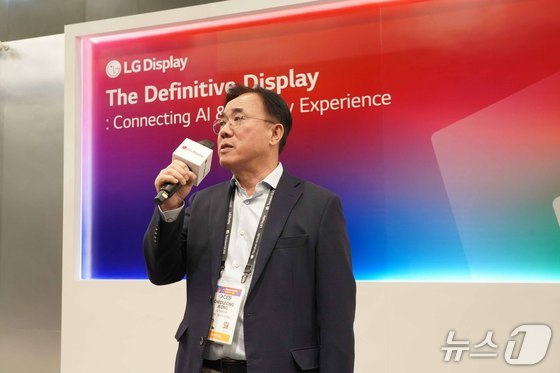
Physical artificial intelligence (AI) and humanoids are transitioning from concept to reality. LG Display is well-prepared for this shift, according to Jeong Cheol-dong, Chief Executive Officer (CEO) of LG Display, who expressed confidence in the humanoid robot market.
At a press conference in Las Vegas during Consumer Electronics Show (CES) 2026 on January 7, Jeong noted that the robotics industry is advancing faster than anticipated. He emphasized that displays are finding new roles and opportunities in this evolving landscape.
Jeong covered a broad range of topics, including robot displays, organic light-emitting diode (OLED) vs. liquid crystal display (LCD) competition, the shift to AI-driven cost innovation (AX), and investment strategies. He outlined a vision aimed at bolstering both technological edge and business resilience to weather any market conditions.
Entering the Humanoid Era: Leveraging Automotive OLED Expertise
Jeong observed that the technology ecosystem for humanoid robots is rapidly maturing. He pointed out that robots are already commonplace in industrial settings, and the evolution towards AI-integrated humanoid forms is gaining momentum.
At CES 2026, LG Display unveiled an OLED panel designed for humanoid robot faces, marking their first public showcase of such products. The display features plastic-OLED (P-OLED) technology with a plastic substrate, enabling high resolution and curved designs.
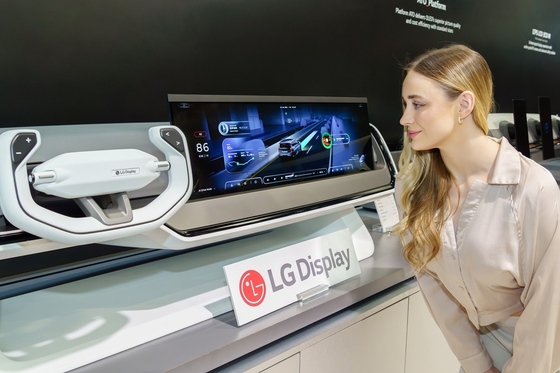
Jeong drew parallels between humanoid and automotive displays, noting similarities in durability, reliability, and long-term operation requirements. He expressed confidence in LG Display’s technological foundation in this area.
He clarified that they’re not starting from scratch but transferring existing expertise. The technology developed for automotive OLEDs, which must function reliably in extreme temperatures, is directly applicable to humanoid robots.
This perspective reflects a realistic assessment of business expansion potential rather than mere optimism about the robot market.
OLED vs. LCD: Acknowledging Competition While Emphasizing OLED Strengths
Jeong offered a balanced view on competition from Chinese display manufacturers. He acknowledged the fierce competition in LCD technology regarding image quality and cost, noting Chinese firms’ rapid technological progress. However, he stressed the fundamental differences between OLED and LCD technologies and their distinct quality perceptions.
He emphasized that experts and consumers can clearly distinguish between OLED and LCD quality. Jeong highlighted the importance of effectively communicating OLED’s advantages in online retail environments, particularly in the premium market segment.
Jeong also noted that OLED technology requires ongoing improvement, mentioning continued advancements in brightness, lifespan, and cost-effectiveness.
LG Display aims to maintain its position in the high-end market with premium OLEDs while also competing directly with LCDs through more cost-competitive products.
Accelerating AI Transformation: Reshaping Cost Structures Through Technology
LG Display is focusing on technology-driven cost innovation rather than simple cost-cutting measures. Jeong explained that with yield rates already high, the company is now targeting cost structure changes through technical approaches such as material innovations, streamlined processes, and reduced mask usage.
The key to this strategy is AI Transformation (AX). LG Display is enhancing design and development efficiency through AI-based virtual design (VD) and is streamlining testing and validation processes using physical AI and robotics. This approach aims to accelerate development while reducing uncertainties.
Jeong emphasized that AX is not just about short-term savings but a tool for long-term structural improvement.
Regarding market outlook, Jeong remained cautious. He noted the difficulty in predicting specific market cycles, stressing the importance of building resilience to withstand various market conditions. The company plans to approach major investments cautiously, waiting for clearer profitability indicators.
LG Display’s strategy focuses on enhancing technological competitiveness in OLED technology for televisions (TVs), vehicles, and robots, while simultaneously improving cost structures and development capabilities through AI transformation. Jeong concluded by emphasizing direction over speed, aiming to build a robust business foundation through technological, cost, and structural innovations.