

Ulsan City said on the 21st it has been selected for a public contest project hosted by the Ministry of Science and ICT to develop and demonstrate an artificial intelligence (AI)-based ship specialized platform and applications, securing $140 million in government funding.
With the selection, the city will invest a total project cost of $271 million over four years through 2029, including $140 million in government funding, $69.6 million from the city and $61.5 million in private investment.
The project aims to transform conventional hardware-centered ships into software- and data-driven vessels.
Under the software-defined ship (SDS) system to be established through the project, the latest AI technologies can be continuously applied via wireless updates, similar to smartphones, even after a ship is built.
This will enable performance improvements, such as advanced autonomous navigation and energy optimization functions, through software installation without the need to build new ships.
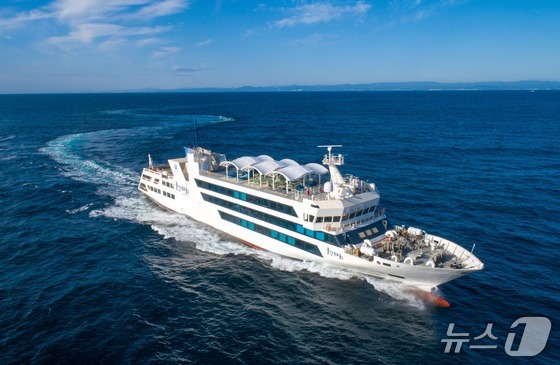
In particular, the project will organically connect real vessels — including Ulsan’s Taehwa-ho and large commercial ships — with virtual environments to minimize the risk of maritime accidents and maximize trust in the technology.
In addition, AI will analyze real-time maritime conditions to identify the safest and most fuel-efficient routes, improving fuel efficiency and reducing carbon emissions.
The project will be led by the Ulsan Information Industry Promotion Agency, with participation from HD Korea Shipbuilding & Offshore Engineering, digital twin company Hiers, and RWTH Aachen University in Germany.