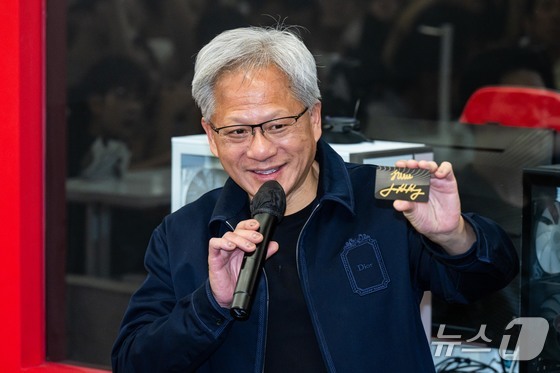
Jensen Huang, the Chief Executive Officer (CEO) of NVIDIA, has become a sensation in the tech industry and Wall Street. His trademark black leather jacket and approachable demeanor have endeared him to the public, adding a human touch to his larger-than-life persona.
One intriguing tidbit about Huang is his connection to the Yongsan Electronics Market in Seoul. From the 1990s through the 2000s, he personally pounded the pavement there, selling graphics processing units (GPUs) and other computer components.
Huang’s grassroots efforts, coinciding with the boom of internet cafes in Korea, fueled NVIDIA’s early growth. The man who once traversed foreign marketplaces now helms a global tech giant worth over 5 trillion USD.
At this year’s GTC Taipei in Taiwan, Huang painted an optimistic picture of the artificial intelligence (AI)-driven tech ecosystem. He outlined a rosy future where AI boosts productivity and creates jobs.
However, Taiwan’s personal computer (PC) component market – the birthplace of its information technology (IT) industry – is facing headwinds. Ironically, the AI revolution sparked by Huang is reshaping the very market that nurtured him.
A visit to Guanghua Digital Plaza, Taiwan’s equivalent of the Yongsan Electronics Market, during the Computex 2026 coverage on June 4 brought this reality into sharp focus.
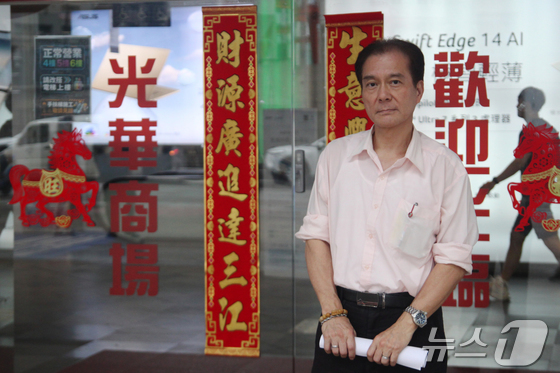
The AI fever that dominated Computex hasn’t reached Guanghua Digital Plaza. As tech giants pivot to AI component production, merchants struggle to source the PC parts that were once their bread and butter.
Liang Shun-wen, general secretary of the Guanghua Digital Plaza Development Association, revealed that most items on shelves are old stock, as major manufacturers have shifted their focus entirely to AI components.
This scene at Guanghua Digital Plaza illustrates how AI, while opening new markets, is also ruthlessly restructuring existing ones.
Technological revolutions invariably cast both light and shadow. As NVIDIA rides high on the AI wave, the brick-and-mortar ecosystem that once underpinned the hardware market takes a direct hit.
Yet, these merchants aren’t throwing in the towel. They’re carving out niches by assembling small, custom PCs and repairing non-standard products – areas where tech giants can’t compete.
The AI revolution is rewriting the rules of the game. The computer market, once driven by personal PC sales, is now pivoting towards AI servers and chipsets backed by massive capital.
This reality mirrors the situation at Korea’s Yongsan Electronics Market.
Once a thriving hub where even Jensen Huang himself hustled to make sales, Yongsan now faces its toughest winter. Sidelined by e-commerce trends and hit by the global component shortage fueled by the AI boom, it’s struggling to find its footing.
This may be the most paradoxical scene of the AI era. The ecosystem of internet cafes, electronics markets, and custom PCs that once nurtured Huang is now being transformed by the very AI revolution he spearheaded.
Yet, amidst the turbulence created by cutting-edge technology, the merchants of Guanghua Digital Plaza are quietly forging ahead.
These merchants aren’t creating AI or building trillion-dollar companies like NVIDIA. But they’re at the frontlines of change, adapting to survive in a market reshaped by AI. Yongsan, too, is fighting this uphill battle.
In the end, tech revolutions don’t just create winners. They also displace industries and spawn individuals who find ways to thrive in the new gaps.
Perhaps the real force driving the AI era isn’t the technology itself, but human tenacity in the face of change.