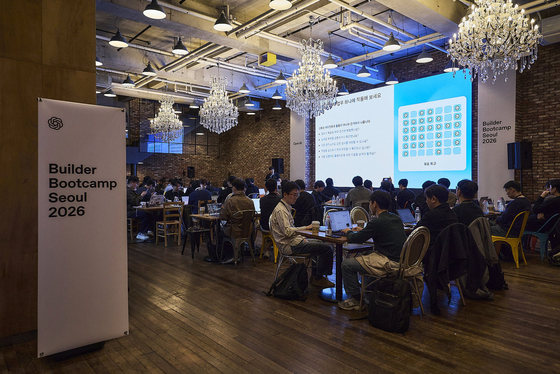
OpenAI hosted the Builder Bootcamp Seoul in South Korea’s capital to assist local companies in implementing artificial intelligence (AI) in their operations, the company announced on Wednesday.
The previous day’s event drew over 40 attendees, including technology leaders and representatives from various sectors such as manufacturing, telecommunications, information technology (IT) services, consumer goods, and AI.
This bootcamp, a follow-up to OpenAI’s developer event DevDay, featured OpenAI engineers conducting lectures, hands-on sessions, and demonstrations while addressing operational challenges faced by participating companies.
The program kicked off with solution scoping, a process aimed at defining specific problems to be solved with AI and determining the scope of its application.
Attendees learned strategies for identifying operational bottlenecks and prioritizing tasks based on expected outcomes, implementation complexity, and potential technical and operational risks.
Using customer support as a case study, participants examined current performance metrics such as processing time and quality, and established success indicators to measure the impact of AI implementation.
An on-site consultation clinic facilitated discussions on tailoring AI approaches to each company’s unique circumstances.
Participants raised concerns about managing data access and execution parameters for employee-developed AI agents, as well as addressing instances where AI responses lacked crucial information or procedural steps, despite being connected to on-site knowledge bases.
In response, OpenAI engineers proposed a methodical approach: first determining which tasks to delegate to AI versus those requiring human oversight, followed by incremental validation to gradually expand AI applications.
The technical session covered Codex-based planning, development, and validation, along with AI agent design and performance evaluation, through a mix of lectures, hands-on exercises, and demonstrations.
The team also showcased practical applications, demonstrating how voice interactions could be integrated into real-world tasks such as flight announcements and baggage inquiries.
A dedicated cybersecurity session highlighted the use of Codex Security for identifying, validating, and rectifying security vulnerabilities.
OpenAI has committed to providing ongoing support to ensure that the challenges addressed during the event translate into practical workplace solutions.
Jeong Jae-won, Partner Director of OpenAI Korea, emphasized that this bootcamp was designed to address real-world AI implementation challenges faced by companies and to collaborate with OpenAI engineers on finding concrete solutions. It’s committed to offering continued technical support and guidance to help turn these discussions into tangible workplace applications.