

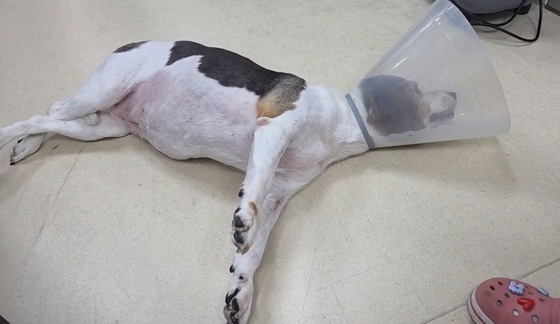
[Courtesy of Bon Animal Medical Center] A companion dog that suddenly lost the use of its four legs has regained the ability to walk after emergency surgery. This case demonstrates how quick diagnosis and timely intervention can lead to recovery in cervical disc disease, where rapid assessment and treatment are crucial for a positive outcome. On Monday, the Anyang 24-Hour Bon Animal Medical Center reported a successful case where a dog with acute limb paralysis underwent surgery for cervical intervertebral disc herniation and recovered normal gait.
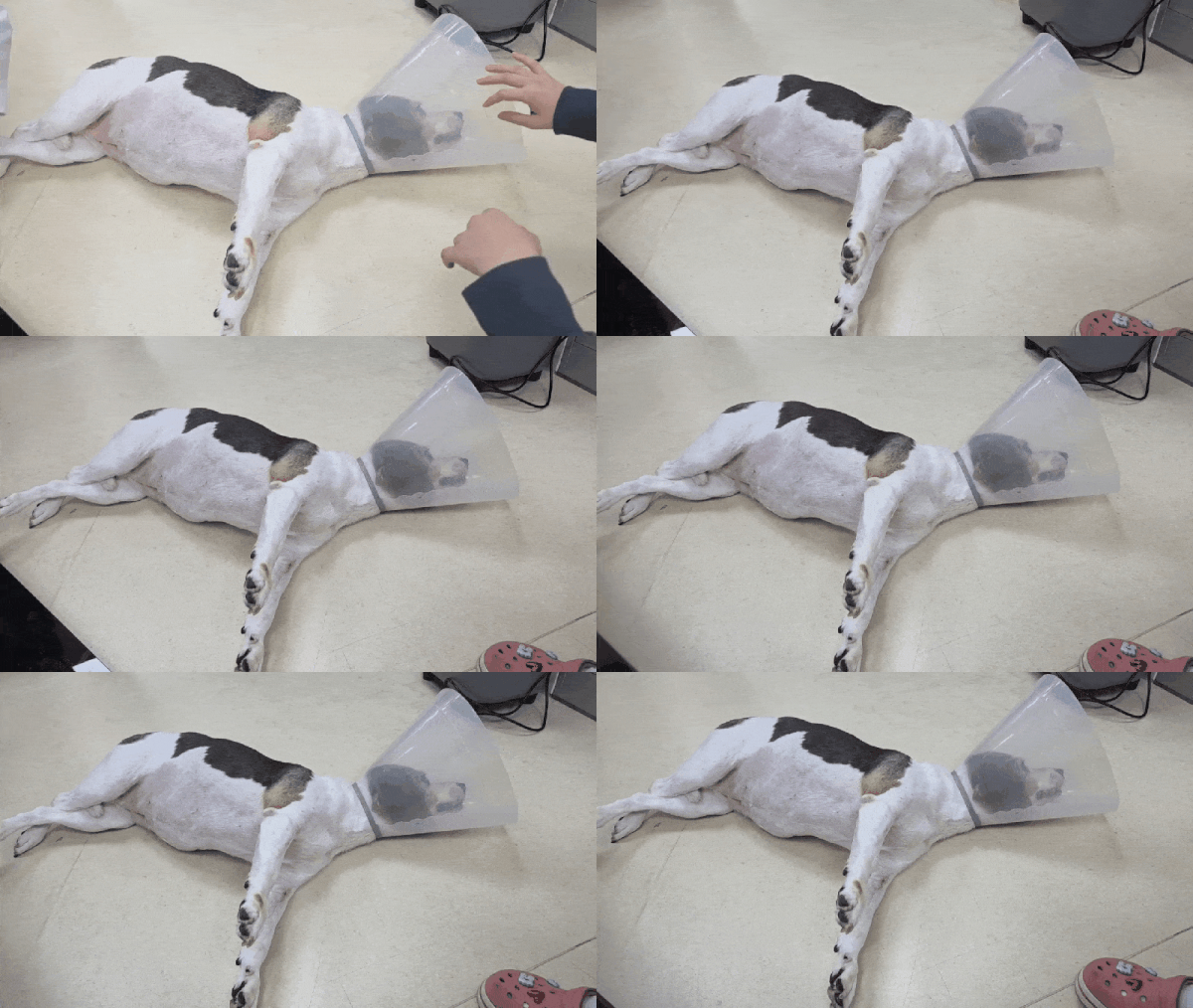
[Courtesy of Bon Animal Medical Center] The center explained that cervical disc disease occurs when a disc in the neck area protrudes, compressing the spinal nerves. This can cause sudden pain or abnormal gait in dogs. In severe cases, it can rapidly progress to paralysis, rendering the dog unable to use all four limbs. As such, it is considered a neurological emergency requiring accurate imaging diagnosis and prompt treatment. The patient in this case was a 10-year-old spayed female Beagle. She had been receiving conservative treatment for neck pain, but suddenly exhibited acute quadriplegia on the day of her visit to the clinic.
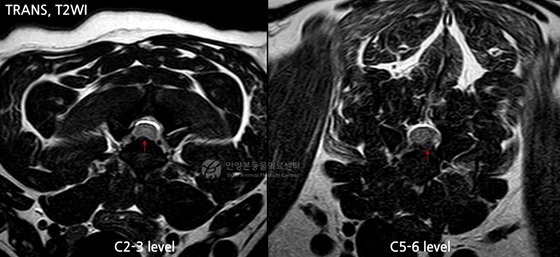
[Courtesy of Bon Animal Medical Center] To determine the cause, the medical team conducted an MRI (magnetic resonance imaging) scan. The results revealed nerve compression in the C2-3 cervical region. Notably, the C5-6 area showed severe disc herniation, severely compressing the spinal cord. The medical team identified this area as the primary cause of the acute paralysis and decided to perform immediate surgery.
The surgery employed the ventral slot technique, a widely used method for treating cervical disc disease. This approach involves accessing the lower neck, removing a portion of the vertebrae, and extracting the disc material to relieve nerve compression.
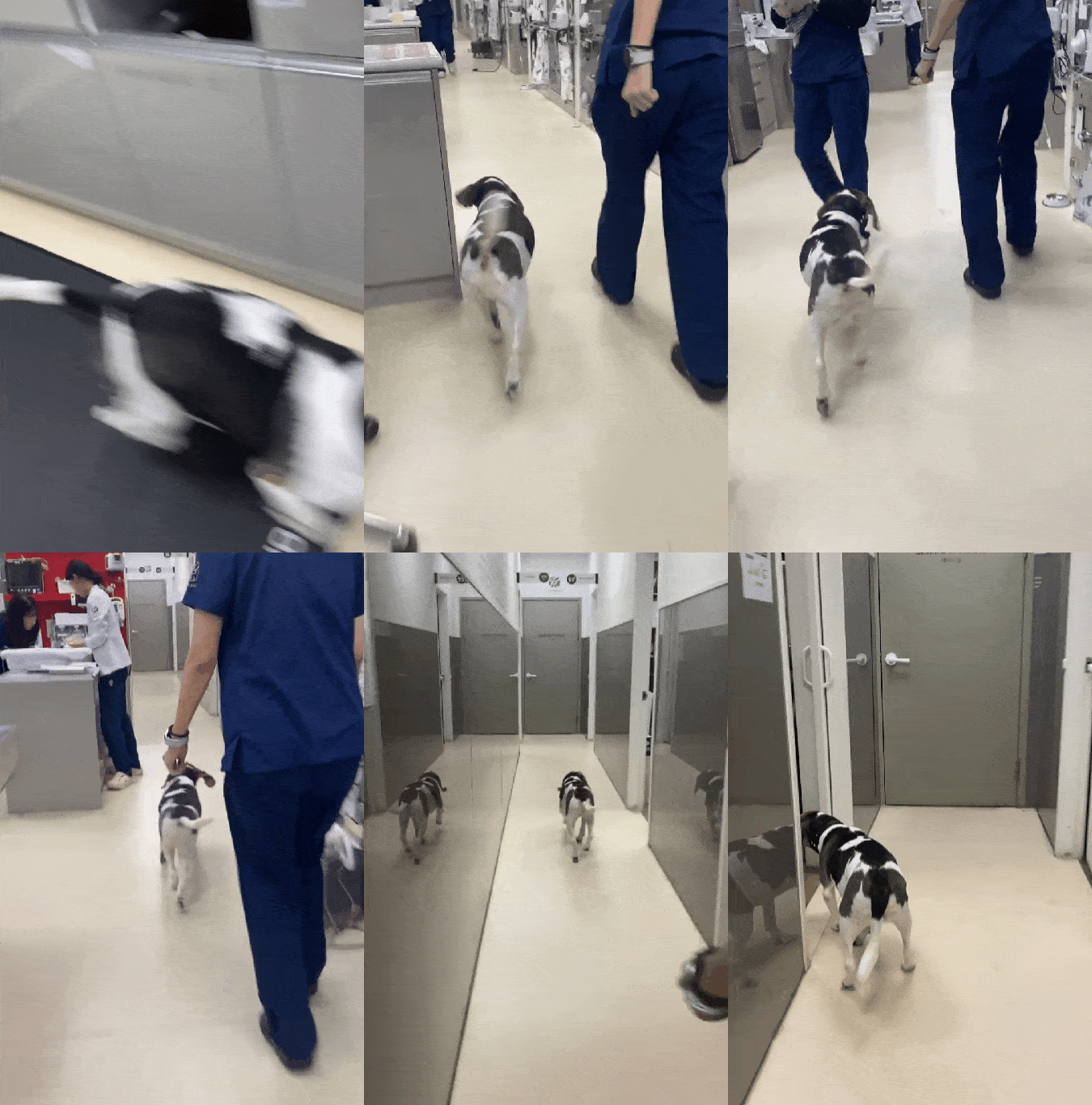
[Courtesy of Bon Animal Medical Center] During the procedure, the surgical team found a significant amount of herniated disc material at the C5-6 site. Removing this material successfully relieved the spinal cord compression. The dog’s recovery was remarkably swift. She was able to maintain her posture independently the day after surgery and had fully regained her ability to walk normally by the fifth day. The medical team attributed this rapid recovery to accurate diagnosis, timely surgical intervention, and prompt relief of nerve compression.

[Courtesy of Bon Animal Medical Center] Dr. Jeong Young Eun, Chief of Surgery at the center, explained that cervical disc procedures require a high level of precision due to the proximity of major blood vessels, the airway, and the esophagus, adding that MRI-based diagnosis and surgical expertise play a critical role in recovery outcomes. She further emphasized that symptoms such as neck pain or gait abnormalities can quickly progress to paralysis, emphasizing the importance of seeking immediate veterinary care if a dog suddenly loses mobility or shows severe neck pain.