

The U.S. has launched a reverse blockade in the Strait of Hormuz to curb Iranian oil exports, sparking fears of a complex economic shock. This could lead to simultaneous cost increases due to energy supply disruptions and a contraction in demand.
Experts warn that if tensions around the Strait of Hormuz persist, disruptions in oil and natural gas transportation could drive up energy prices. This would directly impact businesses’ production costs and dampen consumer confidence.
Middle East Risks Escalate, Putting Pressure on Energy and Logistics
Industry sources reported on Tuesday that the U.S. began blocking vessels attempting to pass through the Strait of Hormuz to access Iranian ports at 10:00 a.m. on Monday.
This reverse blockade counters Iran’s previous closure of the strait and is seen as an escalation of U.S. pressure following failed negotiations.
Previously, the U.S. had tacitly allowed oil tankers carrying Iranian crude to pass through the strait to stabilize oil markets during the Middle East conflict. This new blockade is expected to further destabilize the global energy market.
The impact on South Korean industries could be substantial. South Korea relies on the Middle East for about 70% of its oil imports, meaning higher oil prices will directly increase costs for the refining and petrochemical sectors.
Moreover, if liquefied natural gas (LNG) shipments are disrupted, it could drive up power generation costs, potentially leading to higher industrial electricity rates.
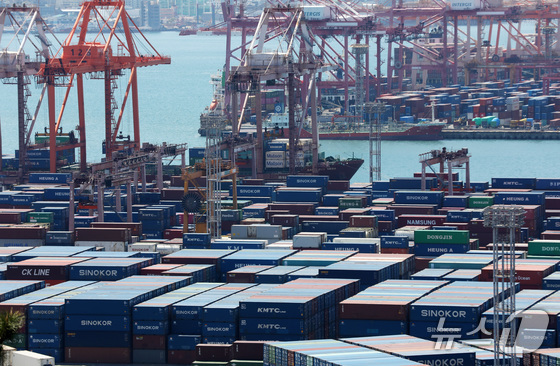
The logistics sector is also likely to face increased burdens. Escalating military tensions could cause war risk insurance premiums to soar, and if shipping companies opt for alternative routes, both transportation times and costs could rise.
Given South Korea’s industrial structure, which depends heavily on importing raw materials and exporting finished products, disruptions to supply chains in both directions could become a reality.
Prolonged Crisis Could Lead to Demand Slowdown, Creating Downward Pressure Across Industries
If the situation persists, it could evolve from a simple cost shock to a broader contraction in global demand. Prolonged high oil prices would erode consumer purchasing power and increase financial market volatility, exerting downward pressure on the overall economy.
Park Sang-hyun, an analyst at iM Securities, suggests that scenarios involving an extended ceasefire for peace talks or a U.S. attack on Iran during the ceasefire are likely. In either case, he predicts that sustained high oil prices would increase downward pressure on U.S. economic growth.
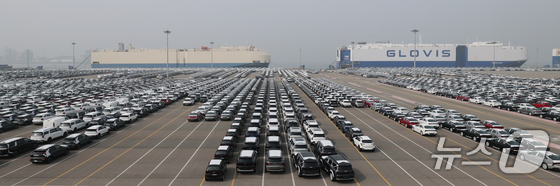
Key export industries such as automotive, steel, and chemicals could see significant drops in overseas demand. The auto industry, in particular, might face slowing vehicle sales in North American and emerging markets if high oil prices coincide with interest rate pressures.
The automotive sector is notably sensitive to economic cycles. As vehicles are not essential goods, purchases can be easily postponed or canceled based on macroeconomic factors like interest rates and oil prices.
Indeed, February’s auto exports fell by around 20% year-on-year, already signaling a weakening demand.
Park warns that in the worst-case scenario of all-out war, oil prices could surge past previous highs, potentially exceeding 150 USD per barrel. This could severely disrupt energy supply chains for an extended period, posing a significant stagflation risk not just for the U.S. economy, but for the global economy as a whole.