

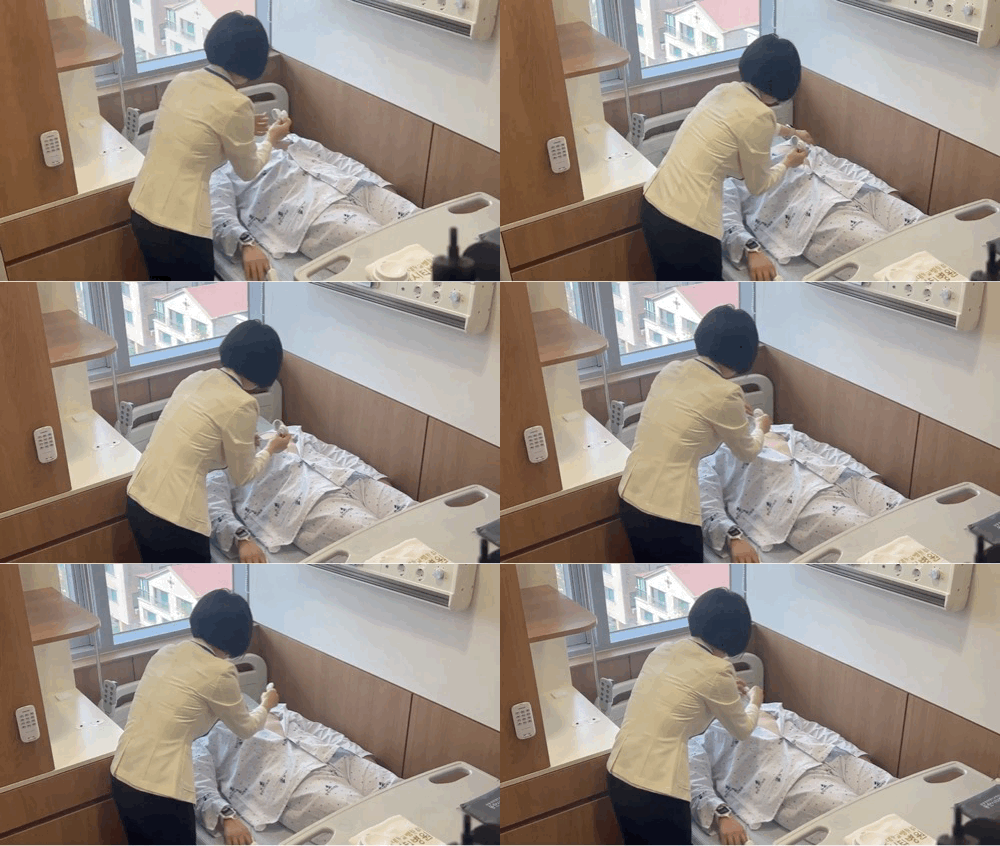
After a patient’s oxygen saturation level dropped below 83% during thynC device attachment, medical staff immediately checked on the patient and administered oxygen treatment.
In another incident, when an elderly patient was flagged for a potential fall during the night, medical personnel responded promptly, discovering the patient attempting to leave the bed and successfully preventing a fall. Both cases highlight the effectiveness of thynC™, an inpatient monitoring platform developed by Seers, enabling on-site patient care by medical staff. Thyrse aims to bolster its competitive edge through a scalable structure that supports real-world ward operations and expansion.
Industry’s First Unveiling of AI Smart Ward Powered by thynC
On Wednesday, Thyrse hosted a Smart Hospital Media Tour at Dongtan City Hospital in Hwaseong, Gyeonggi Province, showcasing the operational site of its AI-driven thynC system. This event marked the first public demonstration of the smart ward utilizing thynC technology.
ThynC is an inpatient monitoring solution that analyzes key vital signs in real-time using wearable biosensors and AI analytics, promptly alerting medical staff to any abnormal indicators.
Unlike traditional monitoring focused on intensive care units, this system enables continuous patient status checks in general wards, facilitating early detection and rapid response. Daewoong Pharmaceutical, with its extensive sales network, plays a significant role in domestic distribution, enhancing the technology’s market presence.
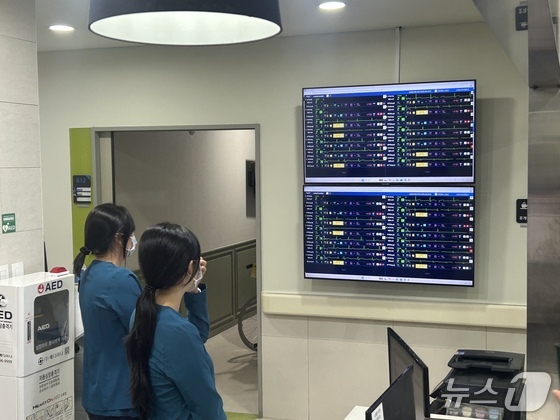
Dongtan City Hospital, with a capacity of 180 beds, has implemented this system in its 90-bed nursing care ward, revolutionizing its approach to patient management.
A thynC Experience Zone on the first floor of the hospital’s new wing attracted visitors’ attention, allowing the public to interact with the solution and gain insight into smart ward technology.
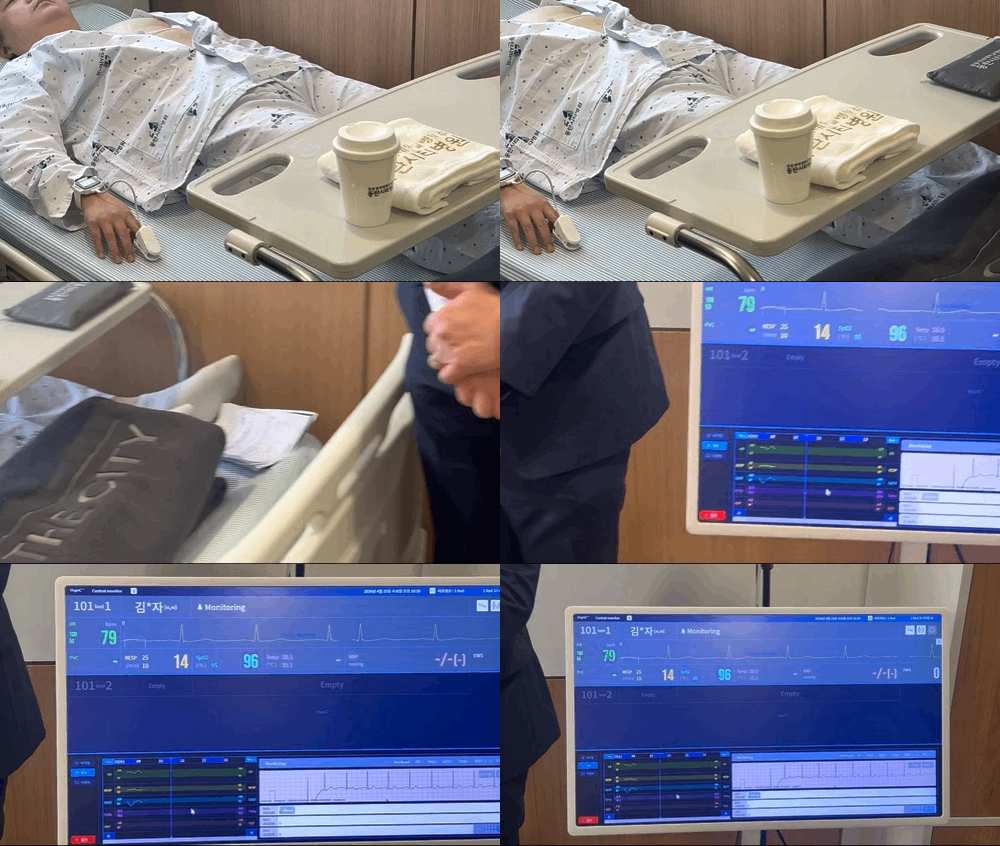
In the patient room, visitors observed a wearable device attached to a virtual patient, demonstrating real-time monitoring of various health metrics on a screen. Hospital staff noted that thynC’s user-friendly design allows patients to maintain their daily routines with minimal disruption.
Kang Dae-yeop, Chief Strategy Officer of Thyrse, explained that ThynC is designed to expand into general wards. Through its implementation in actual hospital settings, it’s validating the scalability of the smart ward model.
Real Patient Cases Validate Clinical Effectiveness
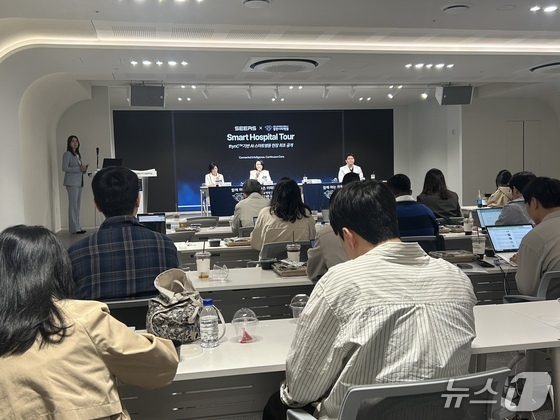
The concluding seminar featured presentations spanning technology, hospital operations, and clinical applications.
Kim Mi-young, Administrative Director of Dongtan City Hospital, detailed the process of establishing an AI-based smart hospital and its impact on operations. Subsequently, Professor Kim Beom-seok shared insights on changes in patient monitoring and response methods, drawing from clinical cases in the ward.
Professor Kim highlighted a case where PVC abnormal signals were detected in a patient’s electrocardiogram (EKG) rhythm, revealing changes the patient was unaware of and leading to collaborative care. He emphasized that thynC facilitates a seamless flow from early detection of patient status changes to medical staff responses, significantly enhancing patient safety within the ward.
Dongtan City Hospital serves as a crucial healthcare hub, addressing the medical infrastructure gap in an area lacking a tertiary general hospital.
The hospital is also exploring opportunities to expand into integrated care and home healthcare in collaboration with care medical centers, with plans to launch related pilot projects in the near future.
Kim stated that implementing a smart ward goes beyond introducing new equipment; it’s about transforming our entire operational approach. It’s applying this technology to enhance both patient care efficiency and the working environment for the medical staff.