

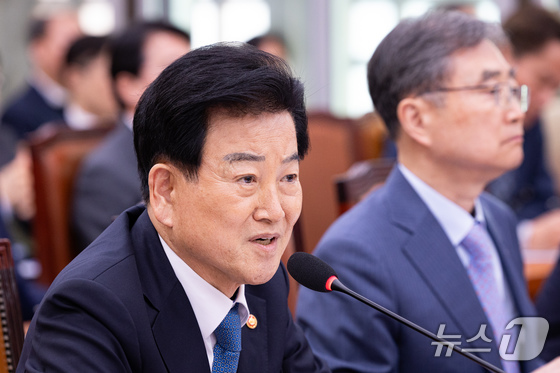
Reports emerged on April 19 that the U.S. has suspended sharing certain North Korea-related intelligence with South Korea. This move comes as a strong expression of dissatisfaction with comments made by South Korea’s Unification Minister Chung Dong-young, who newly identified Gusung in North Pyongan Province as the location of a third nuclear site housing North Korea’s new uranium enrichment facility.
The U.S. reportedly took this action about a week ago, after Minister Chung mentioned Gusung during a National Assembly session on April 6, in addition to the previously known sites in Yongbyon and Gangseon, Nampo City. American officials contend that Chung disclosed classified information shared between the U.S. and South Korea.
During the National Assembly’s Foreign Affairs and Unification Committee meeting, Minister Chung cited a very serious report by Rafael Grossi, Director General of the International Atomic Energy Agency (IAEA), presented on March 2. Chung stated that there are currently uranium enrichment facilities in Yongbyon, Gusung, and Gangseon. While Iran’s enriched uranium is at 60% enrichment, North Korea is reportedly producing 90% weapons-grade uranium. He added that President Lee Jae-myung emphasized halting this immediately as the key priority.
The uranium enrichment facility in Gusung, North Pyongan Province, has not been officially confirmed by U.S. or South Korean intelligence agencies. It appears that Director General Grossi did not explicitly mention Gusung in his board report.
However, the U.S. think tank Institute for Science and International Security (ISIS) suggested in a 2016 report that the initial centrifuge research and development facility was likely located near Banghyeon Air Base, approximately 45 km (about 28 miles) west of the Yongbyon nuclear site. Banghyeon Air Base is situated in Gusung City.
The intelligence that the U.S. has stopped sharing includes data gathered through satellites, reconnaissance aircraft, and signals intelligence. Among this information, the locations of North Korea’s nuclear facilities and strategic assets like ballistic missiles are classified. Traditionally, the U.S. and South Korea have shared such information as part of their cooperation on North Korea issues.
On the same day, the Hankyoreh newspaper, citing a high-ranking source within the ruling party, reported that the intelligence provided by the U.S. on North Korea typically amounted to 50 to 100 pages daily, but this information sharing has now ceased.
In response, the Ministry of Unification stated on April 17 that they had explained the context of Minister Jeong’s comments to the U.S. Embassy. They clarified that his remarks were not based on U.S. intelligence but rather referenced information from reports by ISIS and other sources.
The Ministry also emphasized that the possibility of uranium enrichment in Gusung has been reported by various research institutions and major media outlets since the release of the ISIS report in 2016, reiterating that they have not received any specific information about Gusung from other agencies.