

The U.S. has extended its relaxation of sanctions on Russian crude oil and petroleum products for another month. However, the government believes domestic refiners are reluctant to secure additional supplies, citing the European Union (EU) sanctions and the establishment of alternative supply chains.
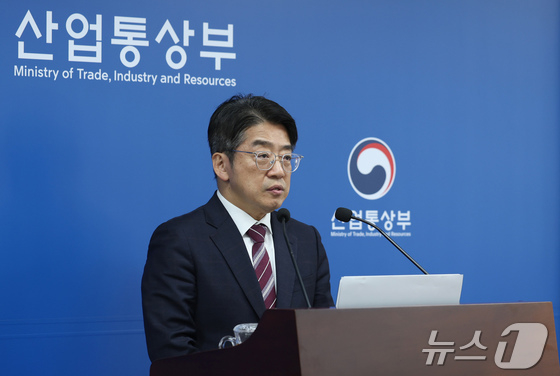
During a briefing at the Government Complex in Sejong on Tuesday, Yang Ki-wook, Director of the Industrial Resource Security Office at the Ministry of Trade, Industry and Energy, noted that refiners’ response to the U.S. extension of Russian oil sanctions was more tepid than when the sanctions were initially eased.
Yang explained that Russian crude oil still carries insurance and shipping risks due to EU sanctions, necessitating caution in imports. He added that with alternative supply routes largely secured, particularly for May shipments, Russian imports are now just one of several options under consideration.
Regarding naphtha, Yang stated that while there have been some imports in the past, current contracts are diversified among various suppliers, avoiding over-reliance on any specific source.
Assessing the overall supply situation, Yang pointed out that the blockade of the Strait of Hormuz has prevented some contracted shipments from being loaded, creating significant uncertainty.
He further noted that refiners are struggling to accurately predict incoming shipment volumes. While oil-producing countries are under pressure to increase exports due to inventory burdens, potentially leading to sudden influxes of supply, the high volatility makes it difficult to consider these as reliable alternative sources.
Addressing Kuwait’s declaration of force majeure on oil and refined product shipments due to the Hormuz blockade, Yang said it currently appears to have no impact on South Korea, as Kuwaiti crude oil has been unable to enter the country since the onset of the conflict.
A force majeure declaration serves as a legal safeguard, exempting parties from liability for contract breaches when uncontrollable circumstances prevent them from fulfilling supply obligations.
Yang reported that as of Monday evening, some domestic refiners had begun receiving force majeure notifications from Kuwait. He clarified that this declaration seems to be more about contractual procedures related to April shipment deadlines rather than production facility issues, and suggested that further force majeure declarations for additional shipments may follow.
In a significant development, on April 17, a South Korean vessel loaded with crude oil departed from Yanbu, Saudi Arabia, embarking on a journey to South Korea via the Red Sea. This marks the first instance of crude oil transport to South Korea through the Red Sea as an alternative route since the Hormuz blockade began.
Yang concluded by noting that as national shipping companies begin to utilize the Red Sea route, and following the presidential special envoy’s successful negotiations with Saudi Arabia for additional crude imports, the Red Sea could become a key channel for future alternative supply.