

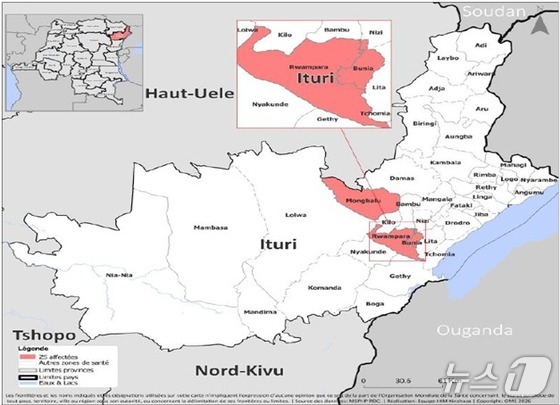
South Korea’s Korea Disease Control and Prevention Agency said May 17 it has raised its infectious disease alert level to “Attention” and strengthened quarantine measures as Ebola virus disease spreads in the Democratic Republic of the Congo and Uganda.
The agency said it convened an emergency risk assessment meeting immediately after the World Health Organization declared the Ebola outbreaks in DR Congo and Uganda a Public Health Emergency of International Concern (PHEIC).
During the meeting, health authorities assessed the risk of Ebola entering South Korea as “low.” However, officials issued the “Attention” alert level and formed a response task force as a precaution. South Korea will also designate DR Congo, Uganda and South Sudan as重点 quarantine management areas starting May 19.
Ebola virus disease is an acute febrile hemorrhagic illness caused by infection with the Ebola virus. It can spread through direct or indirect contact with infected animals, or through blood and bodily fluids of infected patients or deceased individuals. In South Korea, it is classified as a Class 1 infectious disease.
Early symptoms include fever, vomiting, diarrhea and abdominal pain. Severe cases can progress to bleeding, reduced white blood cell and platelet counts, and elevated liver enzyme levels. Depending on the virus strain and the healthcare capacity of affected countries, the fatality rate can reach as high as 90%.

“Monitor your health for 21 days after returning from Congo or Uganda”
The strain identified in DR Congo is the Bundibugyo Ebola virus, a different type from strains that previously spread in Africa, raising international concern. However, the KDCA said it already has a diagnostic testing system in place for Ebola viruses, and the Bundibugyo strain can be rapidly identified through genetic testing.
Beginning May 19, all travelers entering South Korea after visiting or staying in DR Congo, Uganda or South Sudan must report their health conditions to quarantine officials through the Q-CODE pre-entry quarantine information system or other reporting channels. National quarantine stations will also conduct full inspections at airport gates.
KDCA Commissioner Lim Seung-kwan urged travelers planning to visit affected countries, or those who have recently returned, to closely monitor their health for 21 days after arrival and immediately report symptoms such as fever or abdominal pain to local health authorities or the 1339 hotline.
He also advised travelers to avoid contact with fruit bats, primates and wild animals, refrain from visiting funeral sites in affected regions, and wear personal protective equipment such as masks when visiting medical facilities while strictly following disease prevention guidelines.