Saturday, October 3, 2026

Samsung Seoul Hospital Performs 1 in 5 Gastric Cancer Surgeries With Robots

Samsung Seoul Hospital has performed 1,500 cumulative robotic gastric cancer surgeries, with robot-assisted procedures accounting for 22% of all gastric cancer surgeries last year.

AI Cloud Boom: How SanDisk and Micron’s Stocks Skyrocketed Amid Strong Demand

American memory stocks soared as SanDisk surged 6.35% due to Meta's $27B AI cloud deal, boosting demand for memory chips.

Unveiling the Legacy of Hyun Chol-hae: North Korea’s Military Mentor to Kim Jong Un

North Korea emphasizes loyalty through the biography of mentor Hyun Chol-hae, as it prepares for its 9th Party Congress.

POSTECH Develops Single-Device Transistor Capable of Performing Multiple Circuit Functions

TechPOSTECH Develops Single-Device Transistor Capable of Performing Multiple Circuit Functions
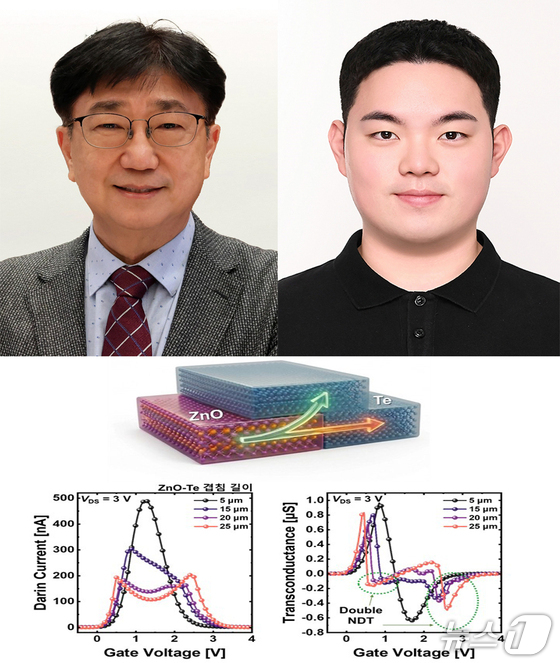
A research team led by Professor Lee Byung-hoon of the Department of Electrical Engineering and the Department of Semiconductor Engineering at POSTECH has developed a next-generation transistor technology capable of performing multiple circuit functions simultaneously using a single semiconductor device. From left are Professor Lee Byung-hoon and Dr. Jeon Jae-hyun. (Provided by POSTECH, redistribution and DB use prohibited) May 19, 2026 / Courtesy of News1

Researchers at POSTECH said on May 19 that a team led by Professor Lee Byung-hoon from the Department of Electrical Engineering and the Department of Semiconductor Engineering has developed a next-generation transistor technology capable of carrying out multiple circuit functions with a single semiconductor device.

The research team conducted the study to enable more functions to be implemented efficiently within limited chip space in the era of ultra-compact AI devices and highly integrated semiconductor systems.

The newly developed technology can perform frequency conversion functions that previously required multiple transistors using just a single device, significantly reducing circuit complexity while increasing data processing speeds by roughly four times.

The team created a heterojunction transistor with a new structure by combining zinc oxide (ZnO), which supports low-temperature processing, with tellurium (Te). The technology enabled complex semiconductor circuit functions to be implemented at the level of a single device.

Professor Lee said the technology is expected to improve both performance and power efficiency in ultra-compact AI electronics such as smartwatches and wearable devices, while also contributing to the development of next-generation 3D semiconductor integration technologies.

Check Out Our Content

Check Out Other Tags:

Most Popular Articles