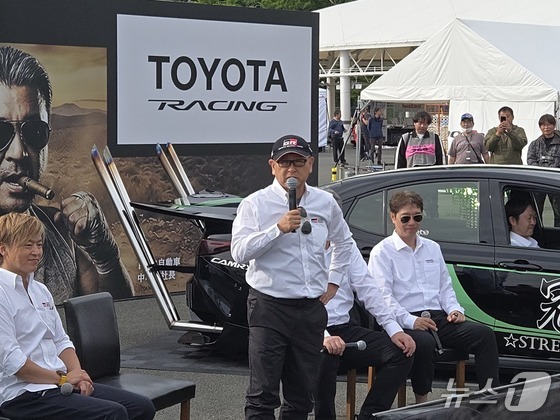
To maintain the strength of the Japanese automotive industry, it needs to secure a certain volume of domestic production. However, when tariff issues come into play, the situation changes. It is believed that reintroducing the American-made Camry to Japan could have a positive impact on the tariff discussions with the U.S., explained Akio Toyoda, Chairman of Toyota Motor Corporation, shedding light on the decision to reimport the Camry midsize sedan produced at the company’s Georgetown plant in Kentucky.
Speaking at the third round of the Super Taikyu 2026 endurance race held on June 5 at Fuji Speedway in Shizuoka Prefecture, Toyoda emphasized that the Japanese government, businesses, and consumers should all emerge as winners in the tariff negotiations.
The event marked the Japanese debut of the 11th generation Camry (9th generation for overseas markets). This unveiling comes six months after Toyota announced plans to reimport three models from the U.S., including the Camry, the Highlander midsize sport utility vehicle (SUV), and the Tundra full-size pickup truck. In the interim, both the Highlander and Tundra have already launched in Japan.
The Camry is slated for a fall release in Japan. Hiroki Nakajima, Toyota’s Chief Technology Officer and Executive Vice President, revealed that they’re producing right-hand drive Camrys in the U.S. and are in the process of obtaining certification from Japan’s Ministry of Land, Infrastructure, Transport and Tourism. The target is to launch this fall with annual sales of 10,000 units. This marks the return of the Camry to Japan after a three-year hiatus, following the discontinuation of the 10th generation model (8th generation for overseas markets) in December 2023.
Toyota’s decision to reimport the Camry is widely seen as a strategic move to address the trade imbalance between the U.S. and Japan, which has been at the heart of increased automotive tariffs. In April of last year, citing an annual automotive trade deficit of 200 billion USD, President Donald Trump imposed a 25% tariff on all imported vehicles. Subsequent negotiations with various countries led to adjusted tariff rates, with Japan securing a deal last July that reduced tariffs on Japanese automobiles to 15%.
Nevertheless, Japan remained the second-largest contributor to the U.S. automotive trade deficit last year, accounting for 35.3 billion USD of the total 128 billion USD deficit, trailing only Mexico and still surpassing South Korea’s 28.7 billion USD contribution. The negotiation agreement released by the White House repeatedly emphasized resolving the U.S.-Japan trade deficit, suggesting that tariff issues could resurface. By reimporting American-made Camrys to Japan, Toyota can boost U.S. automotive export figures, potentially helping to narrow the trade gap with Japan.
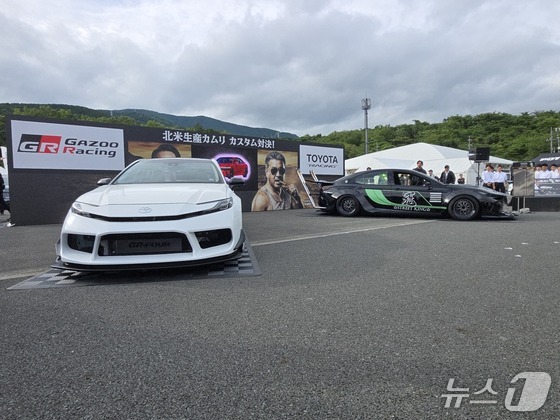
This marks the second time since the 1990s that American-made Camrys will be reimported to Japan, echoing similar measures taken then to ease U.S.-Japan trade tensions. Previously, Camrys for the Japanese market were produced at Toyota’s Tsutsumi plant in Aichi Prefecture. While some Japanese consumers might view this as a concession to U.S. trade pressure, Toyota cleverly diffused any potential tension at the event. The company showcased the American-made 11th generation Camry through an engaging customization contest between Chairman Toyoda and Vice Chairman Nakajima.
Akio Toyoda’s Gazoo Racing (GR) team presented a white Camry fitted with custom fenders, bumper, and rear spoiler, even modifying the engine to a seven-cylinder configuration. In contrast, Nakajima’s Toyota Racing (TR) team showcased a black Camry featuring an imposing front splitter, rear spoiler, and vertically extended exhaust. Toyoda humorously remarked that he’s a bit worried about our upcoming shareholders’ meeting, before playfully adding while glancing at Nakajima to remember, he was the one who executed this.
With the Camry’s reintroduction, Toyota aims to capture the attention of younger Japanese consumers. Nakajima noted that while the Camry’s sales performance in Japan led to its discontinuation, it remains highly popular in the U.S. During his visit there last year, young customers shared that sedans are now considered cool because their parents predominantly drive SUVs. A Toyota spokesperson added that the Japanese auto market has shifted towards SUVs and kei cars, making sedans less common on the roads. It’s optimistic that the new Camry will offer a fresh appeal to Japan’s younger demographic.