

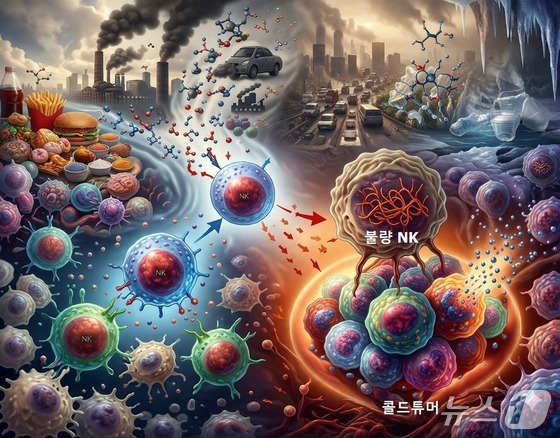
A groundbreaking study by South Korean researchers has revealed that the root causes of cold tumors – cancers with low immune responses such as ovarian, breast, and prostate cancers – extend beyond genetics to include chronic environmental stress and poor lifestyle choices.
On Monday, the National Research Foundation of Korea announced that a research team led by Professor Moon Yoo-seok from Pusan National University has identified the molecular mechanisms behind the failure of tumor elimination. The team discovered that energy-depleted and maladapted NK cells predominantly infiltrate and accumulate in cancer tissues.
NK cells, or natural killer cells, are part of the innate immune system that directly attacks and destroys virus-infected or cancerous cells.
Cold tumors, which are solid cancers with extremely low immune reactivity, are among the most prevalent cancers affecting both men and women in South Korea. While lifestyle and environmental factors were long suspected to play a role in the poor immune response to these tumors, the specific biological mechanisms remained unclear until now.
Scientists have long known that thousands of environmental endocrine disruptors in our air, water, and food pose significant health risks. However, the direct link between these disruptors and the deterioration of immune cells within tumors had not been definitively established.
The research team found that Gdf15, a factor derived from cancer cells, promotes signaling of the aryl hydrocarbon receptor (AhR), which responds to environmental stress. This process reconstructs the tumor’s immune microenvironment.
Their findings show that when NK cells infiltrate a tumor and are continuously stimulated by AhR, they initially exhibit anti-cancer activity. However, over time, these cells undergo a maladaptive transformation, characterized by energy depletion and increased genetic damage.
As a result, these dysfunctional NK cells accumulate in the cancer tissue, failing to eliminate cancer cells. Instead, they become indicators of tumor recurrence and progression, as demonstrated by both clinical data and animal models.
Professor Moon explained that this research paves the way for developing next-generation immunotherapies. These new treatments would not only increase NK cell numbers but also prevent or reverse their transformation caused by environmental stress.
The research team believes their study provides crucial evidence of the tangible harm environmental pollutants inflict on the human immune system, specifically in the context of tumor immunology. This information is expected to inform public health policies and guidelines for preventing environmentally induced diseases.
This groundbreaking research, supported by the Ministry of Science and Information and Communications Technology (ICT) and the National Research Foundation of Korea through the Outstanding Scientists Program for Regional Universities and the Post-Doctoral Growth Joint Research Project, has been published online in the prestigious international journal Signal Transduction and Targeted Therapy.