

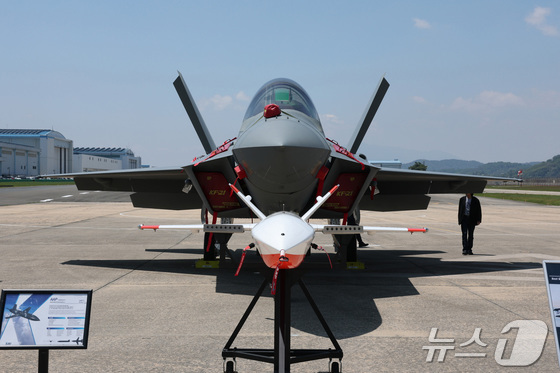
Korea Aerospace Industries (KAI) has firmly refuted online rumors claiming that it developed the Korean Fighter KF-21 by misappropriating technology from the U.S. F-22 fighter jet.
In a statement released on Wednesday, KAI categorically denied any connection between Dr. Park Si-mong and the KF-21 project, dismissing claims circulating on social media platforms as entirely baseless.
The rumors alleged that Dr. Park, a Korean-American known for his involvement in developing navigation systems for the F-22 Raptor, had leaked F-22 technology to KF-21 engineers.
KAI emphatically stated that there was no collaboration or technological cooperation with Dr. Park throughout the KF-21 development process.
The aerospace company stressed that the KF-21 project strictly adhered to all relevant laws, procedures, and regulations governing domestic and international technology transfers and intellectual property rights. It has never utilized or applied U.S. technology or data without proper authorization, KAI officials asserted.
The company warned that propagating unverified claims or false information could severely damage the credibility of South Korea’s defense industry and undermine the hard work of the engineers involved in the KF-21 project. Such misinformation, KAI cautioned, could also jeopardize the legitimacy of the KF-21 program and strain international partnerships.
With system development completed in the first half of this year, the KF-21 project is set to enter full-scale production in the latter half. The Republic of Korea Air Force plans to deploy a total of 120 KF-21 fighters by 2032, with the initial batch of 20 aircraft scheduled for delivery in the second half of this year.