

Seoul National University Hospital has successfully performed Korea’s first revision total hip arthroplasty using the MAKO robotic surgery system.
The hospital said on the 1st that it conducted the country’s first MAKO robot-assisted hip revision surgery in March and has since completed a total of four such procedures successfully.
Total hip arthroplasty is a surgical procedure used to treat conditions such as avascular necrosis of the femoral head, degenerative hip arthritis and hip fractures. The damaged joint is replaced with an artificial implant to reduce pain and restore function.
While most patients return to daily life after surgery, some require revision procedures due to implant wear, loosening, recurrent dislocation or bone loss.
In particular, acetabular revision surgery is considered highly complex because bone defects and altered anatomical structures often make normal anatomy difficult to restore, requiring highly precise surgical planning and stable fixation of the prosthesis.
MAKO is a robotic-arm assisted surgical system developed by a U.S. medical device company. It creates a 3D surgical plan based on CT imaging and assists surgeons in precisely guiding bone preparation and implant placement using a robotic arm.
The MAKO system is currently widely used in hip and knee replacement surgeries, but its application in revision arthroplasty had not previously been reported.
The orthopedic team at Seoul National University Hospital developed CT-based, patient-specific 3D surgical plans using the MAKO system and precisely positioned the acetabular cup, successfully completing four revision surgeries to date.
The hospital said the approach improved joint stability and reduced the risk of dislocation, with patients showing stable postoperative recovery.
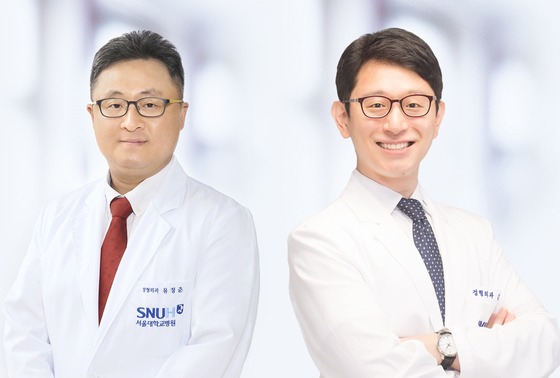
Professor Kim Hong-seok of the Department of Orthopedic Surgery said, “Revision hip arthroplasty is a highly complex procedure that requires simultaneous consideration of anatomical deformation and bone loss caused by prior surgeries. The MAKO robotic system allowed us to accurately translate preoperative planning into surgery and precisely reconstruct acetabular cup positioning and the joint center.”
Professor Yoo Jung-joon of the same department added, “This first case in Korea confirms that robotic surgery technology is also effective in highly complex revision procedures. We will continue to strive to provide more accurate and safer treatment for patients in the future.”