

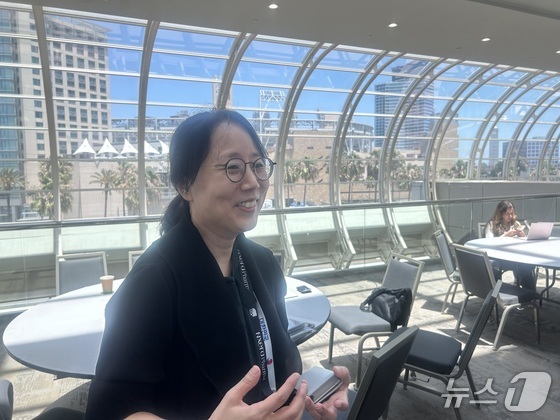
Generative artificial intelligence (AI) is expected to evolve beyond designing drug candidate molecules into an “agentic AI” era where it autonomously handles the entire drug discovery process, according to biotech startup Galux. However, due to the current limitations in data availability and research tools, generative AI-based molecular design remains the dominant approach in the field.
At BIO USA, Galux CEO Seok Chaok told reporters that AI in drug development is transitioning rapidly.
“Until now, generative AI has focused on predicting molecular interactions and designing new candidate compounds. But in the future, agentic AI will independently use multiple research tools and datasets to play a central role in drug development,” he said.
Founded in 2020 by Seoul National University chemistry professor Seok, Galux is a biotech company specializing in AI-driven antibody design technology that precisely identifies mutation-specific target sites. Its atom-level “de novo antibody design” platform has enabled collaborations with companies such as AstraZeneca, Boehringer Ingelheim, Celltrion, and LG Chem.
During BIO USA, a technology cooperation seminar hosted by the Korea Health Industry Development Institute highlighted Galux’s AI-driven drug discovery collaboration model with AstraZeneca as a successful case study.
Seok explained that drug discovery is undergoing a fundamental shift.
“In the past, we selected promising candidates from pre-made molecules. Now we can design molecules from the ground up to meet desired conditions,” he said. “This is a qualitatively different approach.”
He also pushed back against concerns about AI-designed molecules, arguing that they are not inferior in quality.
“There is a perception that AI-designed compounds may be lower in quality, but in reality, they allow more precise control at the molecular level and can be even more competitive,” he said.
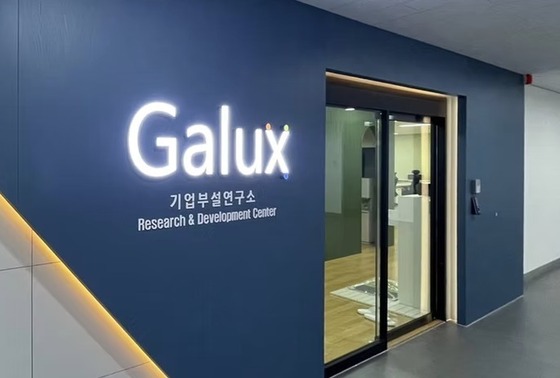
Preparing for the Agentic AI Era
Agentic AI refers to systems capable of connecting and analyzing multiple databases and experimental results autonomously, effectively functioning like a researcher. Global big tech companies are actively investing in this field.
However, Seok noted that due to insufficient tools and datasets, generative AI currently remains the most widely used technology in drug discovery.
“Once the necessary infrastructure is in place, agentic AI will become fully effective,” he said. “We are likely to see a completely different level of change within 10 years.”
He added that China and the United States are both making rapid progress in AI-driven drug discovery, increasing competitive pressure on Korean companies.
Seok emphasized that Korea’s key advantage lies not only in AI model development but also in integrating AI with real-world drug discovery workflows.
“China is growing rapidly with massive capital and state support, making it difficult for individual companies to catch up,” he said. “Korea must build a stronger ecosystem linking AI and biotech, supported by regulatory improvements and research investment.”
He further stressed that execution capability is critical.
“Beyond developing AI models, the ability to apply them effectively in drug development is essential,” he said. “Generative AI-based molecular design is already showing meaningful results, and its applications will continue to expand as bio-AI technology advances.”
Seok concluded that Galux aims to expand its global partnerships.
“As our Galux-designed molecules demonstrate successful outcomes, more companies are reaching out for collaboration,” he said. “Our goal is to secure larger deals with global big pharma.”