

Republican members of the U.S. House Judiciary Committee have demanded an official explanation from the South Korean government regarding the revised Information and Communications Network Act, commonly dubbed the fake news punishment law. This move follows earlier scrutiny of Coupang and online platform regulations, signaling an expansion of U.S. pressure on South Korea’s digital policies into legal and regulatory spheres.
The U.S. government has voiced concerns about potential free speech violations and impacts on American companies even before the law’s implementation. With Congress now directly addressing the issue, the U.S.-South Korea debate over digital regulations may reignite.
CNBC reported on August 7 that House Judiciary Committee Chairman Jim Jordan, Subcommittee on Administrative State, Regulatory Reform, and Antitrust Chairman Scott Fitzgerald, along with Representatives Darrell Issa and Michael Baumgartner, sent a letter to Kim Jong-cheol, Chairman of the Broadcasting, Media, and Communications Committee. The letter outlined their concerns about the revised Information and Communications Network Act.
In their communication, the lawmakers argued that the law’s scope and enforcement criteria for misinformation and disinformation remain ambiguous. They specifically warned that vague provisions could enable the South Korean government to suppress politically unfavorable views, potentially chilling online free expression.
The letter also highlighted concerns that the law could be used to compel content deletion from major American platforms like Meta (Facebook and Instagram), X, and YouTube, which fall under its purview.
In a separate statement, Representative Fitzgerald asserted that no foreign government has the authority to pressure American companies to censor speech protected by the U.S. Constitution. He added that South Korea’s so-called misinformation law is overly broad and vague, posing a significant risk of abuse.
U.S. Government, Congress, and USTR Intensify Pressure on South Korea’s Digital Policies
This isn’t the first time U.S. officials have expressed concerns about the revised Information and Communications Network Act. When the bill passed South Korea’s National Assembly in late December, the U.S. State Department warned that it could negatively impact American online platforms and undermine free speech, expressing serious concerns.
Following the law’s implementation last month, the State Department reiterated its serious concerns, urging the South Korean government to maintain ongoing dialogue with key stakeholders, particularly American tech companies, to ensure the law’s implementation doesn’t suppress free expression.
Recently, U.S. criticisms have broadened beyond this specific law to encompass South Korea’s overall digital policy landscape.
In April, 54 Republican members of the House Republican Study Committee sent a letter to South Korea’s Ambassador to the U.S., Cho Hyun-dong, expressing concerns about the Coupang investigation and online platform regulations. They declared that discriminatory regulations targeting American companies like Apple , Google, Meta , and Coupang are unacceptable.
Earlier in February, Chairman Jordan and Subcommittee Chairman Fitzgerald classified the South Korean government’s Coupang investigation as discriminatory regulation against American companies and launched an official inquiry. The House Judiciary Committee demanded that Coupang executives testify at hearings and submit relevant materials.
The U.S. has also linked these issues to trade concerns. In February, the U.S. Trade Representative (USTR) announced plans to investigate potential discrimination against American tech companies and digital goods and services by major trading partners under Section 301 of the Trade Act, increasing pressure on South Korea. USTR representative Jamieson Greer warned of potential tariffs and other countermeasures if unfair trade practices are confirmed.
As U.S. scrutiny expands from individual company investigations to broader digital policies and legal frameworks, analysts suggest these issues could evolve into significant trade disputes between the U.S. and South Korea.
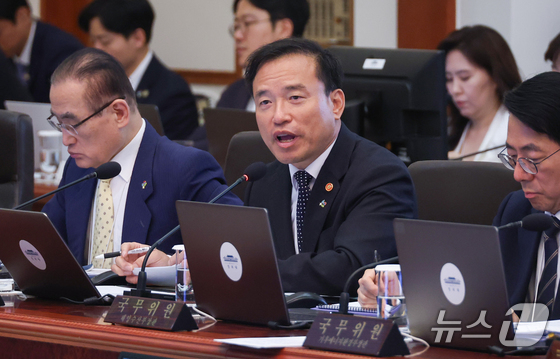
South Korean Government: We’re Not Targeting Specific Countries or Companies – Pledges to Explain Position to U.S.
The South Korean government emphasizes that its domestic digital policies do not discriminate against American companies and plans to engage with U.S. officials through inter-ministerial cooperation.
Korea Media and Communications Commission stated that the revised Information and Communications Network Act aims to address social harms arising from the evolving digital landscape and enhance user protection. It does not target specific countries or companies.
They further asserted that the law contains no discriminatory elements against American companies and announced plans to actively explain its intent and expected effects to the House Judiciary Committee in collaboration with relevant ministries.
The Ministry of Science and Information and Communications Technology (ICT) also communicated to U.S. officials earlier this year that South Korea’s digital-related legislation and measures do not discriminate against American companies. The ministry is coordinating responses with other relevant government bodies.
The revised Information and Communications Network Act, which took effect on July 7, establishes procedures for reporting and handling illegal and false information on large social media platforms, online communities, and video-sharing/search services. The law applies to both foreign operators like Google, Meta , and X, as well as domestic companies such as Naver and Kakao.
Additionally, it includes a punitive damages system allowing courts to order compensation of up to five times the damages incurred if illegal or false information is disseminated with intent or gross negligence.