

When discussing treatments for smoothing out facial wrinkles, Botox is often the first word that comes to mind. However, Botox isn’t actually the name of a treatment, but rather a brand name for a specific company’s product. The correct term is botulinum toxin.
This substance works by temporarily blocking nerve signals to muscles, effectively paralyzing them. It’s widely used not only for treating various medical conditions but also for cosmetic procedures aimed at reducing wrinkles.
For a time, foreign products dominated the botulinum toxin market in South Korea. This was largely due to the challenges of securing the necessary bacterial strains, filtering out impurities, and mastering large-scale manufacturing techniques to create pharmaceutical-grade botulinum toxin.
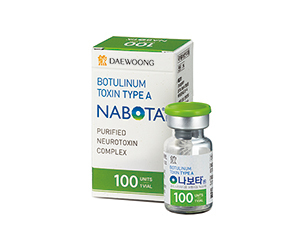
Daewoong Pharmaceutical’s Nabota, a botulinum toxin type A product, entered this competitive market with homegrown technology. Daewoong spent about five years developing Nabota before launching it in South Korea in 2014.
During Nabota’s development, Daewoong’s primary focus was minimizing impurities. They applied their proprietary HI-PURE™ Technology to filter out unnecessary components and produce a highly pure form of botulinum toxin.
Clinical effects were quickly apparent. In a study of 42 adults with frown lines, over 80% showed reduced wrinkles within two days of receiving Nabota. By day 14, 97.6% of participants reported noticeable improvements.
Repeated botulinum toxin injections can lead to tolerance, potentially reducing effectiveness. This occurs because the body may produce neutralizing antibodies that block the toxin’s effects.
However, in clinical trials involving over 1,500 participants, no cases of new neutralizing antibodies emerged after single or multiple Nabota injections, even at maximum dosages.
Nabota’s most significant milestone came five years after its domestic launch. In February 2019, it became the first botulinum toxin developed in Asia to receive U.S. Food and Drug Administration (FDA) approval.
The path to FDA approval was rigorous. Daewoong conducted extensive Phase 3 clinical trials involving over 2,000 participants across the U.S., Europe, and Canada to confirm safety and efficacy. They also secured approvals from the European Medicines Agency (EMA) and Health Canada.
After these extensive efforts, Nabota launched in the U.S. under the name Jeuveau and has since captured the second-largest market share in the country. This achievement demonstrates the quality and clinical competitiveness of a South Korean botulinum toxin in the world’s largest aesthetic market.
Following this success, Nabota launched in Europe as Nuceiva and has secured product approvals in 69 countries worldwide. In Thailand, it holds a 30% market share, leading the industry.
Driven by its strong international presence, Nabota achieved an average annual revenue growth rate of 57% from 2019 to 2025. This June, it surpassed 1 trillion KRW (approximately 727 million USD) in cumulative sales, 12 years after its initial launch.
To meet growing global demand, Daewoong has completed a dedicated toxin production facility and is preparing for commercial production in 2027. Once operational, the facility’s annual production capacity will increase more than threefold, from 5 million vials to 16 million vials.
Daewoong’s ultimate goal is to grow Nabota into a global blockbuster brand with annual sales reaching 500 billion KRW (approximately 363 million USD).
Additionally, Daewoong plans to leverage its Nabota experience to expand into other aesthetic fields. The company aims to broaden its product range to include skin boosters, fillers, and next-generation toxins, positioning itself as a comprehensive aesthetic company.
Nabota’s next challenge lies in maintaining its competitive edge in the global market, moving beyond the milestone of being the first South Korean product in its class. With expanded production capabilities and next-generation product development underway, industry watchers are eager to see how Nabota will enhance its presence in the global botulinum toxin market.