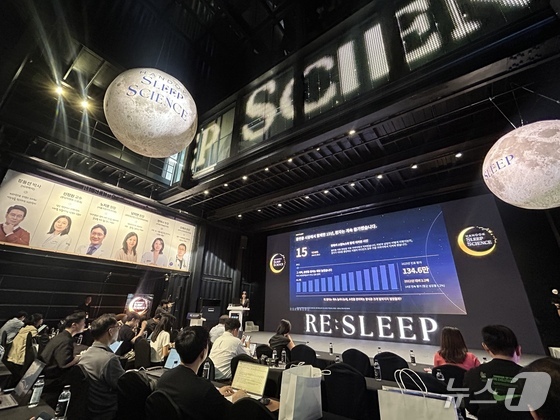
Handok is positioning sleep as a new growth pillar for its digital health care business, extending beyond diagnosis and treatment to everyday management. The company plans to combine its expertise in sleep treatments and medical professional network with digital technology to build a “sleep ecosystem” that covers patients’ entire treatment journey. Handok unveiled its sleep business strategy on Sept. 9 at a media session in SJ Kunsthalle in Seoul’s Gangnam district titled “RE Handok Sleep Science: New Possibilities for Sleep Health Connected Through Digital Technology.” Kim Yoon-mi, executive vice president overseeing Handok’s prescription drug and digital health care businesses, said, “Handok’s sleep business starts with the patient, not the product. The goal of Handok Sleep Science is to connect the sleep care process, in which diagnosis, treatment and management have operated separately, into a single flow.” Kim explained that sleep is increasingly recognized not merely as a quality-of-life issue but as a key health indicator associated with major chronic diseases, including obesity, diabetes and hypertension, as well as depression and anxiety disorders. However, Handok believes the process for insomnia patients to receive an accurate diagnosis, undergo appropriate treatment and receive continuous management in their daily lives remains fragmented. In particular, cognitive behavioral therapy for insomnia (CBT-I), recommended as the first-line treatment for chronic insomnia, is difficult to provide sufficiently to patients in practice because of limitations involving time, staffing and accessibility. Handok’s strategy is to fill this gap with digital technology. Rather than simply selling individual products, the company plans to expand its digital health care business into a platform connecting the patient’s treatment journey from diagnosis and treatment to follow-up management.
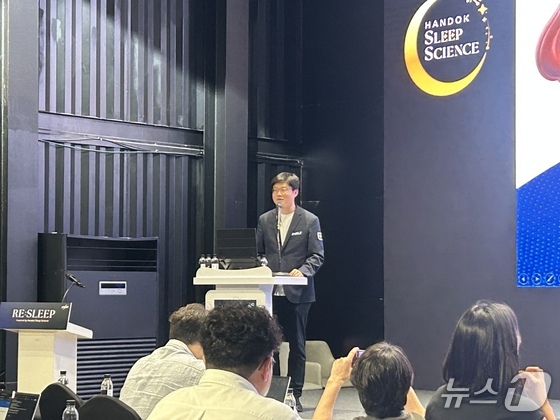
At a presentation by Handok’s partners, sleep-related technologies from WELT and Asleep were introduced. Kang Sung-ji, CEO of WELT, first introduced SleepQ, a digital medical device for cognitive behavioral therapy for insomnia. SleepQ is a product that delivers cognitive behavioral therapy for insomnia (CBT-I), traditionally conducted in person at hospitals, through a smartphone application. Patients who receive a prescription from a medical professional complete programs such as sleep restriction, stimulus control and cognitive restructuring over six weeks to improve sleep habits and thought patterns that contribute to insomnia. According to Handok, SleepQ surpassed 1,000 cumulative registrations with the National Evidence-based Healthcare Collaborating Agency (NECA) in July. The company said this indicates growing interest among medical institutions in treating insomnia with digital therapeutic devices. Lee Dong-heon, CEO of Asleep, introduced ChronoTrack, a contactless digital medical device for recording sleep. ChronoTrack uses a smartphone rather than a wearable device worn on the body to analyze sounds of breathing and movement during sleep using artificial intelligence (AI). It provides data on total sleep time, sleep efficiency, time to fall asleep, time awake during sleep, chronotype, social jet lag and a sleep regularity index.

The goal is to reduce the burden of patients having to fill out sleep diaries every day while helping medical professionals objectively assess patients’ sleep conditions using data and develop treatment strategies. Handok plans to expand its sleep business by using digital technology to obtain data needed for diagnosis and treatment and connect that data to actual treatment and management. Handok also plans to expand its patient-centered digital health care model developed through its sleep business into the chronic disease sector. Kim emphasized, “Handok will expand the patient-centered connected model it has built in sleep care into chronic disease areas that require ongoing management, expanding various digital health care ecosystems that connect diagnosis, treatment and everyday management.”