

North Korea’s Wonsan Kalma Coastal Tourist Area, a decade-long development project, opened its doors in July this year. However, it appears that the tourism season concluded just months after its inauguration. Analysts suggest that North Korea may pursue further development to integrate this area with the Mount Kumgang tourist zone.
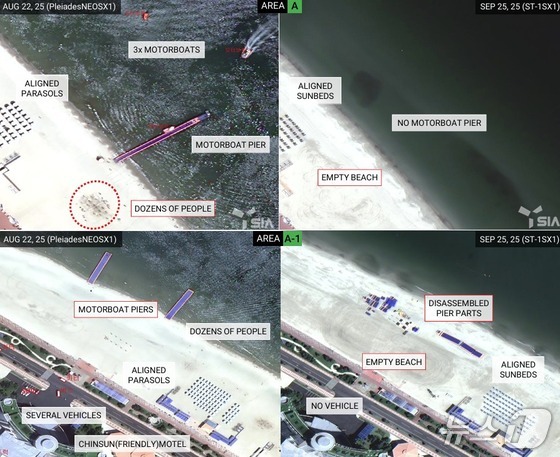
According to SI Analytics (SIA), a domestic satellite imagery analysis firm, visitor numbers to the Kalma area peaked in August following its July 1 opening, but experienced a sharp decline in September.
The report states that throughout September, there was virtually no human activity observed at key facilities such as the beach, Myongsasipri Theater, and performance venues in the Kalma area. Further noting that the motorboats previously seen on the beach have vanished, boat docking structures have been dismantled, and beach cleaning vehicle operations have ceased.”
The report particularly emphasized that the Myongsasipri Water Park, once a bustling attraction frequently showcased on Korean Central Television, recorded zero visitors during September.
Despite officially opening the Wonsan Kalma Coastal Tourist Area on July 1, North Korea announced on July 18 that it would temporarily suspend acceptance of foreign tourists, limiting access to domestic visitors only.
North Korea’s shift in strategy, moving away from its initial focus on attracting foreign tourists for hard currency, can be attributed to multiple factors. These include the exposure of its subpar conditions and tourism infrastructure through candid reviews from foreign visitors to the Rason area earlier this year, as well as ongoing domestic health concerns related to potential COVID-19 resurgences.
The report emphasizes that substantial improvements to basic infrastructure are crucial for reviving tourism in the Kalma area. It predicts that the region will be developed as a tourist destination with potential links to the southern Mount Kumgang tourist zone.
Recently, North Korea has nearly doubled the size of the Myongsasipri General Hospital, located at the southernmost point of the Kalma area, in just six weeks. Since last month, it has been mobilizing a large workforce to focus on constructing a new train station. The report forecasts that this winter, North Korea will significantly enhance its resort features to attract domestic visitors.