

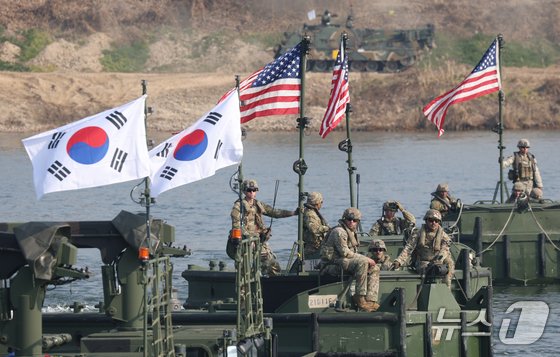
On January 23, the Donald Trump administration unveiled a new National Defense Strategy (NDS) that reduces the U.S. military’s role in deterring North Korea on the Korean Peninsula and assigns South Korea the primary responsibility for its own defense. This shift is expected to accelerate the transfer of wartime operational control and the modernization of U.S. forces in South Korea.
The Pentagon’s 2026 NDS acknowledges South Korea’s robust military capabilities, citing high defense spending, a strong defense industry, and conscription. It asserts that South Korea can take the lead in deterring North Korea with significant but more limited U.S. support.
The strategy notes that South Korea’s willingness to assume this responsibility stems from the clear and present threat posed by North Korea. This rebalancing aligns with U.S. interests in updating its force posture on the peninsula.
This shift indicates that while South Korea will spearhead conventional defense, the U.S. will focus on providing extended deterrence against North Korean nuclear threats that exceed South Korea’s independent capabilities. This approach has been consistently emphasized by the Trump administration and has been the subject of ongoing U.S.-South Korea consultations.
The NDS announcement is likely to boost South Korea’s push to transfer wartime operational control by 2030. This transition, which would shift the supreme command authority during crises to South Korean forces, has been a sensitive issue in the U.S. However, the Trump administration has shown a more progressive stance on this matter, coupled with efforts to enhance U.S. forces’ strategic flexibility in South Korea.
The U.S. and South Korea initiated discussions on transferring wartime operational control in 2006. They agreed on a three-phase evaluation and verification process: Initial Operational Capability (IOC), Full Operational Capability (FOC), and Full Mission Capability (FMC). IOC assessments were completed in 2019 and 2020, with FOC evaluation concluding in 2022.
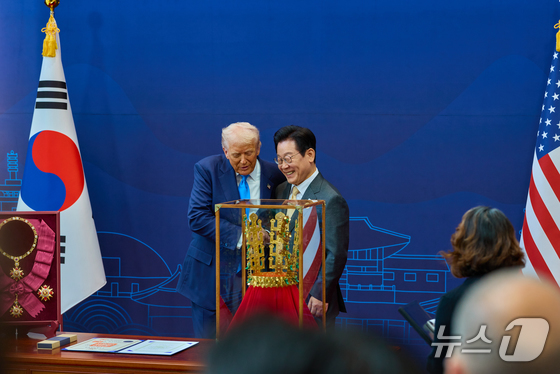
Following the November Security Consultative Meeting (SCM), both nations announced plans to verify the Full Operational Capability of the future combined forces command headquarters in 2026. If FOC verification is completed this year, they will set a target date for the transfer. The final FMC verification, primarily qualitative, will occur a year before the transfer, potentially allowing for a smooth transition based on political considerations.
The NDS’s confirmation of South Korea’s expanded role in conventional defense is expected to reshape the size and composition of U.S. forces in Korea. While U.S. defense officials emphasize capabilities over troop numbers, any adjustments will likely maintain overall deterrence against North Korea.
Military analysts predict the U.S. may reduce ground forces while bolstering air, naval, and long-range strike capabilities. This aligns with U.S. goals to enhance strategic flexibility, potentially deploying forces to other regional conflicts like a Taiwan scenario. The strategy may involve offsetting troop reductions with advanced weaponry and positioning U.S. forces in Korea as a hub for rotational units in the Indo-Pacific.
The NDS, a subordinate document to the National Security Strategy (NSS) released last December, outlines key threats, defense priorities, and implementation strategies. It’s typically revised with each new administration.
This NDS identifies China, Russia, Iran, and North Korea as primary threats. It specifically notes North Korea’s growing capability to threaten not just South Korea and Japan, but also the U.S. mainland.
The strategy explicitly names China, Russia, Iran, and North Korea as major threats, emphasizing North Korea’s potential to endanger South Korea, Japan, and U.S. territory.
Elbridge Colby, the Deputy Assistant Secretary of Defense who spearheaded the NDS development, is scheduled to visit South Korea next week to brief key diplomatic and security officials on its details.