

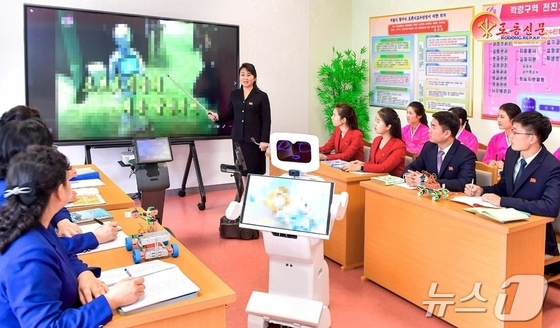
Experts have analyzed that North Korea views artificial intelligence (AI) as an essential element for regime survival, moving beyond its role as a mere technological advancement. They suggest that AI could become a key strategic initiative at the upcoming 9th Congress of the Workers’ Party.
On Tuesday, the North Korea AI Research Task Force (TF), affiliated with the Institute for National Security Strategy (INSS), released a report titled, Changes in North Korea’s AI Discourse and Prospects for National Strategic Direction: State-Led AI Institutionalization as Seen Through Rodong Sinmun.
The TF noted a significant increase in AI-related content in Rodong Sinmun, North Korea’s primary state-run media outlet, since 2024.
According to the TF, the newspaper emphasizes that AI is directly linked to the rise and fall of nations by citing statements from Russian and Iranian leaders, urging officials and citizens to actively embrace it in their daily lives.
Notably, the TF observed that since December 2024, Rodong Sinmun has redefined AI as a state-led model that the government must manage responsibly.
The TF explained that North Korea portrays AI as a national asset that transcends mere technology, crucial for safeguarding sovereignty and achieving military innovation. This framing also serves to justify state ownership of potential social benefits and resources arising from future AI policies. They view this as a strategy supporting Kim Jong Un’s military modernization agenda, particularly given the increased importance of intelligent weapon systems, such as drones, in the ongoing Russia-Ukraine conflict.
Last September, Kim visited research institutes and businesses under the unmanned aerial vehicle technology consortium, inspecting drone performance and emphasizing the military application of AI.
In light of these developments, the TF predicts that North Korea will likely declare AI as a more institutionalized national priority at the 9th Party Congress, expected to take place in February.
They suggest that framing AI as a high-level strategy capable of delivering breakthroughs across military, economic, and cultural sectors may also serve a political purpose, offering hope to citizens and strengthening internal unity.
The institute anticipates that North Korea will likely draw heavily from Russia’s state-led AI model at this Party Congress, establishing a state-affiliated AI organization and developing specific related plans.