

Huawei has proposed an early adoption of 5G Advanced technology as a solution to address the surging demand for artificial intelligence (AI). While 6G standardization is not expected until after 2029, the company emphasizes that AI growth will skyrocket within the next five years, making it crucial to upgrade existing networks immediately.
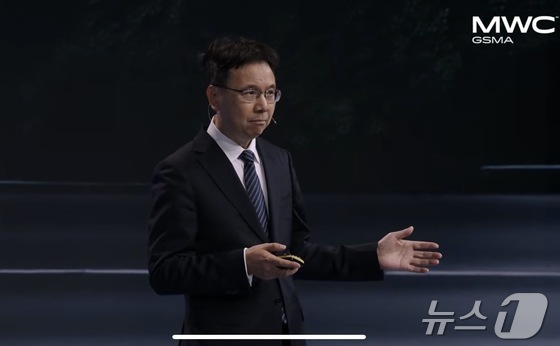
During a keynote speech at the Mobile World Congress (MWC) in Barcelona on Tuesday, Yang Chaobin, Huawei Technologies’ Senior Vice President and Chief Executive Officer (CEO) of the Information and Communications Technology (ICT) Business Unit, declared that AI is no longer just a technology; it’s the core engine powering an intelligent world. AI won’t wait for 6G to arrive.
Yang highlighted the rapid expansion of AI, citing that global daily token usage has exploded by 300 times in the past two years, reaching a staggering 260 trillion tokens per day. He noted that over 30 million AI agents are currently operational across various industries, including manufacturing, finance, and healthcare. By 2030, he projects that the scale of AI task processing will multiply by tens of thousands.
Huawei contends that these changes demand a complete overhaul of network architecture. They’ve pinpointed uplink performance as a major bottleneck in the growth of AI services. For seamless collaboration between AI robots and cloud systems, they stress the need for ultra-low latency (under 60 milliseconds) and high reliability.
Addressing 6G discussions, Yang acknowledged the consensus that the first standard release won’t emerge before March 2029. However, he emphasized that AI will experience explosive growth in the next five years, positioning 5G Advanced as a practical interim solution.
5G Advanced represents a quantum leap over current 5G capabilities. It promises to boost download speeds from 1 Gbps to 10 Gbps and uplink speeds to a maximum of 1 Gbps. This advanced technology will support massive connectivity through innovations like passive IoT and will evolve to incorporate AI functionalities directly within the network infrastructure.
Spectrum policy was also identified as a critical factor. Yang stressed the importance of allowing operators to flexibly utilize frequencies in an environment where multiple generations of mobile technology coexist. He predicted that the 6 GHz band will become the cornerstone for 5G Advanced over the next five years.
Despite these advancements, the global digital divide remains a pressing issue. While some regions boast 5G penetration rates exceeding 50%, parts of Africa and Latin America still rely on 2G networks. Yang revealed that over 300 million people worldwide lack access to mobile network coverage. There are growing concerns that the rapid proliferation of AI could further widen this technological gap.
Huawei reported that its RuralStar solution has been deployed in more than 80 countries to enhance rural connectivity. The company highlighted success stories, such as the spread of mobile network-based financial services in Bangladesh and the provision of remote healthcare services in Argentina.
In conclusion, Yang asserted that the majority of 6G use cases being discussed today can already be implemented and validated on 5G Advanced networks. This approach will lay the foundation for strategies extending beyond 2030.