

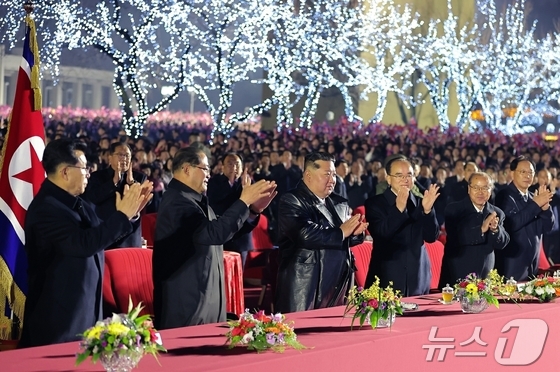
The Ministry of Unification has assessed that North Korea’s hostile stance towards South Korea and the United States has been reaffirmed following Kim Jong Un’s state address at the Supreme People’s Assembly. During his speech, the North Korean leader declared South Korea as the most hostile nation. Despite this, the South Korean government reiterated its commitment to developing inter-Korean relations into a peaceful relationship aimed at unification.
On Tuesday, a Unification Ministry official told reporters that Kim echoed the domestic and foreign policy messages from the 9th Party Congress in his state address on March 23, the second day of the 15th Supreme People’s Assembly.
According to North Korea’s state-run newspaper Rodong Sinmun, Kim stated in his address that he recognizes South Korea as the most hostile nation and will thoroughly reject and ignore it through the clearest words and actions. He added that whether the adversaries choose confrontation or peaceful coexistence is up to them. It is prepared to respond to either choice.
The South Korean official interpreted Kim’s mention of adversaries and the two options of confrontation and peaceful coexistence as remarks likely aimed at the United States. This aligns with North Korea’s stance expressed at the 9th Party Congress regarding their intent to observe U.S. behavior moving forward. The official noted that while condemning U.S. acts of aggression, the overall message towards America has been moderated in tone.
Regarding potential constitutional amendments reflecting the hostile two nations policy, the official explained that it’s difficult to make assumptions since North Korea hasn’t made an official announcement, but they appear to be maintaining their previously articulated hostile stance toward South Korea and the U.S. While North Korea announced constitutional amendments during this meeting, they did not specify whether the deletion of nation and unification concepts, as directed by Kim in 2024, had been implemented. This ambiguity is interpreted as a strategic move by North Korea to maintain diplomatic flexibility amid the current fluid international situation.
Furthermore, the official analyzed that North Korea’s decision to change the constitution’s name from Socialist Constitution of the Democratic People’s Republic of Korea to Constitution of the Democratic People’s Republic of Korea, along with Kim’s omission of references to past leaders in his address, emphasizes the new Kim Jong Un era and is part of a broader effort to strengthen Kim’s personalized regime.