

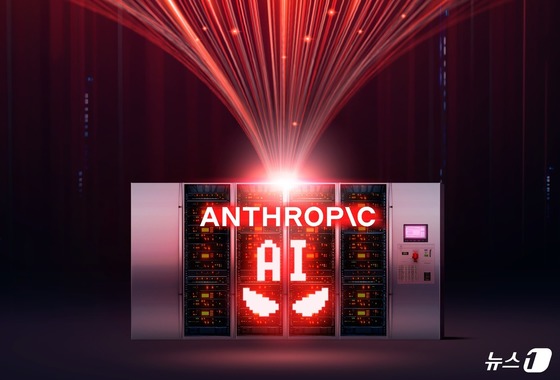
Global tech giants are intensifying their efforts to develop security-focused artificial intelligence (AI) models. Anthropic’s ‘Mitos’ is leading the charge, with OpenAI and Microsoft (MS) following suit by launching AI systems with enhanced security capabilities. This trend underscores ‘security’ as a critical competitive advantage in the generative AI landscape.
Industry reports from Monday indicate that the significance of AI in cybersecurity continues to grow exponentially.
According to the April edition of SK Shieldus’s EQST Headline Report, there’s a surging interest in operational automation powered by generative AI within cybersecurity monitoring environments. Increasingly, AI is being utilized to support analysts in repetitive tasks such as alert classification, investigation, and reporting.
Microsoft recently unveiled Multi-Model Agent Scanning Harness (MDASH) on its security blog. This innovative system coordinates over 100 AI agents to identify vulnerabilities in security systems.
What sets MDASH apart is its reliance on multiple models rather than a single one. It orchestrates more than 100 diverse AI agents to detect bugs through a rigorous process of rebuttal and verification.
Microsoft emphasized that there’s no one-size-fits-all model for every situation, describing MDASH as an effectively managed ensemble of various models.
In the public benchmark ‘CyberGym,’ MDASH achieved an impressive 88.4% success rate on 1,507 vulnerabilities, outperforming Mitos Preview (83.1%) and GPT-5.5 (81.8%) to claim the top spot. Moreover, MDASH uncovered 16 new vulnerabilities across Windows networking and authentication stack.
The partial reveal of Anthropic’s Mitos in April sent shockwaves through the global tech community. Analysts suggested that Mitos could potentially design its own infiltration paths and execute hacks, highlighting the critical importance of security in the AI era.
Anthropic has limited access to Mitos to just 52 companies and institutions. Reports indicate that a Chinese think tank’s request for access was denied by Anthropic.
Anthropic is currently spearheading Project Glasswing with organizations that have secured access to Mitos, focusing on AI security responses. South Korea is also vying to participate in the Glasswing project. A spokesperson from the Ministry of Science and ICT stated that discussions are ongoing. It’ll need to be patient as this process unfolds.
OpenAI swiftly responded by launching the GPT-5.4-Cyber model. In early May, it pre-released the GPT-5.5-Cyber model to select partners and initiated the Trusted Access for Cyber (TAC) project.
The trend suggests that AI-based security systems will play an increasingly crucial role in cybersecurity.
The EQST Headline Report by SK Shieldus notes a growing interest in operational automation driven by generative AI within cybersecurity monitoring environments. AI is increasingly supporting analysts in repetitive tasks such as alert classification, investigation, and reporting.
However, the EQST Headline Report cautions that AI outputs should be used as references and drafts, with analysts retaining responsibility for reviewing and finalizing decisions within the operational framework.
The report emphasizes that AI introduction doesn’t diminish the analyst’s role but rather shifts their focus from repetitive checks’ to ‘judgment and improvement. This transition allows analysts to dedicate more time to root cause analysis, recurrence prevention, detection policy enhancement, and operational quality management.