

Recent restrictions on exporting top-tier artificial intelligence (AI) models by the U.S. government have reignited interest in the importance of sovereign AI.
The information technology (IT) industry reports that since June 12, the U.S. administration has implemented a comprehensive export control directive, halting access to Anthropic’s leading large language models (LLMs), Claude Mythos 5 and Claude Fable 5.
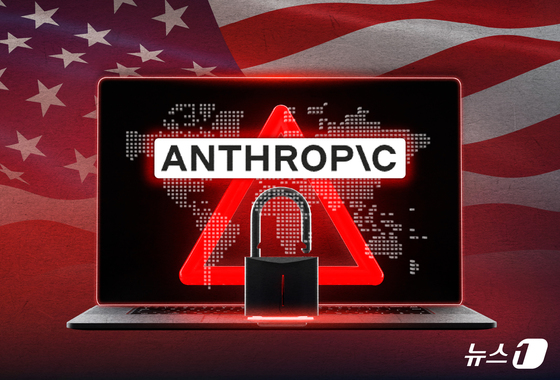
Anthropic’s High-Performance AI Models Mythos and Fable Now Completely Inaccessible.
This action stems from national security concerns raised by the U.S. government. U.S. Secretary of Commerce Howard Lutnick informed Anthropic that providing or exporting Mythos 5 and Fable 5 to foreign individuals requires an individual permit.
Anthropic has entirely suspended access to Mythos 5 and Fable 5, citing challenges in verifying individual users’ nationalities.
However, industry voices argue that the government’s actions are excessive. While the U.S. government implemented these measures due to security vulnerabilities identified through jailbreaking, Anthropic is contesting this decision.
In an official blog post, Anthropic stated that Fable’s safety mechanisms are so robust that users have complained about them, emphasizing that no universal jailbreak method has been discovered to completely bypass the model’s security measures.
They further asserted that while the government should block unsafe external AI provision based on transparent, fair, clear, and fact-based legal procedures, this action doesn’t align with these principles. Anthropic acknowledges the government’s directive but criticizes its lack of sufficient justification.
First Case of Corporate AI Model Blocked by Government Decision, Renewing Focus on AI Sovereignty
This situation represents the first case where a publicly available AI model has been withdrawn due to government action. Moreover, it has become evident that access to high-performance AI models can be restricted under the guise of national security without clear justification. This has amplified calls for greater attention to AI independence.
Currently, the Lee Jae Myung administration has elevated the Ministry of Science and Information and Communications Technology (ICT) to a vice-ministerial level for the first time in 17 years and is investing 530 billion KRW (approximately 344.7 million USD) in a project to select a national AI representative through the Independent Foundation Model (IFM).
In light of the Mythos and Fable situation, AI company Upstage, participating in IFM, has recently voiced the need for stronger support.
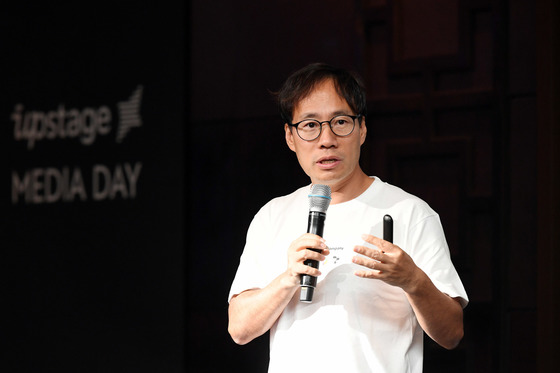
Upstage Chief Executive Officer (CEO) Kim Sung-hoon stated at a press conference on Tuesday that AI has become a strategic national asset, and both the U.S. and China could cut off their AI resources at any time. Therefore, it must elevate the own technology as much as possible. He added that the IFM project is timely, but it needs more than ten times the graphic processing unit (GPU) support from the government.
However, some argue that recent political issues have obscured the necessity of sovereign AI.
An anonymous industry insider remarked that the former Chief of AI Future Planning, Ha Jung-woo, who emphasized the importance of sovereign AI having a golden time of 3 to 5 years, resigned less than a year after his appointment to run for a parliamentary seat. They expressed disappointment, saying that amid discussions questioning the significance of sovereign AI, this choice has even led to doubts about its authenticity.
Beyond Government, Private Sector Joins In as Korea’s Glasswing-Inspired Project Canopy Launches
In addition to government-led projects, private enterprises and institutions are forming a collaborative body to strengthen the sovereign AI security framework.
The non-profit organization Project Plasma announced the official launch of Project Canopy, a public initiative aimed at AI-based vulnerability defense, on Wednesday. Canopy was established to defend public infrastructure, similar to the U.S. company Anthropic’s Glasswing.
At its inception, Canopy includes a total of 27 participating companies and institutions. The core operational group, known as the Steward Group, includes Dunamu, LG Uplus, POSCO DX, Tiori Korea, and Hanwha General Insurance.
The partner group consists of Kwangwoon University, the Financial Settlement Institute, Lotte Card, Lotte Innovate, Modusign, Musinsa, Saramin, Samsung Fire & Marine Insurance, SK AX, LG Electronics, NHN, Woowa Brothers, the Institute of Information and Communication Technology Planning and Evaluation (IITP), G Enterprise, Coway, Hana Card, Korea Investment & Securities, Hyundai Motor Group, Hyundai Card, and three undisclosed companies.
Canopy plans to begin selecting vulnerability assessment targets and sharing reports and patches from mid-June. By early July, they will open a registration page for companies and institutions worldwide to expand the global ecosystem.