

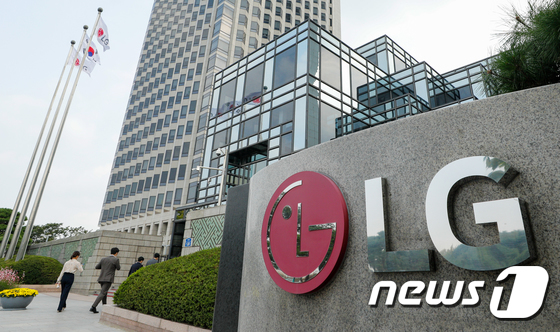
LG Chem reported consolidated revenue of 14.1759 trillion KRW (approximately 9.9 billion USD) and operating profit of 599.6 billion KRW (about 419 million USD) for the second quarter of this year. Analysts attribute these results to the company’s focus on optimizing production and sales, as well as enhancing cost competitiveness amid market instability caused by geopolitical tensions and increased volatility in raw material prices. Looking ahead, LG Chem plans to expand its high-value businesses, including semiconductor substrate materials and next-generation battery materials.
According to the Financial Supervisory Service’s electronic disclosure system on July 31, LG Chem’s consolidated revenue for Q2 2023 was 14.1759 trillion KRW (approximately 9.9 billion USD), with an operating profit of 599.6 billion KRW (about 419 million USD). Compared to the same period last year, revenue increased by 19.0%, and operating profit rose by 25.8%. Quarter-over-quarter, revenue grew by 15.8%, and the company returned to profitability.
During a conference call discussing Q2 earnings, LG Chem’s Chief Executive Officer (CEO) and Chief Financial Officer (CFO), Cha Dong-seok, stated that in the face of ongoing geopolitical risks and raw material price volatility, it has concentrated on improving profitability through production and sales optimization, as well as cost competitiveness enhancement.
Cha added that its petrochemical sector benefited from positive inventory effects and improved product spreads, significantly boosting performance. The advanced materials and life sciences divisions also delivered solid results, thanks to increased sales of key products. LG Energy Solution has turned profitable due to increased battery shipments for energy storage systems, achieving a 4% operating profit margin in Q2 as profitability improved across our businesses.
Looking ahead, he emphasized that market uncertainty will persist due to raw material price volatility and cautious customer purchasing. It’ll enhance the responsiveness to short-term market shifts, accelerate the transition to high-value Apple lication products, and strengthen the long-term growth by developing future-focused businesses in semiconductors, mobility, and robotics materials.
LG Chem Focusing on Petrochemicals and Profitability While Expecting to Expand Sales in Advanced Materials
The petrochemical division reported revenue of 5.3289 trillion KRW (approximately 3.7 billion USD) and operating profit of 426.5 billion KRW (about 298 million USD). Despite reduced sales volume due to the Yeosu NCC plant shutdown, profitability improved thanks to positive inventory effects and wider spreads from rising raw material prices.
Q3 is expected to face ongoing challenges due to negative inventory effects from falling raw material prices and rising logistics costs. Cha stated that it aims to finalize business restructuring approvals and establish collaborative models with refiners by year-end to accelerate improvements.
Revenue from high-value application products, such as electric vehicle (EV)-grade SSVR, semiconductor-grade IPA, and premium PVC, is projected to grow over 40% year-over-year. Cha noted that it plans to increase these products’ revenue share from 10% to over 25% by 2030, building a more profitable portfolio.
He emphasized that the ongoing petrochemical business restructuring aims for final approval this year. LG Chem explained that upon government approval, it’ll proceed with the physical division and seek both domestic and international approvals for any mergers.
The advanced materials division reported revenue of 999 billion KRW (approximately 697 million USD) and operating profit of 19.9 billion KRW (about 13.9 million USD). Increased battery material sales, driven by higher cathode material prices and expanded separator shipments, contributed to revenue growth and a return to profitability.
Q3 is expected to see expanded battery material sales compared to H1, driven by increased cathode material shipments to new customers and gradual growth in energy storage system (ESS) separator sales. The electronics materials sector anticipates robust performance from increased semiconductor material sales and high-value products.
In battery materials, LG Chem will begin supplying cathode materials for upgraded 2170 cylindrical batteries in Q3, with significant sales impact expected from Q4. The company is co-developing next-generation cathode materials and aims to mass-produce Lithium Manganese-Rich (LMR) and Lithium Iron Phosphate (LFP) cathode materials after 2028.
LG Chem noted slower-than-expected recovery in the North American EV market, making it challenging to meet volume targets this year. However, they anticipate significant growth in H2 due to new project volumes.
Regarding separators, Cha said that ESS applications are growing, expected to account for 60-70% of annual revenue. It foresees continued separator demand growth through 2027, driven by power infrastructure investments and artificial intelligence (AI) data center expansion.
Cha stated that it aims to double revenue by 2030 through high-value expansion. It has begun mass-producing SGF products for premium vehicles and will expand into advanced semiconductor materials and packaging solutions to enhance growth.
LG Energy Solution plans to reduce its stake to about 70% by 2030. The subsidiary reported revenue of 7.5602 trillion KRW (approximately 5.3 billion USD) and operating profit of 113.3 billion KRW (about 79.1 million USD), driven by strong EV battery demand and expanded North American ESS production.
Q3 revenue growth is expected from North American ESS market acceleration and stable EV battery shipments. Cha emphasized focusing on stable profits and enhancing competitiveness through next-gen materials, recycling, and cost-effective technologies.
The company will review annual stake liquidation plans, aiming to transition into a technology-driven converter. They’re developing strategies for high-value, profitable businesses and considering inorganic growth options.
The life sciences division reported revenue of 369 billion KRW (approximately 257 million USD) and operating profit of 60 billion KRW (about 41.9 million USD). Q3 may see slight revenue decline due to Q4-concentrated exports and increased research and development (R&D) costs.
Cha outlined plans to strengthen existing product dominance while accelerating new cancer drug development using AI platforms.
Farm Hannong recorded revenue of 274.1 billion KRW (approximately 191.5 million USD) and operating profit of 25.4 billion KRW (about 17.7 million USD). Q3 may see profitability decline despite sales growth, due to rising costs and R&D expenses.