

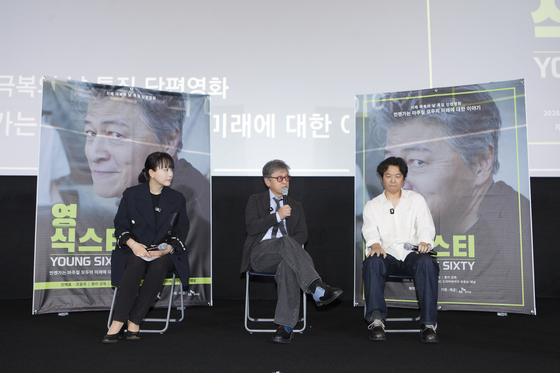
He cannot remember the name of the dessert he orders every day at a café. He orders an LP record he already owns, and suddenly struggles to season dishes he has always prepared well. Even the insulin injection his wife has been giving herself for more than three months suddenly feels unfamiliar to him. These are scenes from “Youngsik Sixty,” a short film jointly produced by SK Chemicals and JTBC ahead of World Alzheimer’s Day on September 21. Set in Seoul in 2056, the roughly 15-minute film follows an ordinary man in his 60s, Youngsik, as his cognitive abilities gradually decline. Real-life married actors Kwon Hae-hyo and Jo Yoon-hee play a married couple in the film. The Korean Dementia Association provided medical consultation and review to enhance the film’s realism. SK Chemicals held a special screening of “Youngsik Sixty” and a question-and-answer session with the audience at Megabox COEX in Seoul, introducing the film’s message about dementia prevention and early diagnosis. Director Yong, lead actor Kwon Hae-hyo and Kim Hee-jin, a professor of neurology at Hanyang University Hospital who served as a medical adviser, attended the event and discussed the filmmaking process and the medical issues portrayed in the film.

Rather than focusing on dramatic events, the film portrays ordinary situations. A familiar word suddenly fails to come to mind. Someone buys the same item again. A person cannot find his own car in a familiar place. Mild cognitive impairment (MCI) refers to a condition in which an objective examination confirms that cognitive function has declined compared with the person’s previous level, while most activities of daily living remain possible. It is generally considered an intermediate stage between normal aging and dementia. The Korean Dementia Association and the National Institute for Health and Care-related research organizations, including the National Evidence-based Healthcare Collaborating Agency, have emphasized that MCI carries a significantly elevated risk of progressing to dementia and that early detection and management are important. At the event, Professor Kim said, “We have consistently emphasized in clinical settings that early management is particularly important when it comes to dementia. ‘Youngsik Sixty’ is a work that communicates that message in an accessible way to general audiences.” She added, “The most striking part of the film was the attitude of Youngsik’s wife, Mikyung. She naturally recognizes potential warning signs without undermining the patient’s self-esteem and waits until her husband is ready to accept his symptoms. That is an extremely important attitude for caregivers.”
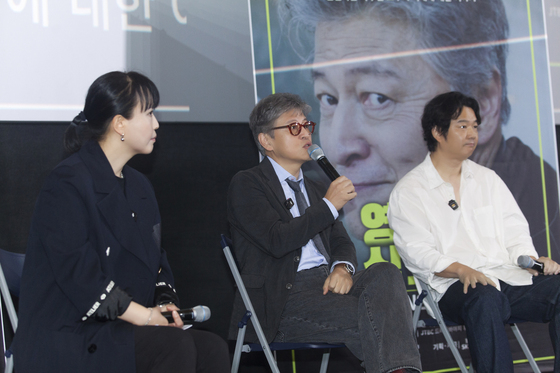
The film is set 30 years in the future, in 2056, rather than the present. The choice was intended to show younger generations—who may see dementia as a distant issue—that it is something they and their families could eventually face themselves. Director Yong said, “I thought about what today’s younger generation might be like when they reach their 60s. I wanted to convey the message that this isn’t something only people in their 50s, 60s or 70s experience, but something all of us could face in the future. That’s why I came up with 2056.” The film ends with Youngsik recognizing the changes in himself and deciding to visit a hospital with his wife. Director Yong said the scene was partly based on his own experience. “My father had a similar experience,” he said. “At first, he was extremely reluctant to go to the hospital, and it was difficult for our family to bring up the subject. But once he went to the hospital, he actually seemed relieved.” Kwon Hae-hyo said he was careful during his performance not to define dementia or cognitive impairment according to a particular stereotype. The same decline in cognitive function can manifest differently depending on an individual’s living environment and condition. “I thought it was important not to generalize by saying that a visually impaired person must behave a certain way, or that someone with cognitive impairment must behave a certain way,” Kwon said. “I also think it’s important not to be overly confident that everything is fine with myself.”
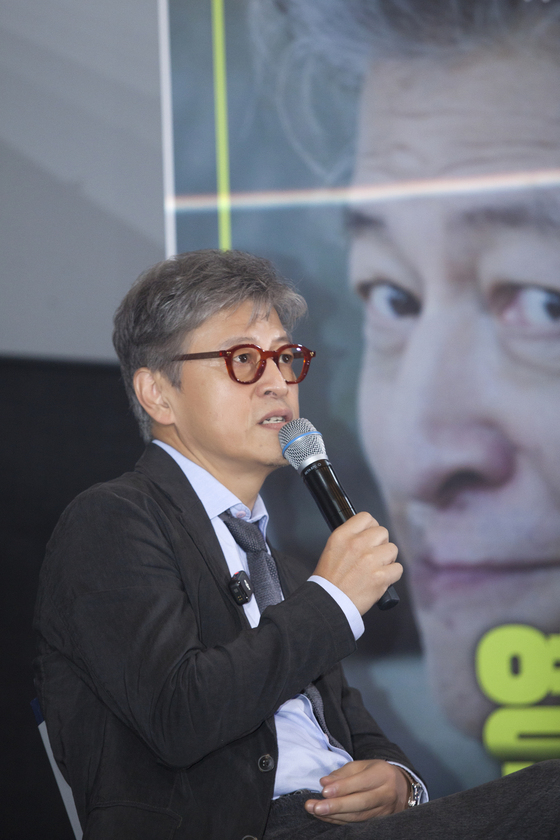
Experts emphasize that when unusual behaviors repeatedly occur and begin to affect daily life, people should not simply dismiss them as a consequence of getting older. MCI is particularly important because it is associated with a higher risk of progression to dementia. Previous studies have reported that approximately 1–2% of cognitively normal older adults develop dementia each year, compared with about 10–15% of people with MCI. Professor Kim said, “If changes in memory or behavior that are different from a person’s usual pattern occur repeatedly or begin to affect daily life, it is important not to dismiss them as normal aging, but to consult a medical professional and determine the person’s current condition. You need to know your own condition before you can begin the management and treatment you need.” SK Chemicals has been running its “Healthy Brain” dementia prevention campaign since last year. The company produces content highlighting the importance of dementia prevention and operates “Healthy Brain Classroom,” an educational program that provides in-home education for people with dementia and their caregivers. “Youngsik Sixty” will be released on JTBC’s official YouTube channel, “Drama Bwayaji,” at 6 p.m. on September 18. It will subsequently air on JTBC as well as JTBC2 and JTBC4.