

In late 2024 to early 2025, South Korea will officially become a super-aged society as its population aged 65 and older surpasses 20%, according to the United Nations (UN) standards. This demographic shift has thrust the issue of elderly mental health into the spotlight as a critical social concern.
To address this challenge, Korean researchers have launched an innovative research and development (R&D) initiative that merges brain change-based therapies with personalized intervention systems. Their aim is to swiftly validate the efficacy of treatments that go beyond current limitations and develop a platform offering tailored interventions. The government is backing this research through the Korean version of the ARPA-H project.
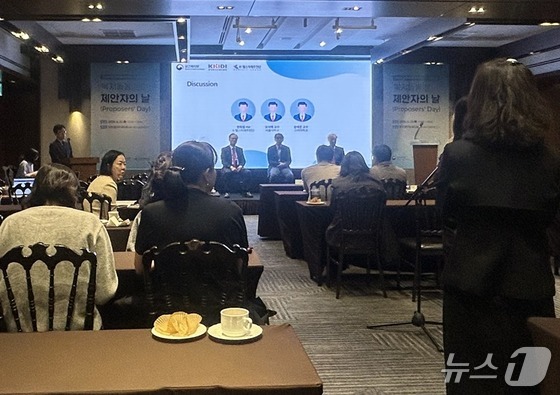
On Wednesday, the Korean ARPA-H Project Proposal Day event was held at the L Tower in Yangjae, Seoul, focusing on welfare and care. The gathering sought to present formidable healthcare challenges and brainstorm groundbreaking solutions with researchers.
Embracing the Korean ARPA-H project’s philosophy of starting with questions rather than seeking answers, the event featured project managers (PMs) from five key areas: welfare and care, health security, unresolved diseases, biomedicine, and essential healthcare. They shared identified challenges and explored potential solutions with diverse stakeholders.
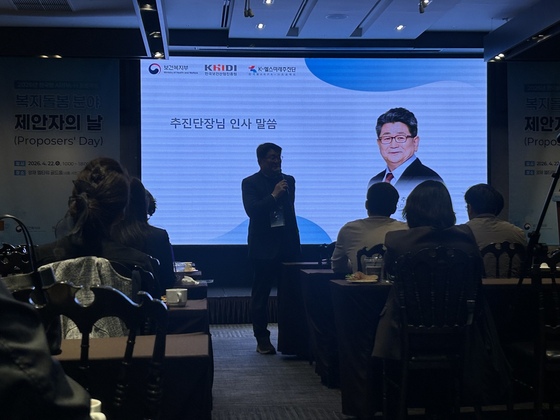
Seon-kyung, spearheading the initiative, explained that while setting modest goals might increase success rates, it won’t position us as industry leaders. The Korean ARPA-H project isn’t just about technological advancement; it’s about tackling crucial healthcare issues that the nation must address. This marks Korea’s first foray into truly innovative, high-risk R&D.
He added that it encourages risk-taking, even if it leads to failure. However, rigorous evidence is crucial. The focus isn’t on developing products or technologies per se, but on eliminating factors detrimental to public health and resolving societal challenges. Its approach, rooted in humanities and social sciences, sets them apart from conventional initiatives.
Seon-kyung further noted that researchers often struggle to form consortia with industry, academia, and hospitals due to limited external networks. It urges them to leverage the PMs for team-building, or they can approach me directly. This collaborative process will drive them towards solving pressing social issues.
Drug Development and Digital-Based Personalized Care… Proposes an Integrated, Scalable Model
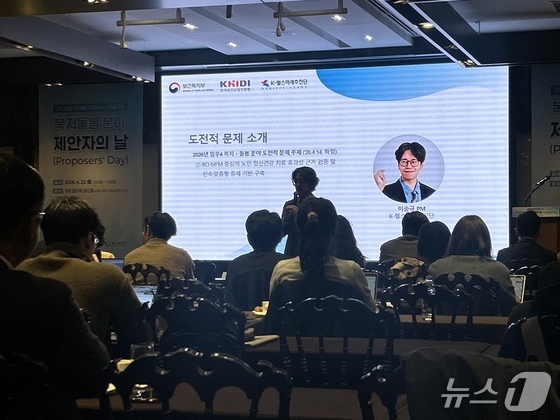
Following this, Lee Seung-kyu, head of the PM center for welfare and care, presented a practical, integrated model for field application.
Lee stated that they’re facing a demographic shift. The Japan Gerontology Society has proposed reclassifying ages 65-75 as pre-elderly and 76+ as elderly. It needs holistic, systemic innovations for senior health, addressing both cognitive and physical functions.
He continued that the current elderly welfare and care system is inadequate. It must analyze seniors’ depression levels and brain changes to devise tailored solutions. By leveraging artificial intelligence (AI) foundation models to monitor brain plasticity and states in real-time, it’ll develop technologies that integrate various intervention methods.
Experts highlighted the paradox of low mental health issue prevalence among the elderly coupled with high suicide rates.
Professor Baek Jong-woo from Kyung Hee University identified early diagnosis barriers, treatment and intervention failures, and legal gaps as key issues. He noted South Korea’s surprisingly low depression rates, stating that the real problem is that many can’t express their depressive feelings.
Professor Lee Jong-seong from Seoul National University emphasized that late-life depression is a complex biological, psychological, and social disease. It’s not just about aging or emotional deficits, but a result of genetic changes, neurodegeneration, and social stressors.
Lee proposed solutions including tailored elderly care services, long-term care insurance, digital care, remote management, and community-integrated care. He advocated for an approach combining biomarkers and social factors for early diagnosis, prediction, and management of elderly issues.
He stressed that given the low prevalence yet high suicide rates, it needs R&D projects focusing on daily life-centered approaches.
The government aims to bolster national healthcare innovation to tackle super-aged society challenges through this project. Their strategy extends beyond research support, focusing on generating practical, applicable outcomes and fostering private sector adoption.