

North Korea has been encouraging increased coal and agricultural production following the 9th Plenary Meeting of the 8th Central Committee of the Workers’ Party of Korea, while also intensifying propaganda emphasizing loyalty to Kim Il Sung and anti-U.S. sentiment.
On July 2, the Workers’ Party newspaper Rodong Sinmun ran a front-page feature titled “No hesitation between fire and water on the path of supporting the grateful mother Party,” stating that the plenary session adopted a decision to strengthen the coal industry and modernize coal-mining towns nationwide. It reported that coal miners across the country are “repaying the Party’s benevolence through higher production achievements.”
The paper stressed that coal is “the food of our industry and the driving force of a self-reliant economy,” adding that workers are striving to increase output “even if it means facing fire and water” in loyalty to the Party.
On page two, the newspaper highlighted songs and poems said to have been personally created by Kim Il Sung during the anti-Japanese struggle, portraying him as an embodiment of patriotism. Works such as “Song of Korea,” “Sahyanga,” “Anti-Japanese Battle Song,” and “On a Autumn Day at Myohyangsan” were cited to emphasize his “ardent and devoted love for the motherland,” which the paper said is being inherited by Kim Jong Un.
Page three featured a personal essay from a worker at the Cheonseong Youth Coal Mine, describing a former “troubled youth” who, through Party care, became a youth shock brigade leader and was transformed into a model worker. The paper described the Party as “a mother that embraces even sick and wounded children without blame.”
Page four called for expanding agricultural output through science and technology, urging a nationwide “scientific farming competition.” It argued that “the country’s rice supply cannot be secured by only a few productive counties and farms,” emphasizing the need for broader technological dissemination.
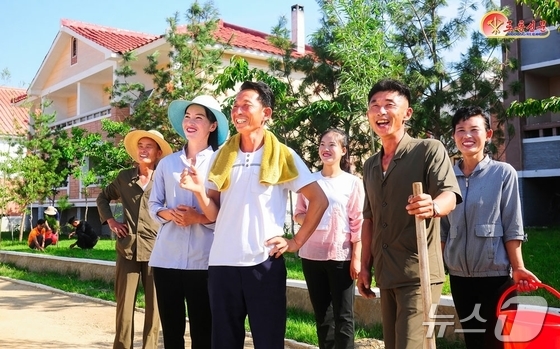
Page five showcased changes in rural life in Juksang-ri, Bukcheong County, South Hamgyong Province, highlighting improved housing and living conditions following rural modernization projects. The paper praised residents’ “local patriotism” and their desire to achieve rural urbanization and modernization through their own efforts.
Page six carried a lengthy historical article framing the Korean War as a war of aggression driven by U.S. global hegemony strategy. It referenced the Truman Doctrine and alleged “A-B-C plans,” claiming that the “anti-communist crusade led by U.S. imperialism” ultimately failed, and asserting that victory in the war proved that no aggressor can defeat a people armed with revolutionary spirit and patriotism.