

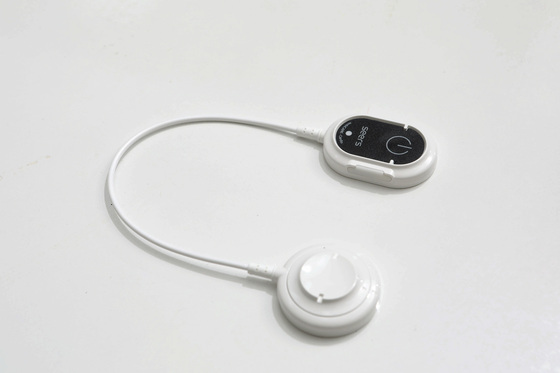
Wearable medical AI company Seers has registered a Korean patent for an AI technology that analyzes short electrocardiogram (ECG) signals to predict the likelihood of paroxysmal atrial fibrillation. While existing wearable ECG analysis has primarily focused on detecting arrhythmias that are already occurring, Seers plans to expand the technology toward assessing atrial fibrillation risk even when the heart is in a normal rhythm.
Seers announced on Sept. 30 that it had completed the registration of a Korean patent for its “AI-based paroxysmal atrial fibrillation prediction system,” which uses AI to analyze 30-second single-lead ECG signals and assess the likelihood of paroxysmal atrial fibrillation.
Atrial fibrillation is a type of arrhythmia in which the heart beats irregularly and can increase the risk of stroke caused by blood clots. Paroxysmal atrial fibrillation is particularly difficult to detect because episodes can occur intermittently before the heart returns to a normal rhythm, meaning short-duration tests may fail to capture abnormal signals.
The technology is designed to assess the likelihood of atrial fibrillation by analyzing subtle characteristics of ECG waveforms and heartbeat intervals with AI, even when atrial fibrillation is not present at the time of testing. It combines single-lead ECG waveforms with R-peak patterns, which indicate the timing of individual heartbeats. During AI training, the patient’s actual atrial fibrillation diagnosis was used as the reference information.
The analysis produces a model probability score ranging from 0% to 100%, designed to help physicians identify high-risk patients and determine whether additional testing or follow-up monitoring may be necessary. However, the score represents a probability value generated by the model and does not itself indicate an individual’s actual probability of developing atrial fibrillation or their clinical risk. Separate clinical validation would be required to establish such a relationship.
Seers plans to apply the technology to its wearable ECG analysis solution, mobiCARE™, as it expands its AI services. While the existing mobiCARE platform has focused on detecting and analyzing arrhythmias from continuously recorded ECG data, the company plans to expand its capabilities to assess atrial fibrillation risk during normal heart rhythms.
The patent provides a technological foundation for identifying disease-related features from short ECG datasets. However, patent registration itself does not establish the technology’s predictive accuracy or clinical effectiveness. Before it can be broadly applied in clinical practice, its predictive performance, false-positive and false-negative rates, and reproducibility across diverse patient populations will need to be evaluated, along with a clear framework for using the technology to support clinical decision-making.
A Seers representative said, “This patent is significant as a technological foundation for expanding mobiCARE’s AI services into disease-risk prediction. We will continue to advance services for high-risk patient screening and disease prediction by leveraging accumulated biosignal data and AI technology.”
Meanwhile, Seers’ name carries the meaning of a “pioneer.” It reflects the company’s founding philosophy of anticipating changes in healthcare and developing new medical systems from a time when digital healthcare had yet to become widely commercialized.